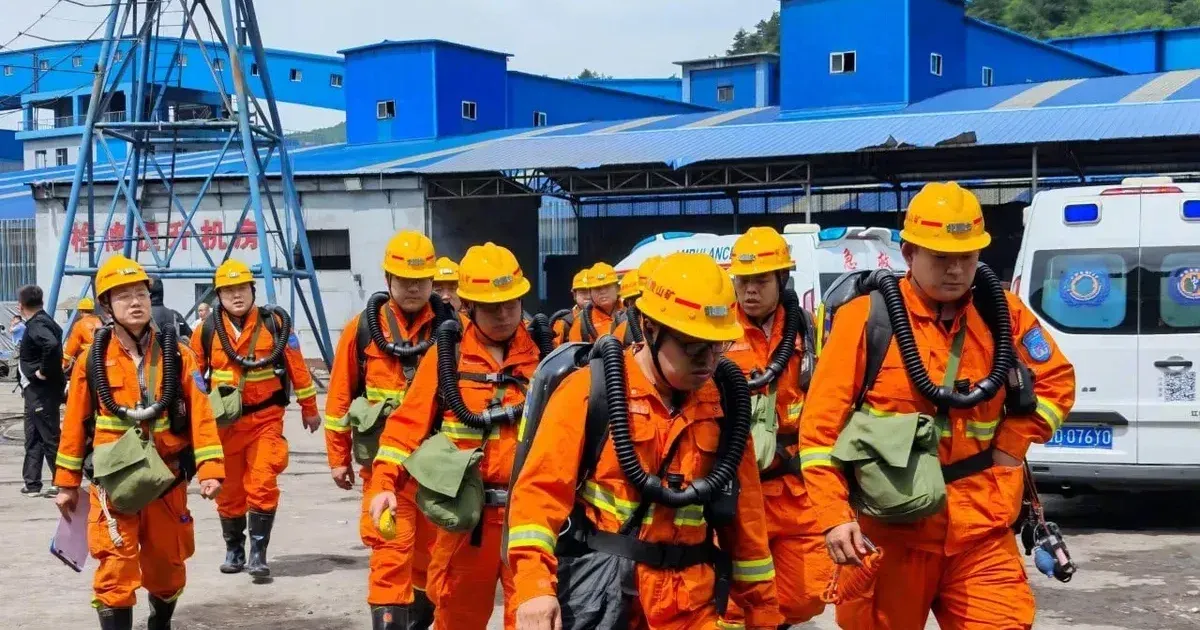
Rescue teams in Shanxi province searched the Liushenyu coal mine after a gas explosion killed at least 90 workers and left families waiting for answers. The accident is one of China's deadliest mining disasters in more than a decade, according to state media and international reports.
The blast happened Friday evening at the Liushenyu coal mine in Qinyuan county. By Saturday, May 23, 2026, state media said the death toll had reached 90 as crews worked through blocked and dangerous sections of the facility. The mine is in Changzhi city, a coal-producing part of Shanxi province.
There were 247 workers underground when the explosion occurred, according to Xinhua. Earlier reports described elevated carbon monoxide levels before later updates identified the disaster as a gas explosion. Investigators are expected to examine warning systems, evacuation decisions and ventilation conditions inside the shaft.
President Xi Jinping ordered local authorities to make every effort in the rescue and recovery work and called for lessons to be drawn from the accident. Beijing often responds to high-fatality industrial incidents with inspections, discipline reviews and pressure on provincial officials to tighten enforcement.
Recovery Operations in Qinyuan County
More than 200 workers were reported to have been brought to the surface after the blast. Rescue teams still faced unstable air, smoke and the risk that damaged sections of the mine could slow access to remaining areas. Those conditions make underground recovery work difficult even after the initial fire or explosion has ended.
Qinyuan county sits in a mountainous part of Shanxi where mine access and emergency logistics can be complicated. Local hospitals and rescue teams were placed under pressure as casualty figures rose from early counts to the much higher Saturday toll. The sharp increase underscored how incomplete the first hours of an underground disaster can be.
Attribution for the operational data came from Xinhua, the state news agency, which has been providing regular updates on the casualty figures. Recent failures in industrial safety protocols also triggered a central government investigation following a deadly fireworks factory explosion in Hunan.
Mining accidents in the region often involve ventilation failures, methane buildup or carbon monoxide risks. Modern sensors can warn operators before conditions become catastrophic, but the effectiveness of those systems depends on fast decisions, clear authority and reliable evacuation procedures.
Industrial Safety Standards Under Scrutiny
The early carbon monoxide reports will be central to the investigation. If alarms were triggered before the explosion, investigators will need to determine who received the warnings, how quickly they acted and whether workers had enough time to leave the danger zone. Authorities had not publicly confirmed the full sequence of orders inside the mine.
The disaster highlights the continuing risks of deep-shaft mining in a country that still relies heavily on coal for power generation and industry. China has improved mine safety over the past two decades, but large facilities can still produce mass-casualty events when gas, ventilation and human decision-making fail at the same time. The Liushenyu case is especially sensitive because the reported number of workers underground shows that this was not a small informal operation, but a large site where emergency planning should have been clear and rehearsed.
Investigators are likely to review the mine operator's safety records, equipment logs and command decisions before the blast. Local officials may also face scrutiny over inspection history and enforcement standards in Qinyuan county. That review could determine whether the case becomes only an accident investigation or a wider political accountability test.
Shanxi supplies a substantial share of China's thermal coal, so the policy response may also affect nearby operations. A broad safety campaign could temporarily disrupt production, while a narrow response could draw criticism from families and workers who see the deaths as preventable. That tension is familiar after major industrial accidents: local governments are expected to protect output and employment while also proving that safety rules are more than paperwork.
Regional Safety Pressure
The Liushenyu disaster leaves Beijing balancing energy security against public anger over industrial deaths. Any order to suspend or inspect mines across Shanxi would carry economic costs, but a limited response could weaken the central government's message that safety failures will be punished.
The accident also raises a practical question for mine operators: whether emergency authority should remain local when sensors show dangerous atmospheric conditions. If investigators find that warnings were delayed, ignored or handled inconsistently, future rules may push toward automatic evacuation triggers and tighter provincial oversight.
For families of the miners, the immediate issue is accountability. The final investigation will need to explain why so many workers remained underground, how the death toll rose so sharply and what changes will prevent another blast from moving from warning signs to mass casualties. It will also have to address whether local managers had the authority, training and incentives to halt work quickly when atmospheric readings became dangerous.