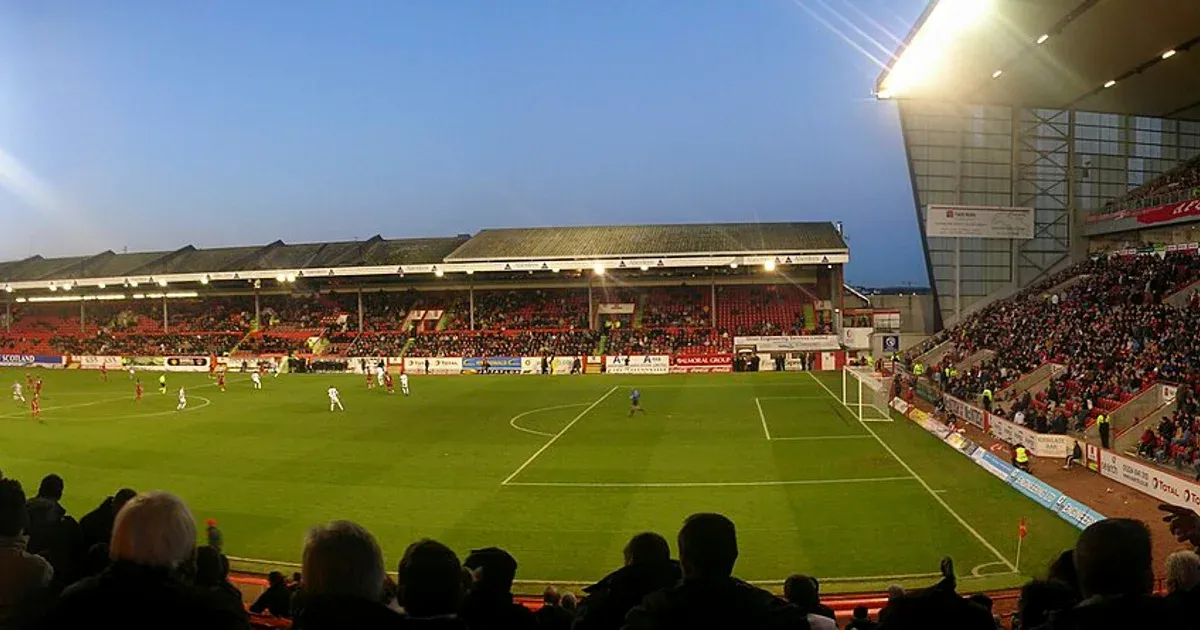
Aberdeen’s talks with Stephen Robinson are less about one appointment than whether Pittodrie can finally build a stable football structure.
Aberdeen Targets a Proven Domestic Manager
Pittodrie Stadium officials secured a breakthrough on Wednesday morning after receiving formal permission to open talks with St Mirren manager Stephen Robinson. This pursuit reveals the board's desperation to find a steady hand for a club that has drifted through the middle of the Scottish Premiership table for too long. Robinson, a tactician known for maximizing limited resources, now faces a career-defining choice between the stability he built in Paisley and the volatile expectations of the Granite City. The talks accelerated on March 11, 2026, with Aberdeen searching for a steadier rebuild plan. Such a move would follow weeks of internal debate at Aberdeen regarding the direction of their football operations.
Executive Chairman Dave Cormack identifies Robinson as a primary target because of his proven track record in the domestic top flight. Aberdeen's recent history is littered with expensive failures and short-lived appointments that have eroded the club's once-mighty stature. The board needs a leader who understands the unique demands of competing against the financial dominance of Celtic and Rangers. Robinson fits that profile through his previous success with Motherwell and his more recent transformation of St Mirren into a legitimate European contender. St Mirren fans feel a sense of betrayal.
Negotiations between the two clubs began in earnest late Tuesday evening. Sources close to the situation indicate that the compensation figure remains the final obstacle to a formal appointment. St Mirren recently extended Robinson's contract to protect their interests, a move that now forces Aberdeen to pay a premium for his services. While the Paisley club wants to retain the man who led them to consecutive top-six finishes, they recognize the reality of the Scottish football hierarchy. Aberdeen, despite their current struggles, possesses a sharply larger budget and a historical legacy that most managers find impossible to ignore.
Success followed Robinson throughout his various stints in British football. At Motherwell, he reached two cup finals and secured a third-place finish, demonstrating a keen eye for talent in the lower leagues of England.
The Robinson Blueprint
He repeated this pattern at St Mirren, where he implemented a rigid defensive structure coupled with explosive counter-attacks. Robinson's ability to extract maximum performance from veteran players and unpolished diamonds alike caught the eye of the Aberdeen scouting department months ago. His tactical flexibility allows him to switch between a back three and a standard four-man defense depending on the opponent, a trait Aberdeen lacked during their recent dismal run of form. Critics often point to the high turnover of staff at Pittodrie as the primary reason for the club's stagnation. Since the departure of Derek McInnes, the managerial door has rotated with alarming speed, burning through club legends and promising young coaches alike.
This potential appointment is a shift toward a more pragmatic, battle-hardened approach. Cormack and his advisors seem to have accepted that flair is secondary to results in a league where physical intensity often trumps technical finesse. The math doesn't add up for a club of this stature. Alan Burrows, the current Aberdeen Chief Executive, previously worked with Robinson at Motherwell. Their existing relationship is a major factor in this pursuit, as Burrows knows exactly how Robinson operates behind the scenes.
Trust is a rare commodity in the high-stakes environment of the Scottish Premiership, and the familiar bond between the executive and the manager could provide the foundation for long-term stability. At Pittodrie, even a pragmatic appointment would carry the heavy burden of a club still measuring itself against the 1983 Cup Winners' Cup ghosts. Supporters in Paisley are understandably anxious about the prospect of losing their talismanic leader. Under Robinson, St Mirren moved from a club fighting against relegation to one that expects to compete in the qualifying rounds of the Conference League. His departure would leave a massive void in the dugout and potentially lead to a talent drain, as several key players joined the club specifically to play under his guidance.
Yet, the pressure to deliver immediate results at a club that still measures itself against the ghosts of the 1983 Cup Winners' Cup team is immense.
The board at St Mirren must now prepare a shortlist of replacements while simultaneously trying to extract every possible penny from Aberdeen in the exit package.
Why Pittodrie Still Looks Unstable
Why do Scottish clubs continue to shuffle the same handful of managers like a deck of worn cards? The pursuit of Stephen Robinson by Aberdeen is the ultimate symptom of a league that has lost its imaginative edge. Rather than scouting the continent for fresh tactical minds or investing in a truly modern sporting director model, Aberdeen is once again raiding a smaller neighbor to fix a problem of their own making. Robinson is a fine manager for a club like St Mirren, where expectations are grounded in reality, but he is being set up for failure at Pittodrie. The Aberdeen board is addicted to the quick fix, believing that if they just find the right 'Scottish league specialist,' the glory days will return.
They won't. Until the club addresses its structural incompetence and the meddling nature of its leadership, even a manager as capable as Robinson will eventually be swallowed by the Pittodrie pressure cooker. Such a move is not a bold vision for the future. It is a desperate grab for mid-table security disguised as a strategic move. Fans deserve better than a recycled solution that avoids the hard work of genuine innovation.