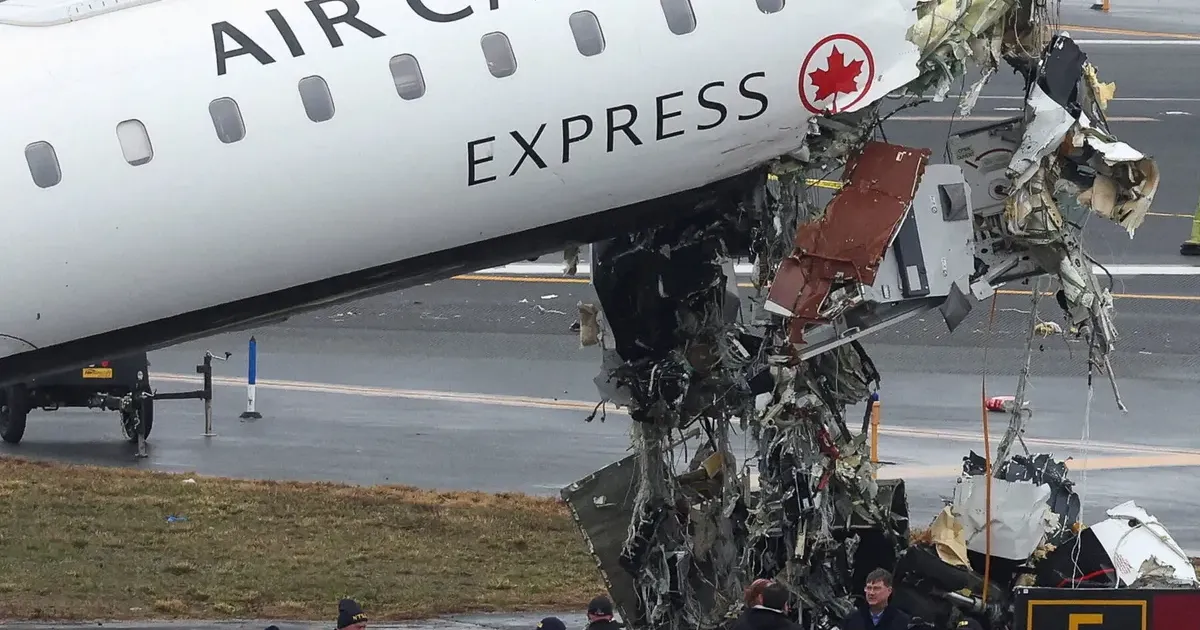
Investigators are examining how Air Canada Flight 721 responded to tower warnings before a runway excursion at LaGuardia Airport. The aircraft stopped in the engineered arresting system after a wet-runway landing from Toronto. The central question is not yet settled blame, but the timing of braking, reverser deployment and cockpit communication. A warning system is judged by whether crews receive usable information in time. On March 29, 2026, the incident renewed attention on short-runway safety in New York.
Investigators now scrutinize the critical four seconds between that warning and the moment the nose gear collapsed. Aviation safety experts suggest that the crew might have experienced a sensory illusion known as the black hole effect, which often distorts a pilot's perception of altitude and speed during nighttime or low-visibility landings. Air Canada maintains that its flight crew followed all standard operating procedures until the final moments of the rollout. Preliminary telemetry shows the jet entered the runway at 165 knots, much higher than the recommended landing speed for the prevailing conditions.
LaGuardia Runway Layout and Safety Overruns
Runway 13 at LaGuardia Airport provides little margin for error because of its 7,000-foot length and proximity to Flushing Bay. Engineers designed the airport decades ago for smaller, slower aircraft, leaving modern commercial jets with limited stopping distance during inclement weather. New York officials have long advocated for expanded safety zones, but geographical constraints prevent meaningful runway extensions. Resultantly, the facility relies on the Engineered Material Arresting System, a bed of crushable concrete blocks designed to stop aircraft that overshoot the tarmac.
Flight 721 eventually plowed into the EMAS bed at 42 knots, a speed that would have likely resulted in a fatal plunge into the water without the safety technology. The jet stopped only when its landing gear disintegrated in the safety bed. Air Canada officials confirmed that all 114 passengers and five crew members evacuated via emergency slides. While no fatalities occurred, the aircraft sustained structural damage that insurers estimate will exceed $45 million.
Maintenance logs for the Airbus A220 show no previous issues with the autobrake or spoiler systems. The NTSB recovered the flight data recorder and cockpit voice recorder within hours of the incident. These devices are currently undergoing analysis at the federal laboratory in Washington, D.C. Early evidence suggests the pilots did not deploy the thrust reversers until three seconds after the tower issued the abort command. Technical experts believe this delay contributed to the inability to stop within the remaining runway length.
Pilot Communication During Final Approach Phases
Cockpit dynamics between the captain and the first officer are now a primary focus of the federal investigation. Training manuals at Air Canada emphasize a sterile cockpit environment during the final approach, meaning all non-essential conversation must cease below 10,000 feet. Investigators are reviewing whether a distraction or a lack of coordination prevented the crew from reacting to the tower warnings. The NTSB has interviewed both pilots, who reportedly described a sudden increase in tailwinds that pushed the aircraft forward. Michael Graham, a board member of the NTSB, issued a statement regarding the ongoing data collection.
Radio transcripts reveal that the control tower noticed the unstable approach nearly fifteen seconds before the crash. Controllers reported that the aircraft appeared to float over the runway rather than touching down at the designated marker. This prolonged flare consumed nearly half of the available landing distance. Port Authority of New York and New Jersey records show that two other flights successfully landed on the same runway in the ten minutes preceding Flight 721. Weather data confirms that while the surface was wet, the friction levels remained within acceptable safety limits.
Air Canada Safety Protocols and Maintenance Records
Training programs at the Montreal-based carrier have come under intense scrutiny in the months leading up to this event. Air Canada recently updated its landing procedures to emphasize go-around maneuvers if an approach becomes unstable. Aviation analysts note that the industry faces a growing trend of landing excursions caused by a reluctance to abort landings late in the process. Some pilots feel pressure to complete landings to maintain schedules or conserve fuel, though the airline strictly denies that such pressures exist. The NTSB will compare the training records of the Flight 721 crew with industry-wide standards over the next several months.
Mechanical inspections of the jet revealed that the tires and brake pads were in good condition at the time of the flight. No alerts regarding hydraulic failure appeared on the primary flight display during the approach. Air Canada flight operations personnel have grounded the involved pilots pending the final results of the investigation. Ground crews at LaGuardia Airport spent twelve hours removing the wreckage from the EMAS bed to reopen the runway for commercial traffic. The total recovery operation required three heavy-duty cranes and specialized towing equipment.
Federal Aviation Administration Runway Safety Review
The FAA launched a thorough safety review of all short-field operations in the Northeast corridor following the crash. Federal regulators are specifically looking at the frequency of unstable approaches at airports with restricted runway lengths, including LaGuardia and Reagan National. New mandates may include lower speed limits for regional jets during wet-runway operations. Air Canada has pledged full cooperation with the FAA and the NTSB during these reviews. Safety bulletins issued this week remind all commercial pilots of the mandatory compliance with air traffic control abort commands.
Public records show that LaGuardia Airport has reported three similar runway excursions in the last decade, though none were as severe as Flight 721. Port Authority engineers are currently assessing the durability of the EMAS blocks and whether the installation of newer, high-density materials could provide even better stopping power. The cost of replacing the damaged safety bed is expected to reach $4 million. Flight operations at the terminal returned to a normal schedule forty-eight hours after the accident.