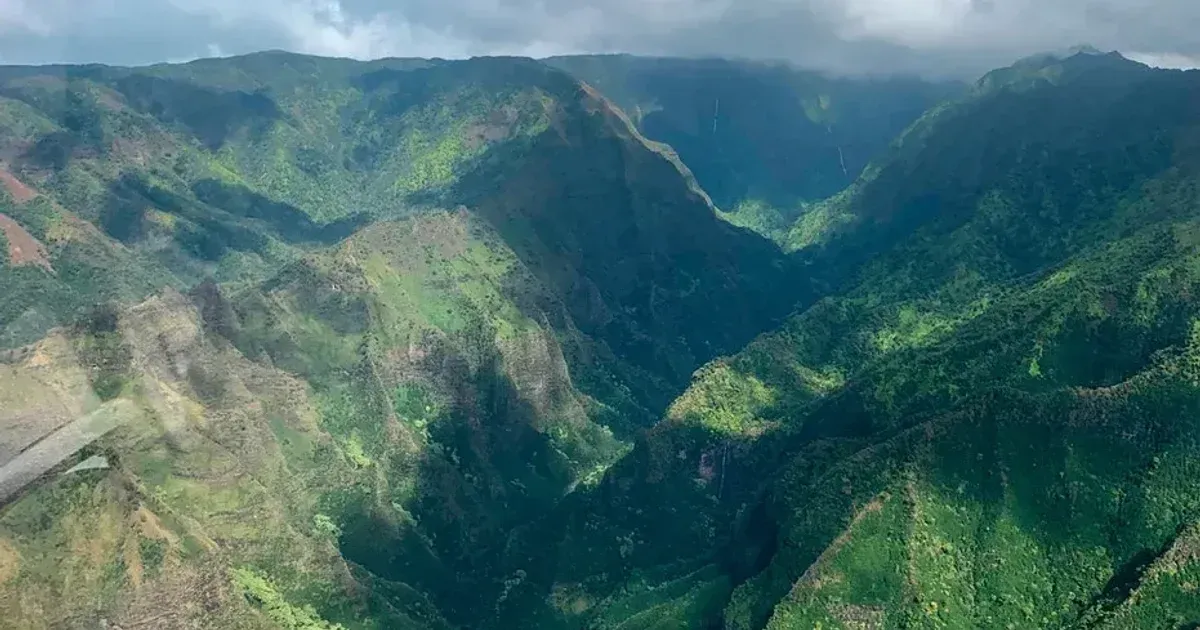
A tour helicopter crashed near Kalalau Beach on Kauai, killing three people and injuring two others, according to local officials. Emergency responders were called to the remote Na Pali Coast area after reports that the aircraft had gone down near the water. The location made rescue and recovery difficult because the shoreline is rugged, isolated, and largely inaccessible by road.
The March 27, 2026 crash involved a flight carrying five people, including the pilot and passengers, the Kaua'i Police Department said. Two survivors were removed from the scene and taken for medical care, while authorities worked to recover the deceased and secure the wreckage. Officials had not released the names of those killed pending notification of relatives. Federal aviation investigators are expected to review the aircraft, maintenance history, weather conditions, pilot communications, and the final moments of the flight. At this stage, authorities have not announced a cause. That caution matters because helicopter crashes near coastlines can involve several overlapping factors, including wind, visibility, mechanical issues, and emergency maneuvering.
Remote Site Complicates Rescue
Kalalau Beach sits along one of Hawaii's most dramatic and difficult coastlines. The cliffs, surf, and narrow landing areas create major obstacles for emergency crews. Responders used marine and air assets to reach the crash area, while police worked to keep the site clear for recovery teams and investigators. The first hours after a crash are often focused on survival and scene control. Rescuers must locate victims, stabilize survivors, prevent fuel or debris from spreading, and preserve evidence that may later help explain what happened. In a remote coastal environment, each of those tasks becomes harder. Local agencies also had to coordinate with federal officials.
The National Transportation Safety Board and Federal Aviation Administration normally take the lead on the technical aviation inquiry, while police, fire, medical, and land management teams support recovery and public safety work. That coordination is especially important because weather, tides, and terrain can change evidence conditions quickly. Crews must balance urgent recovery work with the need to preserve components that may later reveal whether the aircraft lost power, struck an obstacle, or entered an unrecoverable flight condition. Officials will also try to separate confirmed facts from early witness impressions. A sudden descent can look similar from the ground whether it was caused by weather, mechanical trouble, or a pilot attempting an emergency landing. That is why investigators normally avoid assigning blame in the first days after a crash. The final report will likely depend on physical evidence more than early descriptions.
Investigators Review Flight Conditions
Investigators will likely examine the helicopter's maintenance records, pilot qualifications, route, communications, and any available tracking data. If the aircraft did not carry a flight data recorder, the inquiry may rely more heavily on wreckage analysis, witness accounts, radar or GPS records, and maintenance documentation. Weather will also be important. Kauai's terrain can create rapidly changing wind patterns, turbulence, and localized visibility shifts.
Those conditions do not prove a weather cause, but they are part of the operating environment for air tours along the Na Pali Coast. The aircraft operator's procedures may also receive scrutiny. Investigators often review company training, risk assessments, dispatch decisions, and prior maintenance findings after a fatal tour flight. That process can take months, especially when wreckage recovery is difficult.
The crash renews attention on the balance between tourism access and aviation risk in Hawaii. Helicopter tours give visitors a view of areas that are otherwise difficult or impossible to reach, but they also operate in terrain where emergency options can be limited. That reality has shaped years of debate over altitude rules, route limits, and equipment requirements.
Safety advocates have long argued for stronger protections, including better data recording and more conservative flight planning in challenging terrain. Operators often respond that the industry logs many safe flights and supports local jobs. After a fatal crash, that debate usually returns with new urgency. For now, the priority is the investigation and support for the families affected.
Any regulatory or operational changes should be based on confirmed findings, not speculation. The known facts are already serious enough: three people died, two survived, and investigators must now explain how a sightseeing flight ended in disaster. Because the cause remains under investigation, officials are avoiding dramatic conclusions before evidence is reviewed.
The cause is not known, so officials are separating confirmed facts from the safety questions still under review. That approach protects accuracy while giving families and the public the context they need without turning uncertainty into blame. Until investigators release findings, multiple factors remain possible and the evidence must lead the conclusion.