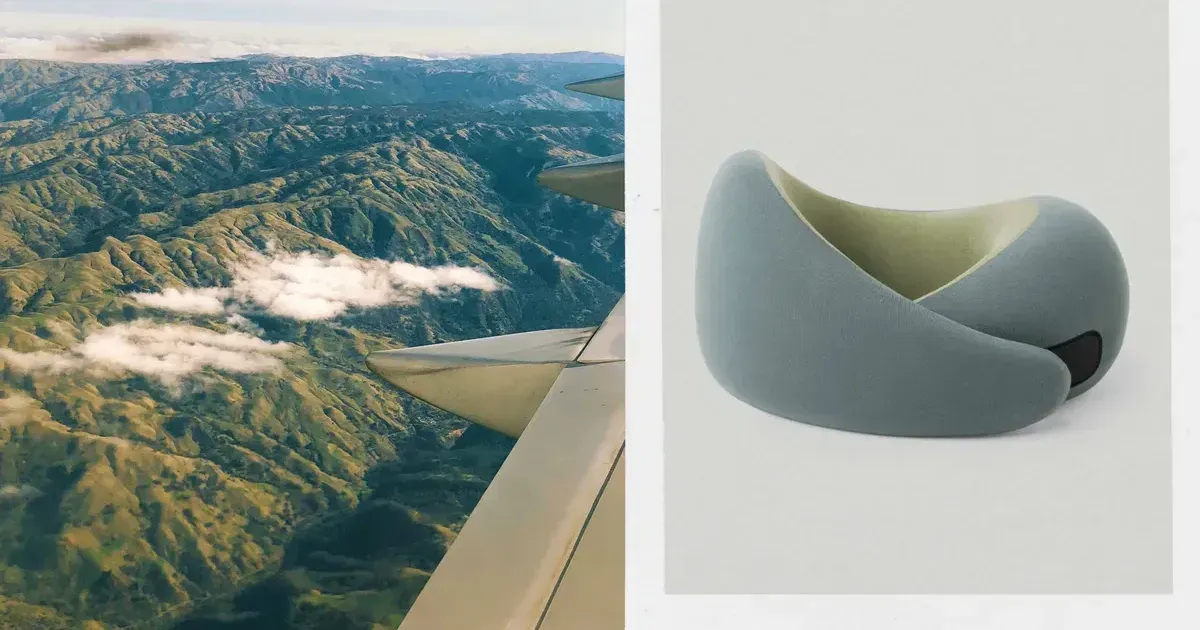
Seat Design Creates a Pillow Market
Passengers boarding long-haul flights in March 2026 face a persistent architectural challenge within the aircraft cabin. Modern economy seating continues to prioritize density over spinal alignment, leaving travelers to seek third-party solutions for neck support. The public timeline reached this point on March 13, 2026.
Market data from the first quarter of the year indicates a 15% rise in travel accessory sales, driven largely by the failure of standard seat headrests to accommodate a sleeping human form. Many travelers now view the purchase of a high-end neck brace as a functional necessity rather than a luxury item. Evolutionary leaps in travel pillow technology have moved beyond the simple polyester-filled ring.
Engineers now utilize reinforced internal scaffolds and high-density viscoelastic foams to prevent the forward head drop that characterizes restless in-flight sleep. Manufacturers like Trtl have pioneered a scarf-like design that uses hidden internal ribs to bear the pressure of the head, a departure from the traditional cushioning model.
This configuration utilizes the shoulder as a structural base, effectively shifting the load away from the cervical spine. Trtl Pillow Plus features an adjustable height mechanism, allowing users to fine-tune the tension against their jawline. Such customization addresses the variance in neck lengths among international travelers, a factor often ignored by one-size-fits-all designs.
Breathable mesh fabrics wrap the structure to mitigate the heat buildup that often accompanies prolonged skin contact with synthetic materials. Lab tests show that temperature regulation is a primary factor in maintaining deep sleep cycles during trans-oceanic travel.
Support Depends on Structure
Cabeau Evolution S3 employs a different strategy by integrating a strap system that attaches directly to the airplane seat headrest. Memory foam remains the primary material for premium support due to its ability to conform to individual anatomy. Brands like OstrichPillow utilize a proprietary foam blend in their Go model, which compresses to 60% of its original volume for storage.
High-grade foam density measurements in 2026 favor a 50kg/m3 rating, balancing soft tactile response with structural integrity over an eight-hour flight. This material reacts to body heat, softening where the neck is warmest and remaining firm where support is most critical.
Huzi Infinity Pillow takes a modular approach, using a continuous loop of microfiber that users can wrap, twist, or fold into multiple configurations. Versatility serves travelers who switch between window seats and aisle seats, where the availability of a side wall for leaning varies. Softness in this model comes from bamboo fabric, which maintains a lower surface temperature than standard nylon.
Frequent flyers often cite the ability to cover their eyes or ears with the loop as an added benefit for sensory deprivation. Inflatable options like the Sea to Summit Aeros Premium provide the highest weight-to-support ratio for backpackers and light travelers. Modern valves allow for precise inflation levels, letting the user find a middle ground between a rock-hard surface and a soft cushion. Synthetic fill between the internal bladder and the outer cover mimics the feel of a traditional pillow while maintaining a packable footprint. The design weighs less than three ounces, making it a staple for those prioritizing a minimal packing list. Weight matters more than aesthetics when every ounce counts toward a baggage fee.
The practical choice depends on sleeping position more than brand hype. Window-seat travelers usually need side support, middle-seat passengers need chin support, and backpackers often trade comfort for packability. A good pillow should also be easy to clean, because fabric that spends hours against airplane seats and skin quickly becomes part of the hygiene equation. Return policies matter as well, since a pillow that feels supportive during a two-minute store test can become rigid or hot during a red-eye flight. Travelers should also consider how much space the product steals from a personal item, because a bulky pillow that never leaves the closet has no practical value. The best purchase is the one that matches a repeat route, not the one that looks most technical in a product photo. For frequent flyers, the deciding factor is consistency across seats, because a design that only works in one cabin position will fail on half of the trips it was bought to improve, especially on long-haul routes.