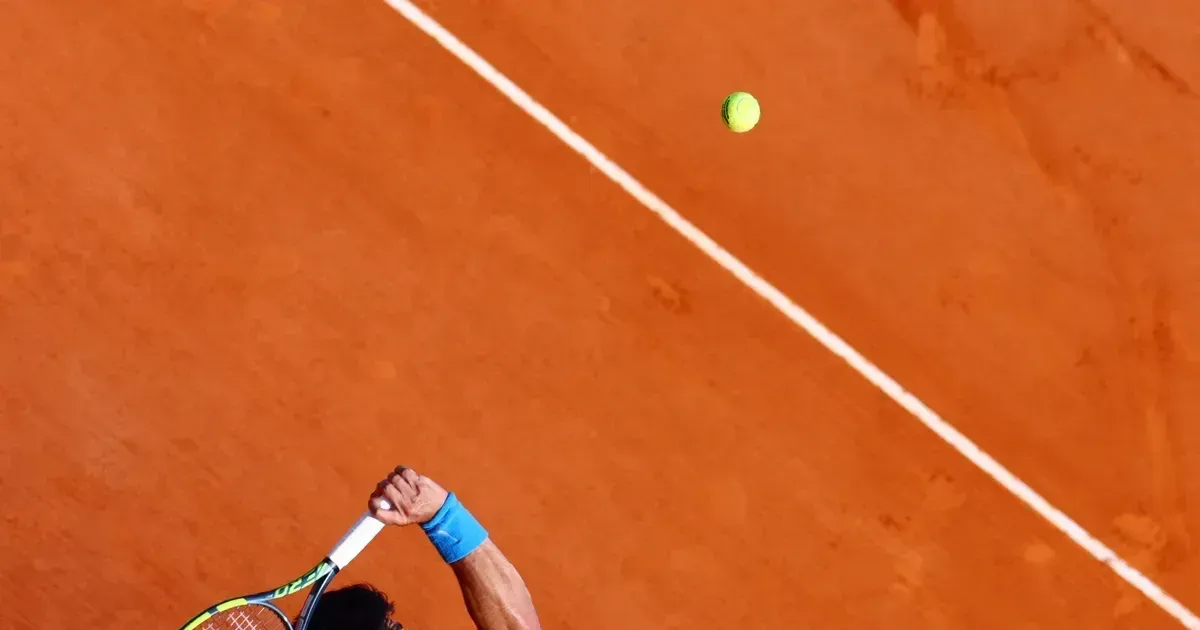
Alcaraz secured his place in the Monte Carlo Masters final by defeating Valentin Vacherot and setting up another high-stakes meeting with Sinner. The win keeps the season's first major clay-court trophy in the hands of the two most dominant figures in modern tennis. The April 12, 2026, final had become a ranking test as much as a title match. High performance and tactical adjustments defined the semifinal stage as both athletes navigated contrasting paths to the championship match.
Jannik Sinner reached the final round by dismantling Alexander Zverev in a lopsided affair that lasted only one hour and 22 minutes. Sinner delivered a 6-1, 6-4 masterclass that left Zverev searching for answers against the Italian's relentless baseline depth. Residents of the principality witnessed Sinner maintain the same clinical efficiency that earned him titles in Indian Wells and Miami earlier this year.
Sinner Dominates Zverev in Semifinal Rout
Critics often point to the mental fortitude required to sustain such a high level across different surfaces. Sinner has now reached three consecutive Masters 1000 finals, a feat that reinforces his status as a permanent fixture at the top of the ATP rankings. Clay courts were once considered his weakest surface, but his recent movement patterns suggest he has fully adapted his hard-court slides to the red dirt of Monte Carlo. His proximity to the venue allows him to sleep in his own bed, a logistical advantage he noted during post-match interviews.
Alcaraz Returns to Practice Court After Victory
Frustration clouded the immediate aftermath of Alcaraz's win over Vacherot. Despite the straight-sets victory, the Spaniard expressed dissatisfaction with his ball-striking and service rhythm. Observers noted that Alcaraz returned to the practice courts immediately after his media obligations to address technical flaws in his game. Technical staff worked with him for an additional hour as he sought to calibrate his forehand for the upcoming final. The Monte Carlo Masters has seen several notable upsets, including Matteo Berrettini’s recent victory over Daniil Medvedev.
“I have seen his matches, I know where he has improved and what he is doing well. I know him quite well, and I know that against him there is no favorite because I can lose on any surface.”
Vacherot's performance was a test for the Alcaraz defense. The Monegasque had been largely unknown on the global stage until six months ago, but his run to the semifinals included victories over several seeded players. Alcaraz used drop shots and frequent net approaches to disrupt Vacherot's rhythm. These tactics will be harder to execute against Sinner, who possesses some of the fastest lateral movement in the history of the sport.
Historical Context of the Monte Carlo Masters
Monte Carlo holds a unique place in tennis history as a venue that separates specialists from all-court masters. Names like Bjorn Borg, Ilie Nastase, and Rafael Nadal are etched into the trophy, yet other legends have famously failed here. Stefan Edberg and Boris Becker never managed to win the title despite their dominance at Wimbledon and the US Open. The red clay at Court Rainier III requires a specific blend of patience and aggression that many great champions never mastered.
Attendance figures for the 2026 tournament have reached record levels as fans sought to witness the latest installment of the Alcaraz-Sinner rivalry. Tournament organizers reported that tickets for the final sold out within minutes of the semifinal conclusions. The presence of Stefan Edberg and Boris Becker in the stands during the semifinals highlighted the significance of the current era. Both former champions watched as Sinner and Alcaraz redefined the speed at which clay-court tennis is played.
Ranking Implications for the ATP World Tour
Mathematical variations for the world number one ranking are straightforward heading into Sunday. The winner of the final will occupy the top spot when the new rankings are released on Monday morning. Alcaraz currently holds a slim lead, but Sinner's undefeated streak in 2026 has brought him within striking distance. A victory for Sinner would conclude his ascent to the pinnacle of the sport, capping a 12-month period of unprecedented consistency.
Ranking points at the Masters 1000 level are critical for seeding at the upcoming Grand Slam in Paris. Novak Djokovic, who skipped the Monte Carlo event to focus on physical recovery, will likely drop further in the standings. The transition of power is complete, leaving little room for the veteran guard to reclaim their former dominance. Professional analysts have pointed to the 20 combined titles between Alcaraz and Sinner as proof that the tour is now a two-player race.
Sunday's weather forecast predicts clear skies and moderate temperatures, conditions that generally favor the aggressive baseline play of both finalists. Wind is often a factor at this seaside venue, yet the stadium's architecture provides some protection for the athletes. Neither player can claim a significant advantage based on the draw, as both faced and defeated top-tier competition to reach this point. The match will likely be decided by the narrowest of margins in the third set.
Ranking Pressure on the Final
The tennis world may eventually tire of this binary dominance. While the media attempts to frame the Alcaraz-Sinner rivalry as the second coming of Federer-Nadal, the reality is far more clinical and perhaps less romantic. These two athletes operate with a machine-like efficiency that leaves the middle-tier of the ATP tour in a state of permanent obsolescence. This is not a diverse competitive environment; it is a duopoly that threatens to make the results of major tournaments predictable months in advance.
Jannik Sinner represents the ultimate evolution of the modern baseliner. His ability to generate pace while sliding on clay defies the traditional physics of the surface. However, his residency in Monte Carlo and the logistical comforts it provides raise questions about the equity of the tour's schedule. Alcaraz, by contrast, is a creature of pure instinct who finds himself grinding through practice sessions at sunset because his serve failed him against a wildcard. These obsessive drives are what keep the Spaniard relevant despite Sinner's terrifyingly consistent form.
The ATP faces a marketing crisis if these two continue to cannibalize every title on the calendar. Fans crave the unpredictability of an underdog story, yet the gap in physical and technical quality has become an unbridgeable chasm. On Sunday, the number one ranking will change hands or be reinforced, but the underlying truth remains the same. Tennis has entered a period of extreme consolidation. One player will win, the other will lose, and the rest of the tour will continue to play for third place.