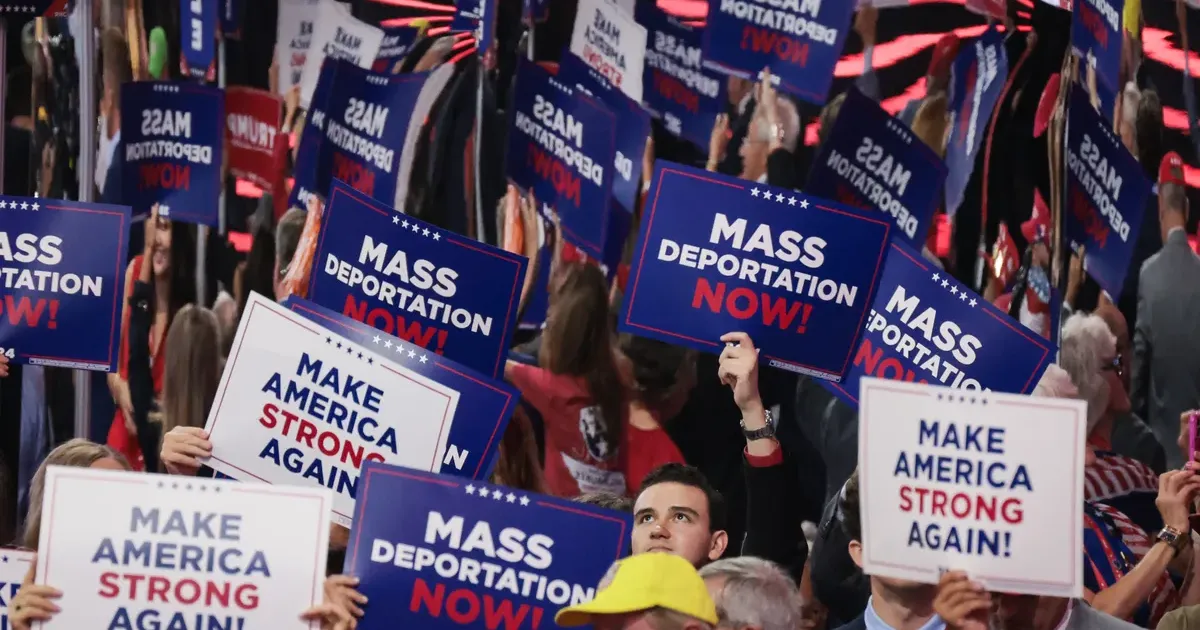
Trump allies are pressing the administration to widen deportations beyond violent offenders, turning an enforcement priority into a test of political credibility. The argument is no longer only about campaign language. It now touches agency capacity and legal sequencing. Those limits are harder to solve than slogans. The pressure campaign widened on March 12, 2026, as immigration hawks argued that a narrow focus on violent criminals falls short of the promises made to voters during the campaign. The dispute exposes a practical and ideological divide. One side wants targeted enforcement that is easier to defend publicly; the other wants a broader removal strategy that treats unauthorized status itself as the trigger.
Why the Fight Is Emerging
Targeting violent offenders gives the administration a clear public-safety message. It is easier to justify, easier to prioritize and less likely to produce sympathetic cases that dominate local news. Immigration hawks see that approach as too limited. They argue that a campaign built around mass enforcement cannot stop at the most politically defensible cases. The broader deportation push therefore tests whether Trump's immigration coalition is satisfied with symbolic intensity or expects a measurable expansion in removals.
Capacity Limits
Even if the White House wants a wider net, enforcement capacity is finite. Detention beds, immigration judges, transport logistics, field personnel and local cooperation all shape what can actually happen. A rapid expansion could also create legal bottlenecks. More arrests mean more hearings, more challenges and more pressure on a system that already moves slowly. Those limits do not eliminate policy choices, but they force prioritization. The administration has to decide whether it wants maximum numbers, maximum legal durability or maximum political visibility.
Political Risk
A broader deportation campaign would energize immigration hardliners, but it could also produce backlash if cases involve long-settled families, workers without violent records or people with pending legal claims. That is why some administrations prefer targeted enforcement even when their rhetoric is broader. The politics of removal can change quickly once abstract categories become identifiable people.
Capacity Becomes the Real Policy
The next test will be whether outside allies can force a policy shift or whether the administration keeps prioritizing cases it can defend as public safety. The fight is unlikely to disappear because it touches the central promise of Trump's immigration politics. Enforcement hawks want scale, while governing institutions impose friction. The debate also has an administrative reality that slogans often ignore. Immigration enforcement is a chain of decisions involving identification, arrest, detention, legal review, travel documents and removal logistics. Expanding the target population expands every link in that chain. That is why capacity becomes policy. A government can announce a broader priority, but if courts are backed up or detention space is limited, field offices still have to choose which cases move first. Local cooperation will matter as well. Some jurisdictions may assist federal enforcement, while others may resist or limit information sharing. A broader campaign could therefore produce uneven outcomes across the country. The politics of those uneven outcomes can become volatile. Supporters may accuse the administration of weakness if numbers fall short, while opponents may focus on cases that appear disproportionate or cruel. The administration's task is to decide whether it wants to maximize removals, maximize legal defensibility or maximize political signaling. Those goals overlap, but they are not identical. Employers will also watch the debate closely. Industries that rely on immigrant labor may not object publicly to enforcement against violent offenders, but a broader campaign could create workforce uncertainty in agriculture, construction, hospitality and care work. That economic layer complicates the politics. Voters may support tougher enforcement in general while reacting differently when removals affect local businesses, churches, schools or families that have been part of a community for years.
The policy question is therefore not simply whether the law should be enforced. It is how a government prioritizes enforcement when resources are limited and when every expansion creates legal, economic and human consequences. The argument will also test how much influence outside advisers and former officials have over operational decisions. Campaign allies can demand a wider net, but agencies have to manage arrests, paperwork, detention and removal flights in the real world. A wider campaign could also shift attention from border control to interior enforcement. That is a different political terrain, because it brings federal action into workplaces, neighborhoods and local institutions where the consequences are more visible. Trump's allies may see that visibility as proof of seriousness. The administration may see it as a risk that has to be sequenced carefully to avoid court losses and public backlash.
The dispute is therefore not between enforcement and non-enforcement. It is between different theories of how much enforcement the system can absorb at once. That is why the internal pressure matters. It may not immediately change policy, but it can push the administration toward a more aggressive posture than agencies believe they can sustain cleanly. That tension will define the deportation debate long after the first round of removals is counted.