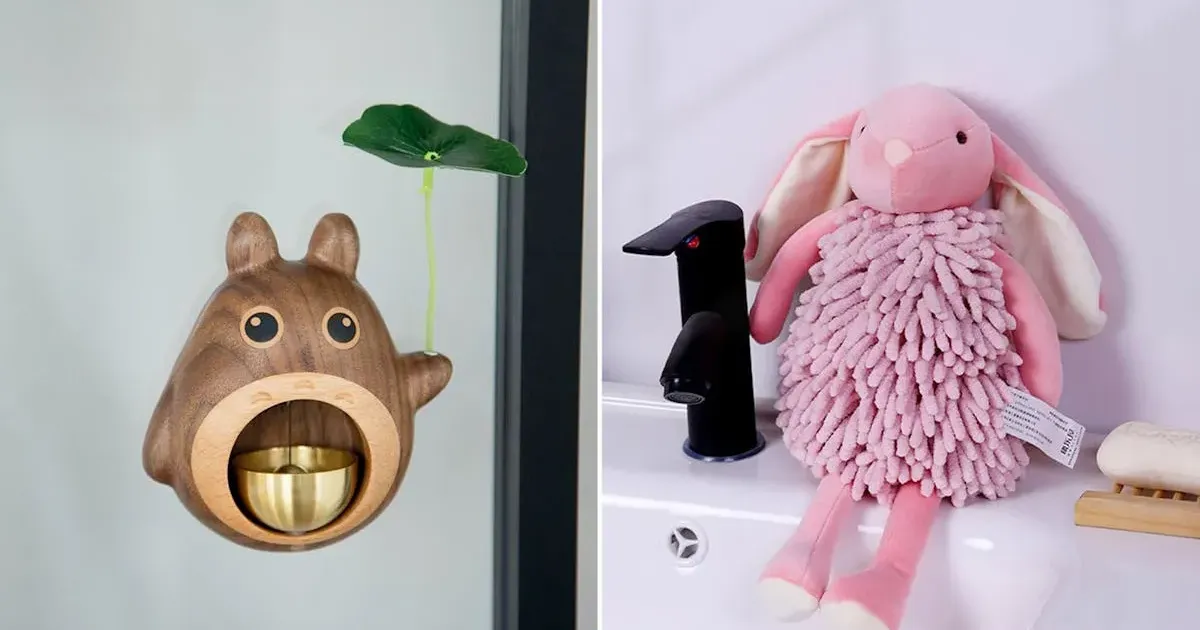
Amazon’s latest home-decor trend is less about perfect taste than emotional relief. The trend shows how small decor purchases can become a low-cost form of self-expression. Shoppers are gravitating toward playful, low-cost objects that make rooms feel more personal: mushroom lights, fruit-shaped vases, magnetic key holders and other small oddities that reject the blank minimalism of earlier decor cycles. The trend is often called whimsymaxxing, and its appeal is easy to understand. People want homes that feel alive.
The movement overlaps with “dopamine decor,” a label used for color, humor and texture designed to create a small mood lift. That does not mean every purchase is profound. A goose-shaped key holder is still a key holder. But the popularity of these objects shows that consumers increasingly expect household items to provide personality as well as utility. Price is central to the trend. Many of the viral items sit under or near the $15 mark, which makes them feel like low-risk experiments rather than serious redesign decisions. A renter can add a door chime, window film or bright vase without repainting a wall or buying new furniture. Small purchases become a way to change the feeling of a room quickly.
The trend also fits the way people now discover domestic products. A practical object must survive a search result, a short video and a customer photo before it reaches the cart. Whimsical items perform well in that environment because they communicate their purpose and personality almost instantly.
Whimsymaxxing Moves Decor Away From Beige Minimalism
The rise of playful decor is partly a reaction against the neutral, highly curated home aesthetic that dominated social platforms for years. Beige rooms photographed well, but they could also feel impersonal. Whimsymaxxing offers the opposite promise: a home that reveals taste through surprise, color and small jokes.
Retailers have adapted quickly. Products now succeed not only because they are useful but because they are demonstrable. A magnetic holder, a novelty lamp or a stained-glass-style window film can be shown in a few seconds on social media. The object needs to be immediately legible, visually distinct and cheap enough for impulse purchase. That creates an advantage for quirky items that would once have been niche. A strawberry vase or bird-shaped lamp can stand out in a search feed crowded with ordinary goods. Consumers are not necessarily abandoning function. They are asking function to arrive with a little theater.
Low-Cost Utility Drives the Amazon Trend
The strongest products in this category solve a small problem while adding personality. A key holder reduces clutter. A door chime makes an entryway feel intentional. Peel-and-stick decor helps renters personalize a room without risking a deposit. These items work because the practical justification lowers the barrier to buying something silly.
That balance separates the better version of the trend from novelty clutter. Consumers are not only buying jokes. They are buying small interventions in routines: where keys land, how a window catches light, what a shelf says about the person who lives there.
The under-$15 threshold also changes how consumers judge value. A major furniture purchase requires planning, comparison and hesitation. A small decor object can be bought as a mood correction. That makes the category well suited to online retail, where discovery and impulse are closely linked. There is a psychological component as well. Homes became workspaces, recovery spaces and entertainment spaces for many people, and sterile design can feel emotionally thin. Whimsymaxxing lets shoppers build moments of pleasure into daily routines. Seeing a playful object by the door or on a shelf can be a tiny but repeated interruption of monotony.
Playful Home Goods Need Restraint Too
The risk is that whimsy becomes clutter. A room filled entirely with novelty objects can lose the charm that made the first purchase appealing. The better version of the trend uses a few distinct pieces against calmer surroundings. That gives the object space to work without turning the home into a product feed.
For renters and younger shoppers, the trend is likely to remain attractive because it is reversible. Magnetic tape, removable film and small tabletop pieces allow experimentation without renovation. That flexibility matters in a housing market where many people cannot change floors, fixtures or wall colors. The broader retail lesson is that consumers are tired of being told that adulthood requires visual seriousness. The success of playful Amazon home goods suggests that people still want order, but not at the cost of joy. Whimsymaxxing may sound like a social-media label, yet the behavior behind it is straightforward: a home should solve problems and occasionally make its owner smile. That is why the trend is likely to outlast a single product cycle. Specific items will fade, but the demand for affordable, reversible personality in the home is not going away. Retailers will keep chasing that demand because it produces frequent small purchases rather than rare renovation-scale decisions. For shoppers, the best use of the trend is selective: one or two pieces that make daily routines warmer, not a cart full of objects bought only because they looked amusing for five seconds online. The most durable purchases will be the ones that still feel useful after the novelty fades, because a playful home still has to function as a home. That is the line between expressive decor and disposable clutter, and it is where the trend becomes livable rather than merely photogenic.