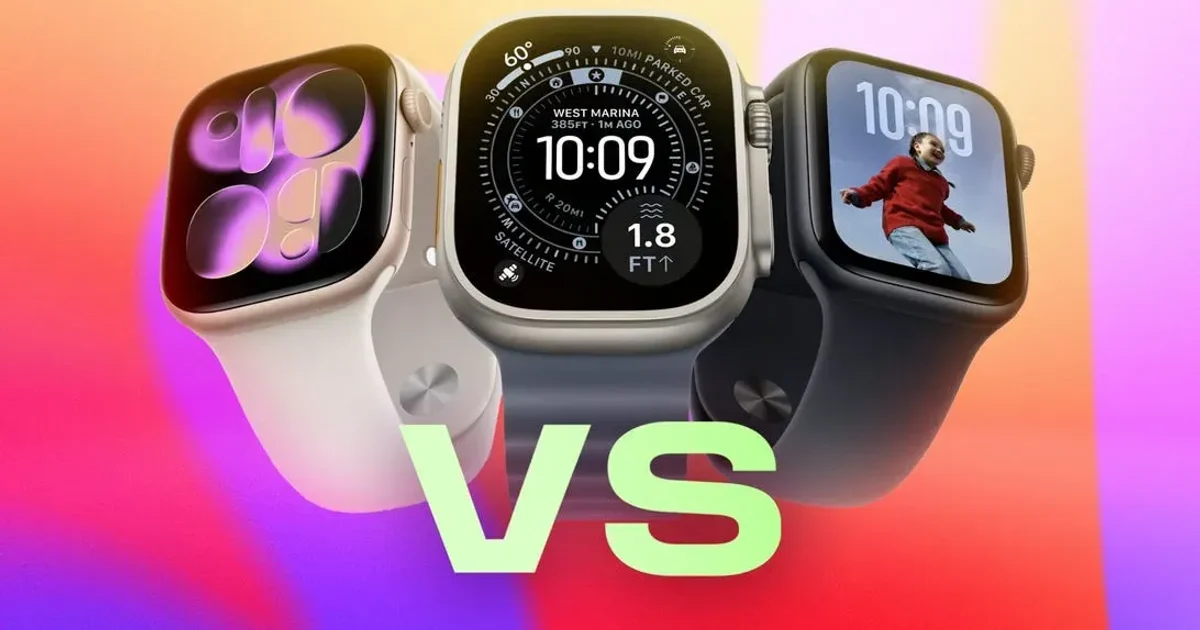
Apple released the technical specifications for its Series 11 wearable on April 4, 2026, solidifying a tiered strategy for the consumer electronics market. This hardware refresh arrives alongside the rugged Ultra 3 and the budget-focused SE 3, creating a tripartite selection for global users. Engineers in Cupertino focused on chassis thinning and sensor integration for the standard model, while the flagship rugged version received battery optimizations. Prospective buyers now face a market where internal components have reached a plateau, forcing a choice based on physical durability and display brightness. Price points for these devices have remained consistent with previous generations despite rising component costs in the silicon supply chain.
Apple Watch Series 11 Hardware and Sensor Upgrades
Designers for the Series 11 prioritized a reduction in casing thickness to improve long-term wearability. A new LTPO3 display technology provides a wider viewing angle than the previous generation, ensuring that health metrics are legible from the side. Beneath the glass, the S11 system-in-package chip handles on-device processing for health alerts. Health monitoring capabilities expanded to include more detailed sleep tracking and potential blood pressure trends. Early testing indicates that the sensor array captures data points with 12% higher frequency during athletic activity. Stainless steel remains the premium casing option for this specific model.
Technical reviews note that the charging speed for the standard model has increased by 15% due to a redesigned inductive coil. Users can now reach 80% battery capacity in roughly 28 minutes, a figure that appeals to those using the device for overnight monitoring. Weight reductions are marginal but noticeable during extended use. Aluminum variants use 100% recycled material to comply with corporate environmental mandates. The screen glass uses a strengthened ion-x formulation for the base models.
Hardware parity between the flagship and the ruggedized model suggests a narrowing gap in internal engineering.
Software integration for the Series 11 leverages improved neural engines for voice recognition. Dictation accuracy has reached a point where punctuation and context are handled locally without cloud intervention. Translation features operate in real time for fifteen languages. Sensors now detect subtle changes in heart rate variability that might indicate physical fatigue or the onset of common illnesses. Each data point is encrypted within the Secure Enclave of the S11 chip. Security protocols prevent third-party access to biometric information unless specifically authorized by the user.
Ultra 3 Battery Life and Rugged Specifications
Extreme athletes and outdoor professionals look toward the Ultra 3 as the main tool for navigation and safety. It remains the largest wearable in the lineup, featuring a 49-millimeter titanium case that houses a high-capacity battery. Power efficiency improvements in the display driver allow the device to last 36 hours under standard usage and up to 72 hours in low-power modes. Dual-frequency GPS provides accuracy in dense urban environments or deep forest cover. Titanium remains the sole material choice for this chassis due to its high strength-to-weight ratio. The action button is still customizable for specific app shortcuts or system functions.
Visibility in direct sunlight reached a peak of 3200 nits on the Ultra 3, making it the brightest screen in the company's history. This peak brightness is twice that of many competitive smartwatches released this year. Divers gain an enhanced depth gauge that operates up to 40 meters. Emergency sirens can be heard from a distance of 180 meters in ideal atmospheric conditions. Microphones use beamforming technology to isolate the user's voice from wind noise or mechanical interference. These hardware choices target a niche yet highly profitable demographic.
SE 3 Entry Level Features and Cost Management
Developing the SE 3 involved significant trade-offs to maintain a low entry price for new users. It lacks the always-on display and the advanced health sensors found in the Series 11 or Ultra 3. A plastic-infused nylon back replaces the ceramic found on more expensive models to reduce weight and production costs. Internal processing uses the S9 chip architecture from two years ago, which still provides sufficient speed for basic notifications and fitness tracking. This model is the main gateway for children and the elderly through the Family Setup feature. High-margin accessories like premium bands are often purchased alongside this entry-level unit.
Educational institutions have started deploying the SE 3 for student wellness programs. The lack of an always-on display helps conserve energy, extending the replacement cycle for large organizations. Water resistance remains at 50 meters, which is adequate for recreational swimming. Heart rate sensors are accurate but do not provide the electrocardiogram capabilities of the flagship models. Compass and fall detection are standard across all models in the 2026 lineup. The SE 3 is a calculated attempt to defend the bottom end of the market against budget competitors.
Wearable Lineup Turns Upgrades Into Choices
Apple's lineup now asks buyers to choose by use case rather than novelty. The Series 11, Ultra 3 and SE 3 each make sense for a different budget, wrist and tolerance for incremental upgrades.