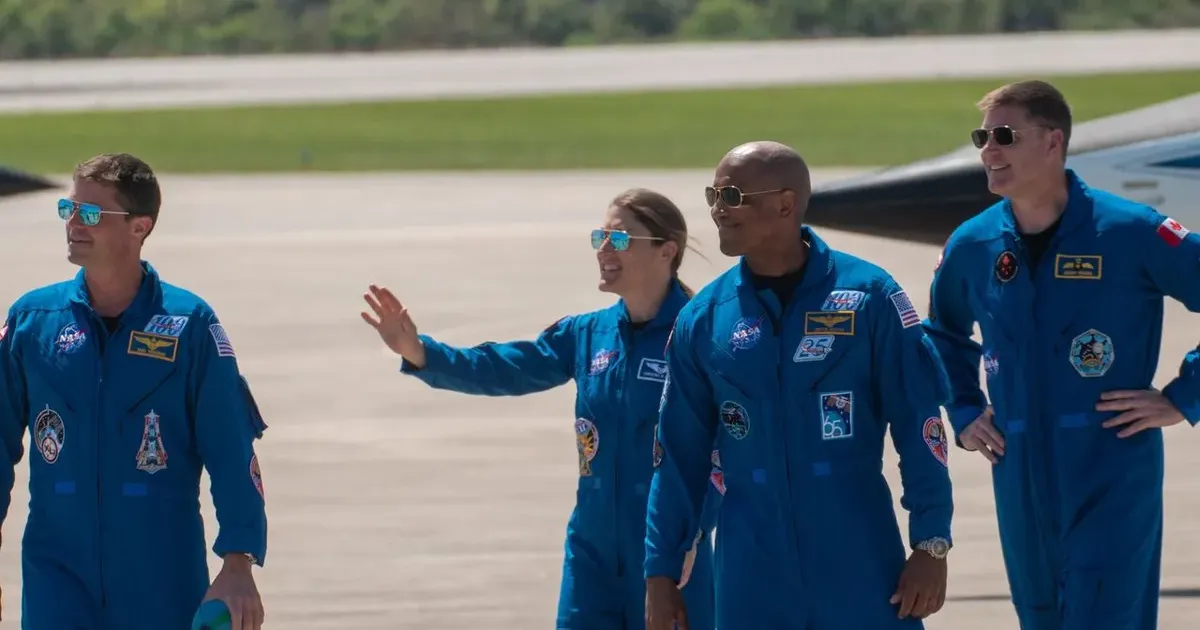
Artemis II began as a launch-clearance story and became something much larger: NASA's first crewed deep-space test of the Artemis era. The April 1, 2026 launch sent Reid Wiseman, Victor Glover, Christina Koch and Canadian astronaut Jeremy Hansen around the Moon aboard Orion, then brought them home after a mission lasting just over nine days.
The symbolism was obvious. It was the first crewed Moon-bound flight since Apollo 17, and the crew traveled farther from Earth than any humans before them, reaching a reported 252,756 miles during the flyby. But the mission's real value was not nostalgia. Artemis II forced the Space Launch System, Orion, life support, navigation, communications, crew procedures and recovery operations to work with people inside the spacecraft.
The Launch Was Only the First Gate
Prelaunch attention naturally focused on weather, vehicle readiness, health quarantine, space weather and the Flight Readiness Review. Once SLS left Kennedy Space Center, the mission became a full-stack test. Artemis I had already shown that the hardware could fly without crew. Artemis II had to prove that astronauts could live, work, troubleshoot and return safely inside the system.
The difference is operational, not cosmetic. A spacecraft can pass an automated mission and still reveal awkward problems when people are using the toilet, water system, exercise equipment, displays, voice loops and survival gear. Human spaceflight exposes design details that simulations cannot fully capture.
Orion Had to Become a Work Place
The crew's early Earth-orbit phase mattered because it gave NASA time to test Orion before committing to the lunar trajectory. The astronauts checked life-support hardware, cabin routines and manual control. They also performed proximity-operations practice using the upper stage as a target, an exercise relevant to later docking and rendezvous work.
The early tests were not glamorous, but they are exactly what a bridge mission is supposed to do. Artemis II was not designed to land. It was designed to reduce uncertainty before more complex missions introduce landers, suits, docking interfaces and surface timelines.
The Flyby Proved Distance, Not Durability
The lunar flyby gave NASA the historic image: humans again in the Moon's vicinity, photographing the far side and an in-space eclipse before returning on a free-return path. The free-return route carried its own engineering value because it tested deep-space navigation while preserving a natural path back to Earth if major propulsion options narrowed.
Still, one flyby does not prove a durable lunar program. It proves that this crew and this vehicle completed this profile. The next question is whether NASA can make the architecture repeatable when missions involve more vehicles, more interfaces and longer operational commitments.
Radiation Planning Stayed Central
Artemis II also kept radiation planning in public view. Outside low Earth orbit, astronauts lose much of the protection provided by Earth's magnetic field. NASA had to prepare shelter procedures, space-weather monitoring and ways to use denser parts of Orion and onboard supplies to reduce exposure during a solar event.
The shelter planning does not remove radiation risk. It shows whether the crew has workable procedures when alerts come during flight. The issue will grow more serious as Artemis moves toward longer missions, lunar-surface work and repeated trips through deep space.
Splashdown Was Part of the Test
The mission did not end at lunar distance. Reentry, parachutes, communications, Navy recovery and post-flight medical checks were part of the system as well. Returning from lunar velocity is a different class of stress than low Earth orbit reentry, and recovery operations have to work while crews are tired, hardware is hot and the ocean is moving.
Post-flight inspection now matters as much as launch footage. Engineers need the spacecraft data, heat-shield performance, leak information, crew observations and recovery lessons before locking down later missions. A successful splashdown is proof of survival; the inspection determines what has to be changed before the next launch.
The Program Still Has to Earn Repetition
Artemis II gave NASA political momentum and public emotion. It did not erase the schedule, budget and contractor questions around the rest of the program. Landers, spacesuits, docking tests, SLS production pace, Orion changes and mission sequencing still decide whether Artemis becomes a sustained lunar effort or a set of expensive milestones.
The program lesson is that Artemis II was historic because it carried humans around the Moon again. It was valuable because it turned that history into engineering evidence. NASA now has to do the harder work: convert one clean flyby into a program that can repeat deep-space operations without needing every mission to be treated as a once-in-a-generation event.