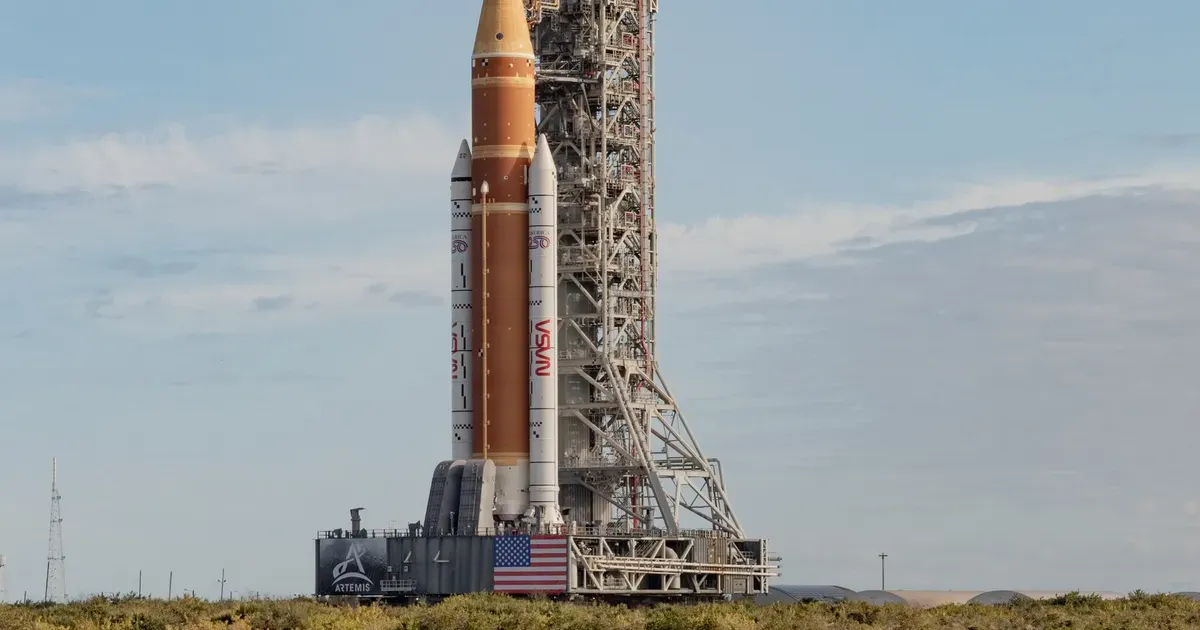
Artemis II was a space mission, but on Florida's Space Coast it also became a crowd-management test. NASA's first crewed lunar flight in more than 50 years drew hundreds of thousands of people who wanted to watch the Space Launch System leave Kennedy Space Center with Reid Wiseman, Victor Glover, Christina Koch and Jeremy Hansen aboard Orion.
The result is now measurable. Space Coast tourism data later put the launch-week visitor count at about 346,000 U.S. visitors to the northern half of Brevard County, not including children, international visitors or local residents. The visitor surge made Artemis II a local economic event as well as a NASA milestone.
The Crowd Was Part Of The Mission Footprint
The rocket left the pad in minutes, but the public event lasted for days. Visitors gathered along beaches, causeways, parks, hotel balconies and public viewing areas. The best locations around Kennedy Space Center are limited by geography, parking and security, so a historic launch quickly becomes a traffic problem.
The logistics do not diminish the mission. It shows what crewed exploration does differently. A satellite launch can draw fans. A crewed moon mission pulls families, photographers, former NASA workers, tourists and casual spectators into the same corridor.
Launch Tourism Has Real Economics
Space.com and local reporting estimated that Artemis II visitors stayed an average of about two days and spent roughly $462 each, contributing around $41 million in launch-week local economic impact. Hotels, restaurants, tour operators, shops and beach towns all shared in the surge.
The benefit came with pressure. Roads, parking, cellular networks, emergency planning and post-launch traffic had to absorb a short, intense wave of demand. The launch belonged to NASA. The waiting, parking and exit routes belonged to the coast.
Scrubs Remain The Hidden Planning Problem
Artemis II launched successfully, but every launch-tourism plan has to account for scrubs. A delay can reset traffic, hotel stays, school schedules and vacation plans. Visitors may have to choose between staying for another attempt or leaving without seeing the flight.
Launch uncertainty is part of the Space Coast business model. It brings excitement, but it also means local officials and businesses have to plan for crowd behavior that can change with weather, hardware and countdown holds.
The Online Audience Was Even Larger
Remote viewing mattered just as much. NASA later said Artemis II broke agency streaming records, with about 149.4 million views across NASA platforms during March and April. Viewership peaked in the millions during launch and splashdown.
The remote audience is part of modern spaceflight. A launch is local in sound and sky, but global in attention. Artemis II proved that people still want a shared public experience around human spaceflight even when they are watching from a phone or living-room screen.
Wiseman, Glover, Koch and Hansen gave the mission its emotional force. Glover, Koch and Hansen carried historic firsts for a lunar mission: the first Black astronaut, first woman and first non-American assigned to fly around the moon. Those milestones turned the launch into more than engineering spectacle.
For many spectators, the point was not only seeing SLS rise. It was seeing humans leave Earth orbit for the moon again after a half-century gap.
The Coast Passed A Public-Space Test
Artemis II showed how crewed exploration creates a civic event around a technical test. NASA needed data from the rocket, Orion and mission operations. Florida needed a safe, workable crowd plan. The public needed a place to put its excitement.
When all three meet, a launch becomes more than a departure from a pad. It becomes proof that human spaceflight still pulls people toward the same horizon, and that the communities around the pad are part of the mission whether or not they appear on the flight plan.