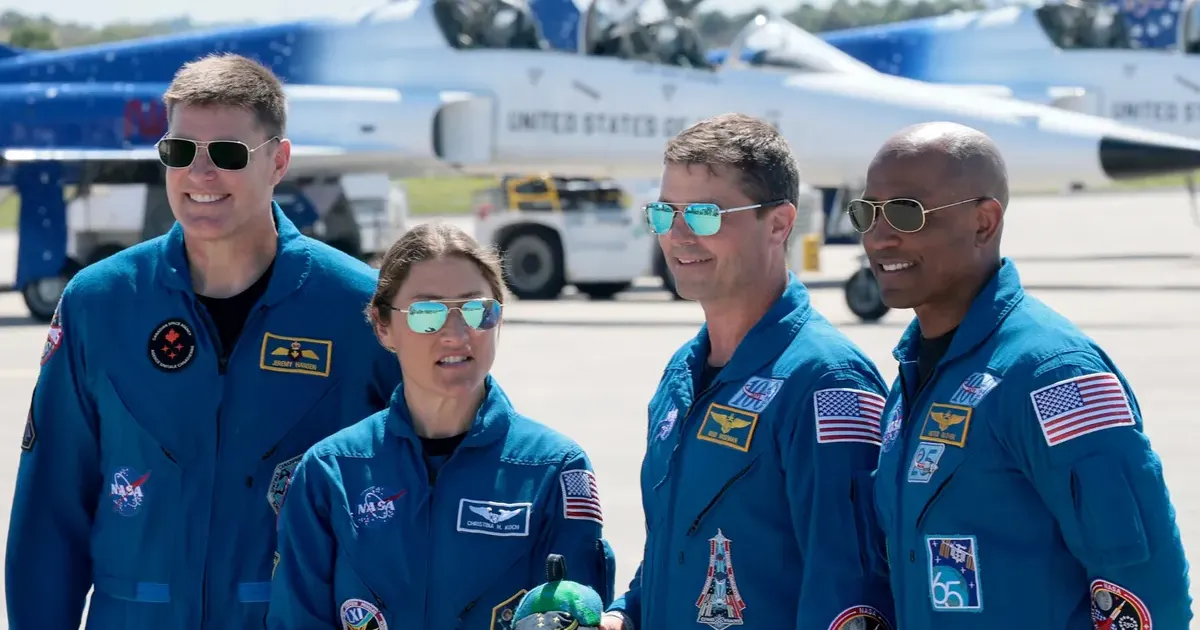
NASA's Artemis II quarantine was the final health gate before the agency attempted its first crewed lunar flight in more than 50 years. Reid Wiseman, Victor Glover, Christina Koch and Canadian astronaut Jeremy Hansen re-entered quarantine on March 18, 2026, as NASA worked toward the April 1 launch window. The procedure looked routine, but it carried mission-level importance.
NASA calls the prelaunch isolation period a health stabilization program, and the point is straightforward: reduce the risk that illness delays the mission or enters the spacecraft environment. A common respiratory infection can be manageable on Earth and dangerous inside a small spacecraft with a fixed crew, shared air, limited medical options and no easy replacement once the countdown reaches its final days.
Quarantine Protected The Timeline
Artemis II had already endured schedule pressure before the final launch campaign. Hardware work, leak repairs, rollout timing and readiness reviews all mattered. Once the crew, SLS rocket and Orion spacecraft were finally aligned for April, crew health became one of the few remaining variables NASA could still control directly.
Quarantine was therefore not a ceremonial holdover from older spaceflight eras. It protected the astronauts and the launch opportunity. If one crew member became sick at the wrong time, NASA could face a delay, a reshuffled medical review or added risk inside Orion. For a mission designed to prove human deep-space capability, the prudent decision was to make the last days quieter, not more public.
The Mission Was More Than A Countdown
By late March, the SLS rocket and Orion spacecraft were back at Launch Complex 39B, and the crew was moving through final training, media and launch-readiness steps. Artemis II was not a landing mission, and judging it only as a rehearsal for boots on the moon would miss the point.
The mission had to prove that Orion, SLS, ground systems, life support, navigation, communications, crew procedures and recovery operations could support humans beyond low Earth orbit. It was the bridge between Artemis I's uncrewed test and later landing architecture. NASA needed engineering data, crew workload data and proof that the whole system could send people around the moon and bring them home.
The Later Flight Gave The Quarantine Its Meaning
The mission later did exactly what the quarantine was protecting. Artemis II launched on April 1 and completed a historic lunar flyby before returning to Earth in April. The crew traveled farther from Earth than any humans before them, with NASA reporting a farthest distance of about 252,756 miles after surpassing Apollo 13's record.
That later success puts the March isolation period in context. The public remembers launch, lunar views, blackout behind the moon, reentry and splashdown. Human spaceflight also depends on quieter gates: medical screening, isolation, checklists, fit checks, suit procedures, weather calls, tanking plans and recovery rehearsals. The spectacular part sits on top of ordinary discipline.
Politics Was Present, But Procedure Led
Artemis II carried enormous political weight. It was the first crewed Artemis mission, the first crewed SLS and Orion flight, the first crewed mission beyond low Earth orbit since Apollo 17, and a public test of whether years of spending and delay could turn into visible capability. The United States also wanted to show that Artemis could move from program language into crewed deep-space operations.
Those pressures did not erase the safety logic. No political deadline can rescue a mission after a preventable failure. Quarantine, launch-readiness reviews and final hardware checks existed because the correct tension was not between courage and caution. It was between public expectation and engineering discipline.
Historic Flights Start With Mundane Control
Artemis II had to prove NASA could do ordinary things perfectly before doing historic things visibly. Quarantine was one of those ordinary things. It did not inspire the livestream audience the way a lunar flyby did, but it helped keep the crew healthy enough to reach that moment.
The lunar flyby began with isolation, not spectacle. That is exactly how a serious human spaceflight program should work. If Artemis is going to carry people farther and eventually back to the lunar surface, the program has to treat quiet procedural gates as part of exploration, not as paperwork before the real story begins.