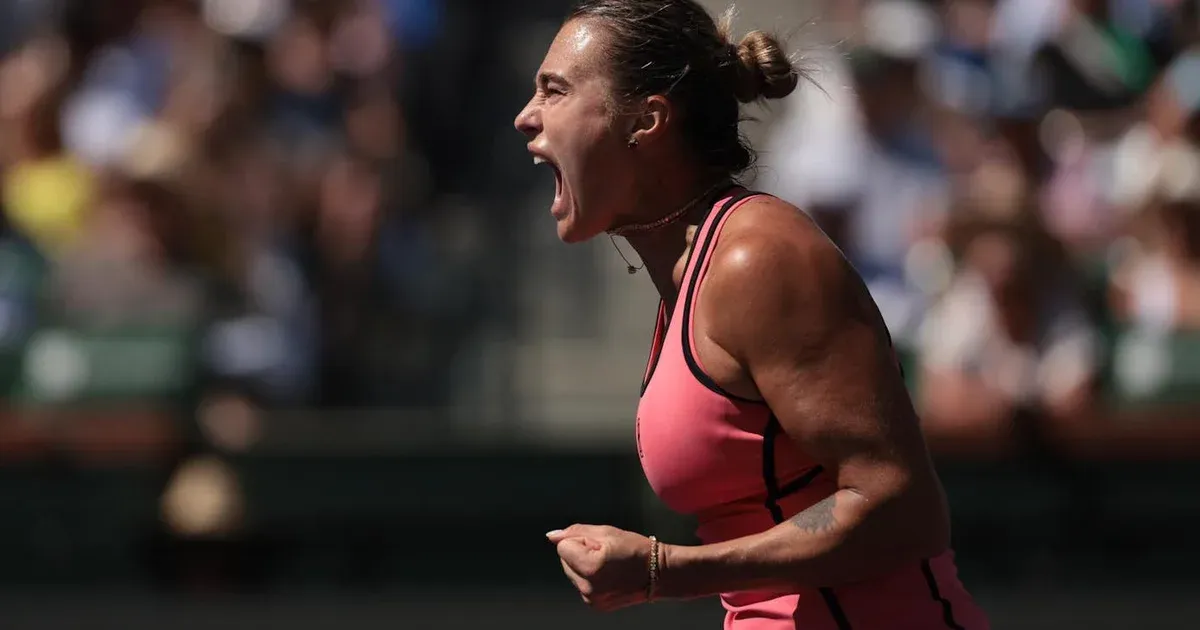
Aryna Sabalenka Indian Wells win over Naomi Osaka felt less like a routine result than a clear statement about the current power balance. On March 10, 2026, Sabalenka controlled the match with pace, depth and a serve that kept Osaka from settling.
Power Decided the Match
Naomi Osaka comeback test was always going to be severe against the world top power player. Osaka still has timing and shot-making, but Sabalenka gave her too little time to build points on her own terms. The match turned whenever Sabalenka stepped inside the baseline and punished shorter balls. Osaka still has the ball-striking to trouble elite players, but Sabalenka denied her the time needed to turn rallies into patterns. That is the difference between having weapons and being allowed to use them. The result also showed why the top of the women's game has become so unforgiving. A player returning to form cannot rely on reputation. She has to handle pace, depth and scoreboard pressure from the first service game. Osaka's challenge is not simply physical. Returning to the top tier requires rebuilding point tolerance, serve rhythm and the instinct to choose the right ball under pressure. Against Sabalenka, every slightly short shot carried a penalty, and that compressed Osaka's decision-making. Sabalenka, by contrast, played like a champion who understands where her advantage begins. Her power was not just speed through the court; it was depth that kept Osaka defending from uncomfortable positions. When Osaka tried to reset rallies, Sabalenka often turned the next ball into another attack. Indian Wells can reward patience because the conditions are not always easy for clean hitting. That made Sabalenka's control more impressive. She did not need to redline every point. She used weight, court position and scoreboard pressure to make Osaka chase a match that never really slowed down for her. For Osaka, the loss should be read as a measuring stick rather than a verdict. She still has weapons that can matter later in the season. The question is how quickly she can turn isolated flashes into patterns that survive against the heaviest hitters in the draw. The result also affects how the rest of the draw reads Sabalenka. A dominant win over Osaka sends a different signal from a routine early-round victory against a lower-profile opponent. It tells rivals that they may have to absorb power from the first game and find answers before the scoreboard closes around them. For the tournament, the match gives Sabalenka a useful kind of momentum: not just a win, but a reminder that her best tennis can rush even accomplished opponents into uncomfortable choices. For Osaka, that lesson is useful only if it becomes work: better first-strike patterns, cleaner service games and more patience when power is coming back at her.
Sabalenka Sets the Present Standard
The result does not erase Osaka's career or her ability to improve. It does show how far the standard has moved.
The sharp conclusion is that Sabalenka looks like the player others must solve, not simply survive.
At Indian Wells, Osaka saw the pace of the present. Sabalenka owned it.