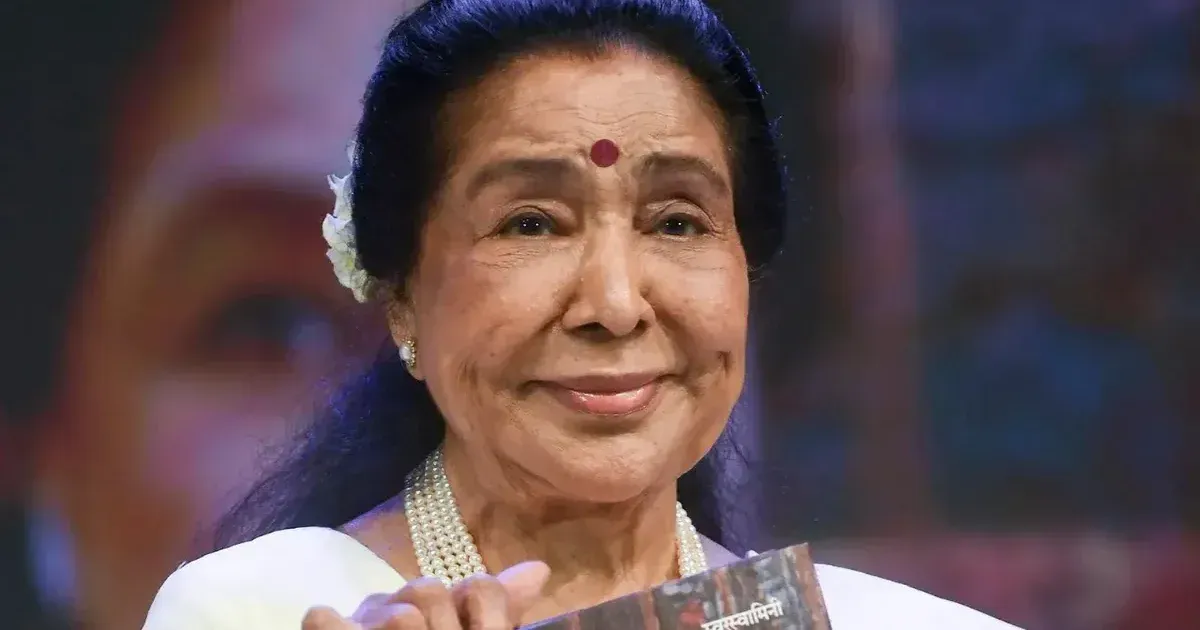
Asha Bhosle's reported medical emergency in Mumbai became a national cultural story because the first accounts moved faster than the confirmed medical detail. That split matters. It changes the story from a single dramatic medical claim into a more careful account of how a private health crisis around a national icon was reported in real time. Public attention sharpened on April 13, 2026. Initial April 12, 2026 reports described a cardiac arrest and an intensive-care admission, while later family-linked updates said the singer had been treated for exhaustion and a chest infection.
The available accounts show that Bhosle's condition drew urgent concern, while early descriptions of the cause required caution. Hospitals, families and newsrooms often move at different speeds when a public figure is involved. Medical staff may limit detail for privacy reasons, relatives may correct language that they believe is too alarming, and entertainment media can amplify the most dramatic version before a formal bulletin is available. In this case, the public response grew around the uncertainty itself.
Hospital Updates and Family Clarification
Reports placed Bhosle at Mumbai's Breach Candy Hospital, a facility often associated with high-profile medical care. Some outlets cited cardiac complications; others later emphasized respiratory illness, exhaustion and family clarification. The distinction is not semantic. A cardiac arrest suggests immediate life-threatening collapse, while a chest infection in a 92-year-old patient can still be serious without carrying the same public meaning. The conflicting accounts require a clear distinction between confirmed public concern and contested medical wording. Early coverage treated the cardiac-arrest account as settled and built much of the story around ICU drama, security and social-media speculation. Later reporting gave greater weight to family clarification than to unnamed medical sources. Public figures of Bhosle's stature often become symbols before their families have time to control the narrative. Fans gathered online, political leaders sent prayers and the film industry watched for updates. Those reactions were real even if the medical shorthand changed. The story is therefore not only about a diagnosis; it is about how India responds when one of its last living links to classic playback cinema faces a serious health scare.
Tributes Move From Vigil to Mourning
Bhosle's hospitalization quickly widened into a national tribute cycle. Prime Minister Narendra Modi and other public figures expressed concern, while musicians and actors invoked her decades-long place in Indian cinema. The attention was not surprising. Bhosle recorded thousands of songs across languages, helped define the sound of Hindi film and built a career distinct from, but inseparable from, the Mangeshkar family legacy.
Later coverage of Asha Bhosle's death in Mumbai turned that vigil into broader mourning. That later story belongs to the same public arc, but it should not erase the reporting uncertainty in the first hours. The hospital account shows how fast a cultural-health story can harden into a national event before every medical fact is stable.
The tributes also crossed generations. Older listeners remembered radio-era playback and the R. D. Burman collaborations that shaped popular memory. Younger audiences encountered Bhosle through streaming catalogs, remixes, documentaries and references in global pop culture. That range explains why a hospital update could become a story followed well beyond India.
A Career Larger Than a Medical Bulletin
Bhosle's career stretched from early post-independence cinema into the streaming age. She built a reputation for versatility, moving between cabaret numbers, ghazals, pop experiments and classical-influenced film songs. That technical range made her more than a nostalgia figure. It made her a working archive of how Indian film music adapted to changing studio systems, changing composers and changing audiences.
Her global profile also made the medical reporting more sensitive. Western coverage often reduces Indian playback singers to statistics about output, but Bhosle's importance lies in interpretation as much as volume. She could make a character sound playful, wounded, defiant or morally complicated within a few lines. That ability is why musicians kept citing her as an influence long after the peak of the studio era had passed.
The family dimension deepened the response. As Lata Mangeshkar's younger sister, Bhosle was often discussed inside a dynasty narrative, but her own path was more restless and stylistically adventurous. The health scare revived that broader conversation about legacy: what remains when the artists who carried Indian cinema's golden-age sound are no longer present as living witnesses.
Cultural Stakes
The strongest analysis is not that a single medical update could halt a country. The real stakes are subtler. Bhosle represents a form of shared cultural memory that cuts across language, class and political division. When news about her health broke, the response showed how few figures still have that kind of cross-generational reach.
That reach also creates responsibility for newsrooms. A report about a 92-year-old artist in hospital should not become a contest to publish the most severe diagnosis first. It should explain what is known, what has been corrected and why the public reaction is proportionate to her legacy. Bhosle's medical episode was a health story, a culture story and a media-caution story at the same time. Accurate coverage must keep all three in view.