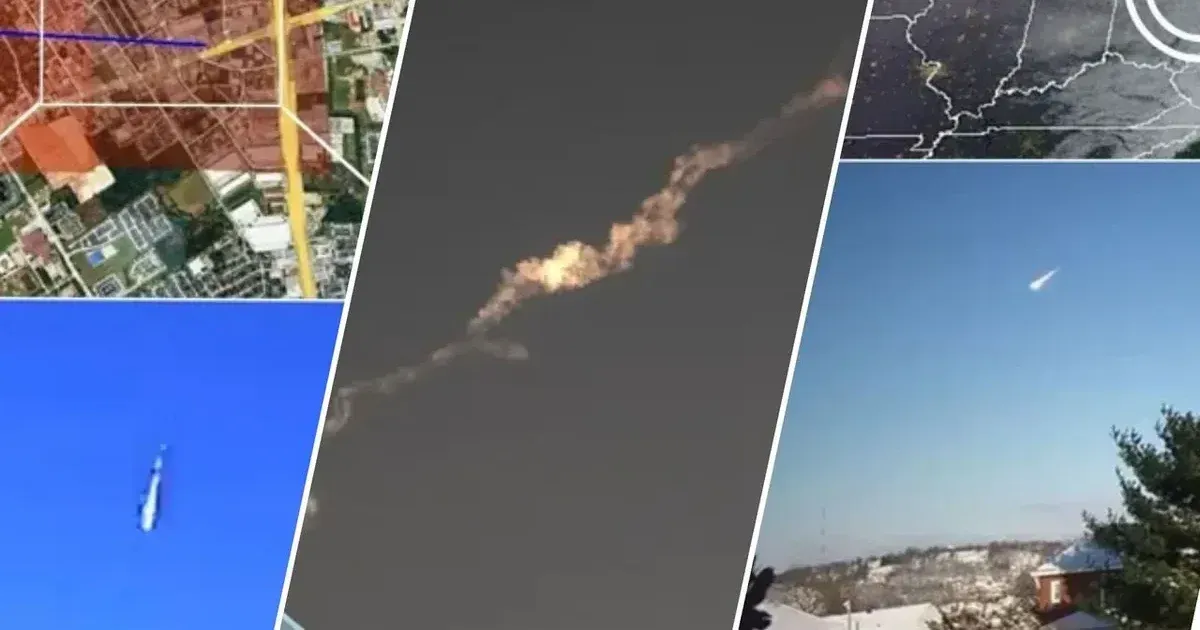
Astronomers are tracking a rise in bright fireball reports across the United States and Europe. The reports matter because fireball sightings can turn routine skywatching into public-safety questions. The March 27, 2026 review of sightings from Ohio, Texas and several European locations points to a mix of seasonal meteor activity and better public reporting tools.
Residents across the American Midwest provided video of bright streaks lighting the night sky near Ohio. Local officials received calls describing blue and green flashes that lasted only seconds before fading. Objects like these are often described as bolides: exceptionally bright meteors that can flare or fragment as they enter the atmosphere.
Fireball Sightings Increase Over Ohio and Texas
Astronomers began comparing the public reports with satellite detections, camera networks and known meteor activity. Early analysis has to separate ordinary seasonal activity from any unusual cluster of sightings. The rise in reports may reflect more cameras as much as more material entering the atmosphere.
"With bright meteors sighted over Ohio, Texas, and Europe, you might wonder what is going on," reported an analyst for Space.com regarding the surge.
The increase in reports also correlates with the spread of low-light consumer cameras. High-resolution sensors now capture events that would have gone unnoticed twenty years ago, and social platforms make those clips visible almost immediately. That creates a feedback loop: one viral fireball video encourages more people to check doorbell cameras, dashcams and backyard skywatching rigs.
Lyrid Meteor Shower and Comets Arrive in April
Lyrid meteor activity will begin to intensify as the calendar turns toward April 2026. This shower is one of the oldest known celestial events, with records of its appearance dating back more than 2,700 years. Observers expect the peak to occur during the overnight hours of April 22.
The moon phase may interfere with fainter meteors, but the Lyrids are known for occasional bright, fast-moving streaks and lingering dust trails. Dark-sky locations remain the best places to watch. Most of the debris associated with the shower comes from long-period Comet Thatcher.
Astronomers also noted that comet viewing opportunities will give skywatchers another reason to monitor the April sky.
Cameras Drive Surge in Fireball Reports
Stargazing gear has seen renewed attention as enthusiasts prepare for April events. Mirrorless cameras, sensitive sensors and wide-angle lenses have changed how amateurs document the sky. The best images can also help researchers when they include time, location and direction rather than only a dramatic clip.
Binoculars can be more useful than high-powered telescopes for broad skywatching because they preserve a wide field of view. Telescopes show detail, but they can miss fast transient objects that cross the sky outside a narrow lens.
For meteor photography, a tripod and wide-angle lens remain the practical starting point. Long exposures can show the path of a meteor against the stars, while stacked images can turn many short captures into a clearer record of a night sky event.
Skywatching Credibility Test
Are we staring at our own demise through two thousand dollar lenses? The obsession with documenting every fireball over Ohio or Texas masks a deeper, more uncomfortable truth about our planetary vulnerability. We have spent billions on high-resolution cameras and consumer-grade telescopes to watch the sky, yet we remain strikingly powerless against the debris that actually enters it. The surge in reporting is not a sign of scientific progress; it is a symptom of a surveillance society that has finally turned its gaze toward the heavens because it has already mapped every inch of the earth.
We congratulate ourselves on the clarity of a doorbell camera video while ignoring that these rocks are penetrating our atmosphere with zero warning. The scientific community treats these fireballs as a curiosity or a hobbyist's delight, but the kinetic energy involved in a bolide explosion is no laughing matter. We are currently passing through a shooting gallery of cosmic leftovers, and our primary defense is a smartphone app and a tripod. The romanticism of the Lyrid meteor shower is a luxury of the uninformed.
For those who understand the physics of impact, the bright streaks in the night sky are not wishes; they are warnings that we are late to the table of planetary defense.