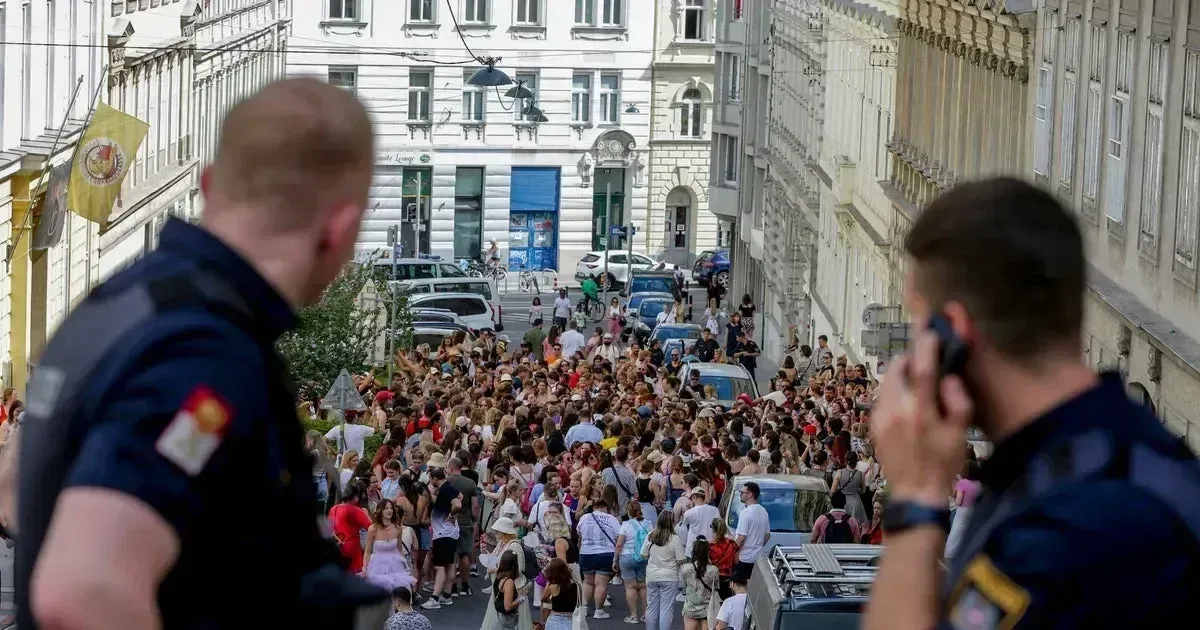
Vienna judges delivered a 15-year prison sentence on Thursday to a 21-year-old man who admitted to plotting a suicide attack at a Taylor Swift concert. The sentence closes one legal chapter while leaving Austrian security services to review how close the plot came to mass harm. Swift fans and venue officials are also likely to treat the ruling as part of a broader debate over concert security. The ruling, handed down on May 28, 2026, concludes a legal process that began after a major security operation disrupted a high-casualty terror attempt in the Austrian capital. Judicial officials finalized the conviction following a trial that detailed the defendant's radicalization and logistical preparations for the thwarted strike.
Evidence gathered during a raid in the town of Ternitz formed the core of the prosecution's case. Law enforcement teams discovered chemical substances, detonators, and ISIS propaganda at the suspect's residence south of the capital. This cache included materials intended for the construction of an explosive device designed to cause maximum harm in a crowded environment. Investigators confirmed that the 21-year-old had sworn an oath of allegiance to the Islamic State before his arrest in August 2024. Digital records recovered from his devices revealed detailed plans to drive a vehicle into crowds outside the Ernst Happel Stadium before carrying out an explosive attack.
The defendant's confession accelerated the legal proceedings.
Prosecutors emphasized the lethal intent behind the disrupted operation throughout the trial.
The defendant admitted to planning a suicide attack during the proceedings, according to the court record.
Judges noted that the advanced stage of the planning and the potential for mass casualties required a heavy sentence. Despite defense arguments suggesting the young man was a victim of online radicalization, the three-judge panel focused on the physical evidence found at his home. Judges sentenced him to 15 years in a high-security facility for membership in a terrorist organization and criminal organization.
The sentence also reflected the court's view that the plot had moved beyond online threats into operational preparation. Austrian prosecutors argued that the defendant had taken concrete steps toward carrying out the attack, while defense lawyers focused on his age, isolation, and exposure to extremist material. The panel accepted that radicalization played a role, but it did not treat that factor as enough to reduce the seriousness of the offense. That distinction became central to the final sentence.
Concert Cancellations and Public Safety
Public safety concerns forced the cancellation of the Vienna concerts during the 2024 Eras Tour. Fans from around the world had traveled to Vienna for the three-day engagement, which was expected to draw 170,000 attendees. Economic data from the Vienna Chamber of Commerce estimated that the cancellation resulted in a loss of approximately 100 million euros for the city's tourism sector. Hotel occupancy rates stayed high, but revenue projections for stadium concessions and local transportation plummeted. This financial shock prompted calls for more robust insurance protections and clearer emergency planning for major cultural events. Promoters also faced renewed pressure to explain how ticket refunds, travel losses, and crowd control decisions would be handled when a security threat emerges with little warning. The case showed that a credible threat outside a stadium can be enough to make a full event impossible, even when the venue itself has not been breached.
Organizers canceled all three scheduled performances immediately after the police briefing.
Intelligence Sharing After the Vienna Plot
Austrian intelligence services also faced scrutiny over their reliance on foreign agencies for the initial tip-off. Reports indicated that a partner agency provided the specific data that led to the raid in Ternitz just days before the first show. Because of this, the Austrian government pledged to increase funding for the Directorate of State Security and Intelligence. Strengthening domestic surveillance capabilities became a priority in the 2025-2026 budget cycles. Security officials maintained a heightened presence at other European tour stops to reassure a shaken public. The response also pushed police departments to review how they communicate urgent threat information without spreading unverified details or creating unnecessary panic among ticket holders. For venue operators, the sentencing reinforced the need for coordinated planning between private security teams, municipal authorities, transport agencies, and national intelligence services.
The Vienna Plot Reshapes Concert Security
Intelligence communities across Europe are re-evaluating the protection of soft targets after the Vienna plot. Large-scale cultural events present unique vulnerabilities that traditional security perimeters struggle to address. Because of the digital nature of modern radicalization, tracking the transition from online rhetoric to physical violence is increasingly difficult for local agencies. Preventing similar plots requires a shift toward proactive digital monitoring and community intervention strategies.
Austria's legal response sets a precedent for how judicial systems handle young offenders involved in high-stakes terrorism cases. Success in this case relied heavily on international cooperation, highlighting the necessity of cross-border intelligence sharing. Future security protocols for major tours will likely incorporate broader exclusion zones and enhanced screening. The final verdict sends a clear signal regarding the state's intolerance for extremist violence, while leaving open difficult questions about prevention, online recruitment, and rehabilitation after long prison terms. Austrian authorities will also review whether venue screening, online monitoring and intelligence sharing worked quickly enough before the stadium dates. The case will likely influence how European venues handle threat reports when a tour date becomes a symbolic target for extremists.