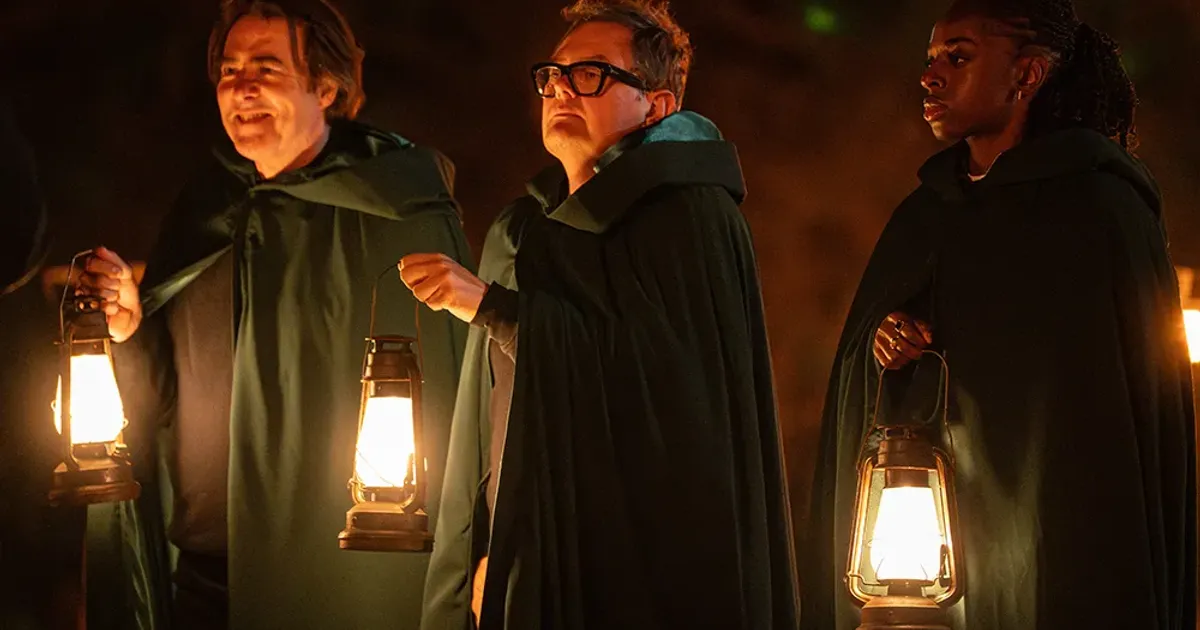
The BBC's decision to extend The Traitors through 2030 turns a breakout reality format into a long-term production asset for prime-time scheduling.
The extension had been watched closely by producers and rival broadcasters. The deal drew attention on March 12, 2026, because broadcasters are hunting for shows that can still create appointment viewing in a fragmented market.
A durable unscripted format is valuable because it can be repeated, localized, promoted and discussed without the cost structure of scripted drama.
A Format Becomes Infrastructure
The Traitors works because its rules are simple enough to understand and flexible enough to produce new social dynamics each season. That combination is rare. For the BBC, the extension creates scheduling certainty. It gives producers, marketers and international partners a runway rather than a year-to-year guessing game.
The phrase The Traitors franchise now describes more than one program. It describes a brand that can support specials, spin-offs, international versions and online conversation.
Why Broadcasters Want Durability
Streaming has trained audiences to sample constantly. Broadcasters need formats that cut through that churn and give viewers a reason to return at the same time each week. Reality competition can still do that when the casting, editing and game mechanics create suspense without requiring viewers to study a complex mythology. The risk is overextension. A format that feels fresh can become tired if it is stretched too aggressively or copied too often.
Franchise Test
The BBC will need to protect the show's sense of event. That means careful casting, pacing and restraint around spin-offs that could dilute the main series. The extension is still a strong signal. In a volatile entertainment economy, a proven format with social energy is a serious asset. The extension also shows how broadcasters are valuing formats that create conversation beyond the episode itself. A reality competition that fuels social debate can feel larger than its overnight ratings. The Traitors has the benefit of repeatable uncertainty. Viewers know the premise, but the cast changes the emotional texture each season, giving producers a controlled way to refresh the show. For production companies, a long deal supports staffing, location planning and international sales. It also reduces the uncertainty that can make unscripted hits difficult to manage after a breakout season. The BBC still has to avoid overexposure. The format depends on paranoia and surprise; if the franchise becomes too routine, its central pleasure can weaken. The safest strategy is likely a disciplined schedule, strong casting and enough restraint to keep the main show feeling like an event. The deal also says something about public-service broadcasting. A broadcaster like the BBC has to justify entertainment spending by delivering programs that feel widely shared, not only narrowly sampled by niche audiences. A format that becomes social conversation helps meet that test. Internationally, the franchise can travel because betrayal, trust and group psychology do not require a highly local premise. Different markets can adapt tone and casting while preserving the central engine of suspicion. Commercially, that makes the format more durable than many one-season hits. It can support licensing, production expertise and cross-market learning, all while keeping the BBC tied to a recognizable entertainment brand. The risk remains creative complacency. A long runway should give producers more room to protect quality, not permission to flatten the show into predictable beats. The BBC also gains promotional efficiency. A known franchise reduces the challenge of launching from zero each season, allowing campaigns to build on audience memory, previous winners, familiar rituals and the pleasure of speculation. That familiarity is useful only if the show keeps enough unpredictability. Producers must avoid casting archetypes so obvious that viewers feel they can see the edit before the game unfolds. The extension through 2030 therefore creates a creative obligation. Longevity will be judged not by how many versions can be made, but by whether the central game still feels tense, funny and socially revealing. Audience fatigue will be the signal to watch. If viewers still argue about strategy, loyalty and betrayal after each season, the franchise remains alive. If conversation shifts only to scheduling and branding, the extension will look more like exploitation than stewardship.
The production calendar now becomes part of the creative strategy. With years of runway, the BBC can plan casting, locations and release windows with less panic, but it also has to make sure the audience never feels the show is being treated as a guaranteed habit.
That balance is the real value of the deal: stability for producers, but enough uncertainty on screen to keep viewers guessing and arguing. The franchise can grow across schedules, markets and platforms only if the audience never feels managed by a formula.
The Traitors has moved from surprise hit to long-term pillar. The challenge now is keeping suspicion entertaining without making the franchise feel mechanical.