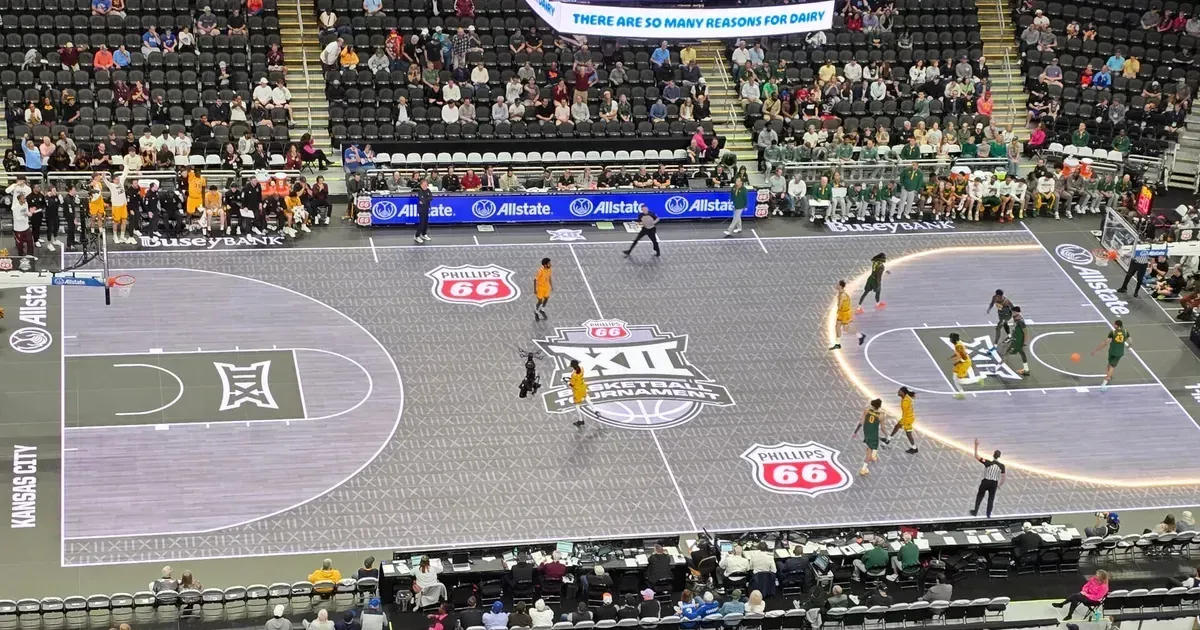
Big 12 Drops the Glass Court
T-Mobile Center officials began the labor-intensive process of dismantling a multimillion-dollar experiment on Thursday night. Workers moved in hours after the quarterfinal round concluded to strip away the ASB LumiFlex LED glass flooring that had served as the centerpiece of the Big 12 Conference’s marketing strategy. The update was dated March 13, 2026. Commissioner Brett Yormark ordered the immediate return to traditional hardwood for the semifinals and finals. The decision came as a direct response to escalating concerns regarding player safety and surface traction that plagued the early rounds of the tournament. Basketball requires precise friction for lateral movement, and the high-tech surface failed to replicate the dependable grip of North American Hard Maple.
The experiment failed. Texas Tech star Christian Anderson became the face of the controversy during his team’s quarterfinal matchup. Anderson suffered a lower-leg injury after his foot slipped on a non-reactive portion of the glass during a transition play. He did not return to the game. Medical staff and coaches observed multiple players struggling to maintain balance throughout the week, leading to a consensus among the remaining four teams that the surface was unplayable for high-stakes postseason basketball.
While the glass was engineered to mimic the tackiness of wood, the reality of competitive humidity and player perspiration created a hazard that even the most diligent floor wipers could not mitigate. Brett Yormark had spent months championing the LED surface as the future of the sport. He frequently cited its successful use in the EuroLeague since 2024 and its FIBA certification as evidence of its readiness for the American collegiate stage. Just hours before the quarterfinal injury, Yormark appeared on ESPN to defend the innovation, suggesting that any new technology faces a lack of total buy-in. He argued that the ability to change logos instantaneously and trigger visual effects, such as the court appearing to shatter after a thunderous dunk, provided a unique engagement tool for younger audiences.
Marketing priorities collided with the physical requirements of elite athletes, and the athletes lost the first round of that battle. Engineers from ASB, the European manufacturer, insist the surface provides consistent shock absorption and grip. But North American college basketball is played with a different level of physicality and speed compared to the European leagues where the glass has seen limited success. Hardwood is porous, allowing it to absorb minute amounts of moisture. Glass is entirely non-porous, meaning any drop of sweat or humidity sits on the surface, creating a slick film that acts like a lubricant between the sneaker and the floor.
This physical reality became undeniable as the tournament progressed into its more intense rounds. This transition required a fleet of trucks to transport the conference’s secondary hardwood court from storage to the arena in the middle of the night. Coaches from the four semifinalist programs were vocal in their opposition to continuing on the LED floor. Their consultations with Yormark on Thursday evening were described by sources as direct and focused on the health of their rosters. Most of these programs are headed for the NCAA Tournament, and the risk of losing a key contributor to a preventable slip was deemed unacceptable.
Player Safety Beats the Visual Experiment
The Big 12 had hoped the glass would be its signature splash, a visual differentiator that would make its tournament the most watched in the country. Instead, the focus shifted from the quality of play to the quality of the floorboards. Broadcasters at ESPN and other networks had to adjust their production plans for the weekend. The immersive graphics and real-time data tracking that were integrated into the glass surface are now useless for the remainder of the competition. Sponsors who paid for premium placement within the LED display will now see their logos returned to the static stickers and painted surfaces of a traditional court.
This technological gamble resulted in a logistical nightmare for the arena staff who had to ensure the hardwood was properly leveled and sealed before the morning shootarounds. How much did the conference lose in potential advertising revenue by reverting to wood mid-tournament? Performance data from the first two days showed a slight decrease in successful fast-break conversions, which some analysts attribute to players being hesitant to sprint at full speed. That change in player behavior is the ultimate indictment of any sports technology.
If an athlete does not trust the ground beneath them, the integrity of the competition is compromised. Players noted that while the court looked spectacular on television, the reflection of the overhead arena lights off the glass created occasional glare issues that interfered with tracking the ball. Such feedback will likely stall any immediate plans for other major conferences, such as the SEC or Big Ten, to adopt similar LED surfaces for their own championships. Historically, basketball has been resistant to surface changes for good reason.
The transition from the 1940s-era tile and synthetic floors back to maple was driven by the specific needs of the human knee and ankle. Maple provides a level of "give" and energy return that synthetic materials have yet to perfect. While the Big 12 wanted to be the first to leap into the digital age, they may have ignored the physics of the sport in favor of a broadcast-friendly aesthetic. The cost of the rental and installation of the ASB unit likely runs into the hundreds of thousands of dollars, a figure that does not include the potential legal liability should an injured player pursue claims against the conference.
Kansas City has long been a traditionalist hub for college basketball. Fans in the stands expressed confusion as the flashy floor was hauled away in sections, replaced by the familiar tan of the hardwood. The decision is a reminder that novelty has limits in college sports. A court can look futuristic on television and still fail if players question traction, glare or injury risk. For the Big 12, backing away quickly may be less damaging than forcing a visual experiment into games where athletes are expected to trust every step.