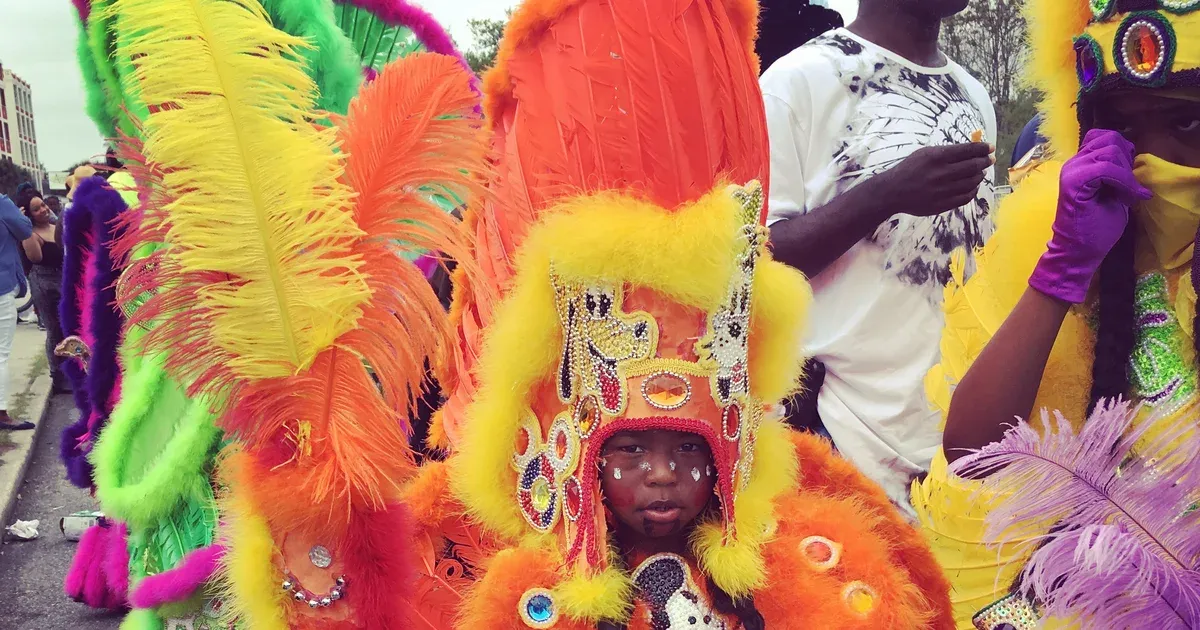
The ritual story is about preservation as much as performance, and community control remains central. On April 6, 2026, New Orleans residents marked a century of public ritual as Black Masking Indians displayed hand-sewn suits rooted in neighborhood tradition. The practice blends African and Native American aesthetics, but the deeper issue is who gets to define, protect and transmit the culture as gentrification changes the city around it. That tension makes the story larger than a parade image: the suits, chants, neighborhood routes and internal ranks all depend on trust inside communities that have often been watched, copied or displaced by outsiders. The work also requires months of private labor before a public appearance, so a single street display carries a long record of family teaching, sewing skill and neighborhood memory. Treating the ritual as only a festival would miss the governance layer inside the tribes, where titles, routes and access are managed by people who earned authority over years rather than by outside institutions. Preservation here is therefore more than archival; it is a living rule system that decides when the public may look, what outsiders may repeat and how younger members learn the obligations behind the beadwork.
Individual suits frequently cost over $10,000 in raw materials including ostrich plumes and imported glass beads. Men and women within the community often work multiple jobs to finance the aesthetic competition that defines their neighborhood status. New Orleans provides the stage for this display, though specific routes remain undisclosed to the public until the day of the march. These secretive movements through the streets ensure the ritual persists outside the gaze of commercial tourism. Sewing sessions occur in living rooms and community centers far from the neon lights of Bourbon Street.
Members spend months painstakingly handcrafting suits to be worn while marching through New Orleans' neighborhoods, according to CBS News.
While the internal community values the craftsmanship, the external market rarely compensates the creators for their work. Most maskers refuse to sell their suits to museums or private collectors, preferring to dismantle them or keep them within the family. This refusal to commodify the tradition protects the sacred nature of the masking process. Economic pressures from outside the community, however, continue to threaten the stability of the traditional masking wards. Neighborhood boundaries dictate the interactions between different groups. When two tribes meet on a street corner, the confrontation is a ritualized battle of beauty and verbal prowess. Chiefs compare the quality of their beadwork and the height of their plumes to determine who is the prettiest. This performance replaced the physical violence that characterized tribal meetings in the mid-twentieth century. Aesthetic excellence is now the primary metric of power within the community.
Hierarchical Roles within New Orleans Tribes
A single chief might spend twelve hours a day sewing during the winter months.
The Queen of the tribe also matters in the social fabric of the group. She often manages the logistical needs of the tribe, from organizing food during the march to assisting with the complex needlework required for the patches. Despite the male-dominated titles, the influence of women in the construction and preservation of the suits is absolute. Their contributions ensure that the oral histories associated with each design are passed down to the next generation of maskers.
Gentrification Threatens Traditional Masking Grounds
Rising property values in the Seventh Ward and the Ninth Ward have displaced many longtime practitioners. As developers convert traditional meeting houses into luxury rentals, the proximity required for collaborative sewing is lost. Many younger members now live miles away from their tribal headquarters, which complicates the logistical planning of the secret marches. Preservation of the tradition depends on the ability of the maskers to stay within the neighborhoods that birthed the culture. Local ordinances and increased policing of unpermitted parades also create friction for the tribes. Because the Black Masking Indians do not publish their routes, they often encounter law enforcement officers who demand permits for their processions. Tribal leaders argue that the spontaneity of the march is essential to the ritual. If the routes were scheduled and permitted, the spiritual essence of the practice would be compromised. Urban development continues to prioritize the needs of new residents over the century-old customs of the indigenous urban population.
Cultural Control and Preservation
The cultural stakes are strongest when the ritual is treated as a living practice rather than a costume story. Black Masking Indian traditions carry neighborhood memory, music, craftsmanship and claims of respect that cannot be reduced to a parade image. The public sees the finished suits, but the authority behind them was built through years of sewing, teaching and service inside the community.
Gentrification threatens more than the physical routes of the marches. When longtime practitioners are displaced and meeting houses become luxury rentals, outsiders gain easier access to the image while the people who sustain the practice lose the proximity it requires. Museums, developers and tourism campaigns cannot claim to preserve the culture if control over its meaning is taken away from the maskers themselves.
New Orleans cannot celebrate the beadwork while ignoring the erosion of the neighborhoods that produce it. Admiring the surface while dismantling the conditions beneath it is branding, not preservation. The tradition survives only if the people who earned authority over it retain the power to decide how it is taught, displayed and carried forward.