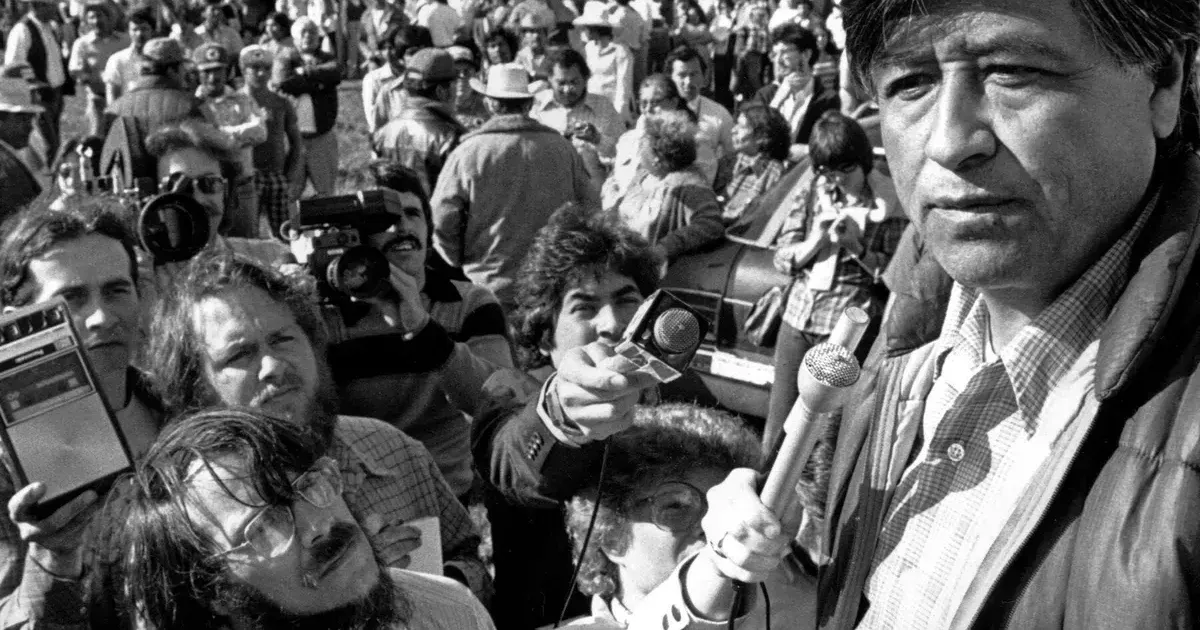
California moved to remove Cesar Chavez's name from a state holiday, replacing the observance with Farmworkers Day after reported allegations forced a broader reassessment of the labor leader's public legacy. Governor Gavin Newsom signed the legislation, setting off an immediate debate over how the state should honor farm labor without centering the commemoration on one contested figure.
The decision carries unusual weight because Chavez has long been one of California's most visible labor symbols. Schools, roads, public buildings and annual ceremonies have tied his name to farmworker organizing and Latino political history. Changing the holiday therefore affects not only calendars but also curriculum, public memory and the symbolic language of state government. The March 27, 2026 decision forces institutions to explain both the labor history and the reason for the revision.
Supporters of the change argue that the holiday should recognize the collective struggle of farmworkers rather than protect any individual from scrutiny. Critics say the state moved too quickly and risks flattening a complex civil-rights legacy before the public has fully examined the allegations and the historical record.
The state is also trying to avoid a vacuum. Removing a name without preserving the labor story would create a different kind of erasure. That is why the new framing matters: Farmworkers Day keeps attention on the people whose wages, safety and organizing rights were at the center of the original holiday. Community response will likely vary by generation. Older activists may view the change as a break with hard-won recognition, while younger organizers may see it as a chance to broaden the movement's public memory.
Farmworkers Day Replaces a Personal Tribute
The new name gives the state a broader commemorative frame. Farmworkers Day can honor organizers, pickers, families and unions without making Chavez the sole vessel for that history. That shift may appeal to lawmakers who want to preserve the holiday's labor focus while reducing conflict over one name. The practical work will be slow. State agencies must update websites, payroll systems, forms and public calendars. Schools will have to revise lesson plans and event materials. Physical signs and plaques will take longer, especially in districts where Chavez's name appears on multiple public assets.
Legacy Debate Moves Into Public Institutions
The allegations reported around the early farmworker movement have forced institutions to confront a familiar problem: how to handle celebrated figures when later accounts challenge the story that made them official icons. Removing a name is one answer, but it does not settle how history should be taught. Labor groups are likely to divide. Some will view the change as a necessary correction that places workers above personality. Others will see it as a politically convenient erasure of Latino labor history at a moment when farmworkers still face low wages, heat exposure and immigration pressure.
The Chavez family and longtime supporters are expected to challenge the moral framing of the law. They may argue that the state is acting on incomplete information or allowing a broader movement to be judged through disputed claims. Lawmakers backing the change will counter that state honors require a higher standard than private memory.
Schools Face the Hardest Transition
Classrooms will carry much of the burden because students learn Chavez as part of California's labor and civil-rights story. A revised curriculum cannot simply delete him without explaining why the holiday changed. It must teach the farmworker movement, the United Farm Workers, the boycott campaigns and the current controversy with enough care to avoid turning history into a slogan. That is difficult but necessary. Public memory is not only about celebration; it is also about evidence, harm and who gets included in the story. A broader Farmworkers Day may allow California to teach the movement with more voices, including women, rank-and-file workers and organizers who stood outside the most famous leadership circles.
Local governments will now have to decide how visibly they follow the state's lead. Some cities may rename events quickly, while others may keep older language in community programs until new guidance arrives. That uneven transition could keep the controversy alive beyond the formal signing. The larger question is whether the state can create a process that feels principled rather than reactive.
Farmworker organizations may use the transition to push current labor demands back into the center of the holiday. Heat protections, pesticide exposure, housing, wage theft and immigration enforcement are all present-tense issues. A broader holiday could become more politically useful if it connects historical memory to those conditions.
The transition may also create legal and administrative questions. Contracts, collective-bargaining calendars, school schedules and local ordinances may still refer to the old holiday name. Updating those references will require more than a press release, especially in districts where the date is tied to paid leave or public programming. Politically, the decision gives both supporters and critics a mobilizing issue. Advocates for the change can argue that public honors must reflect current evidence and community values. Opponents can argue that the state is rewriting a civil-rights legacy without enough process. That argument is likely to continue well after the holiday is renamed.
What the Renaming Signals
The law signals that California is willing to revise civic honors when a legacy becomes too contested for unqualified celebration. That standard will not be applied evenly unless the state builds a transparent process for future cases. For now, the holiday survives while its center changes. The fight ahead is not only over Chavez's name. It is over whether California can preserve the history of farmworker organizing while being honest about the people and institutions that shaped it.