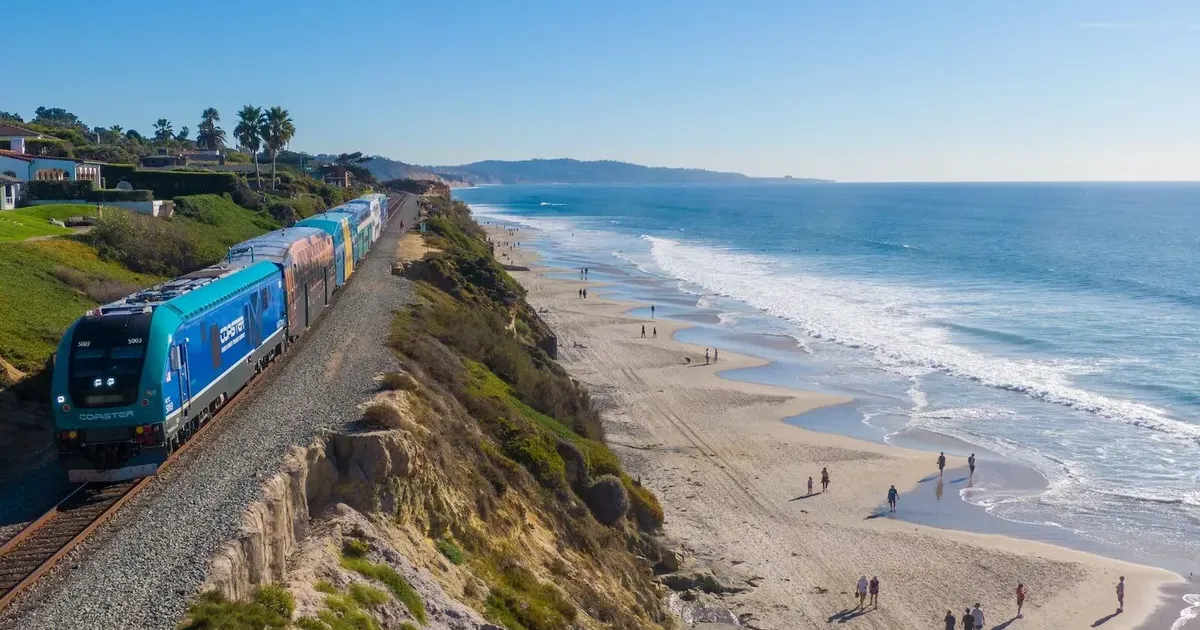
California train travel is often sold through scenery, but its current appeal begins with utility, not romance. The state's major Amtrak routes connect coastal cities, inland valleys and mountain gateways without forcing every trip through airports, rental counters or freeway traffic.
Service has improved in places. The Pacific Surfliner's current advisory page lists no track closures, and the May 4, 2026 schedule added more service, including new trips to Goleta and San Luis Obispo. At the same time, travelers still need to check conditions because soccer events in Los Angeles have required date-and-time reservations on Pacific Surfliner trains from June 11 through July 19.
The Surfliner Is The Easiest Entry Point
The Pacific Surfliner remains the clearest California rail route for many visitors. It runs along a 351-mile corridor between San Diego and San Luis Obispo, serving Orange County, Los Angeles, Ventura, Santa Barbara and the Central Coast. Portions of the route run close enough to the ocean that the scenery becomes part of the product.
The route works because the use cases are easy: beach weekends, college visits, short city breaks, ballgames, Disneyland-area travel, Santa Barbara trips and car-light vacations. Stations in places such as San Diego, Anaheim, Los Angeles and Santa Barbara are close enough to transit, hotels or attractions to make the train a realistic first choice.
Reliability Still Decides Repeat Use
The Surfliner's weakness is not a lack of appeal. It is infrastructure exposure. San Clemente and other coastal segments have faced erosion, landslide and repair disruptions in recent years. Even when there are no current closures, that history shapes how travelers plan.
The advice is straightforward: check advisories before booking, understand whether a reserved train is required, and leave margin around same-day events. A beautiful train loses appeal if passengers cannot trust the trip during peak weeks. More frequency helps, but reliability is what turns a one-time scenic ride into a regular travel habit.
Capitol Corridor Serves Daily California
Northern California's Capitol Corridor has a different appeal. It links San Jose, Oakland, Richmond, Sacramento and Auburn, making it useful for government, university, business and leisure trips across the Bay Area and the capital region. The scenery is not the whole pitch here. Convenience is.
The route gains value when it connects to BART, local buses, light rail, ferries or walkable downtowns instead of leaving riders isolated at the platform. Capitol Corridor's value is strongest when the rail trip fits into a broader transit chain.
San Joaquins Add Inland Reach
The San Joaquins route gives the Central Valley a rail link that is often missing from glossy California travel writing. It connects Bakersfield, Fresno, Merced, Modesto, Stockton, Oakland and Sacramento, with Thruway bus connections extending access to destinations such as Yosemite and other inland communities.
For students, families, visitors without cars and residents traveling between valley cities, that network can matter more than a coastal-view photo. California travel is not only beach and skyline. It is also valley, campus, courthouse, family visit and park gateway.
The Coast Starlight Is The Journey Route
The Coast Starlight is the long-distance version of the California rail argument. It runs daily between Los Angeles and Seattle through Santa Barbara, the Bay Area, Sacramento and Portland. It is slower than flying and can be delayed, but it offers a different kind of value: a trip where the journey is part of the reason to travel.
Coach seats with space, sleeper options, coastal sections, mountain scenery and downtown-to-downtown routing suit travelers who are not trying to compress every mile into the shortest possible time. That is not a substitute for air travel. It is a different category.
The Test Is Operational
California rail does not need to imitate flying to matter. It needs to be reliable enough, clear enough and frequent enough to win trips where the train already makes sense. The state has the geography for it: dense coastal cities, congested highways, inland communities that need better links and destinations where arriving without a car can be an advantage.
The scenery gets people interested. Operations decide whether they come back. Better schedules, honest advisories, strong local connections and clear fares will do more for California rail than any romantic slogan about the coast.