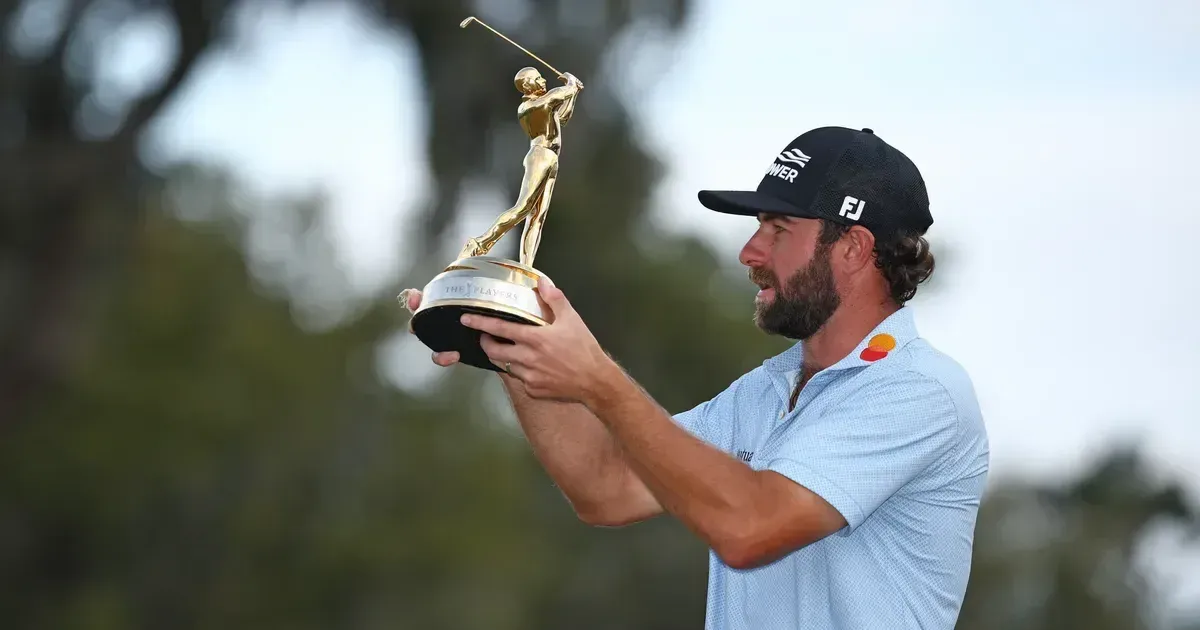
Cameron Young secured the biggest title of his career at the Players Championship after Matt Fitzpatrick missed a par putt on the final green at TPC Sawgrass. The victory ended years of speculation regarding when the American would finally convert a high-profile leaderboard position into a trophy. Young walked away with a winner's check that cements his status among the top tier of the PGA Tour. Critics often labeled Young as the best active golfer without a professional win on the primary circuit. His resume included numerous runner-up finishes, most especially at the 150th Open Championship at St. Andrews, where he fell just short of the Claret Jug. Sunday's performance at the Stadium Course altered that story through a display of technical precision. He began the final round trailing by four strokes, a deficit that typically favors the leader on such an unstable layout. But the pressure of a Sunday at Sawgrass often acts as a solvent, dissolving even the most comfortable leads. Fitzpatrick had controlled the pace for much of the weekend, yet the closing holes of the back nine presented a different psychological challenge. While the Englishman found trouble in the thick rough, Young remained consistent from the tee. The gap between them narrowed steadily as the afternoon shadows lengthened across the fairways.
Young Converts at Sawgrass
Entering the final round with a four-stroke disadvantage required a strategy that balanced aggression with calculated risk. Young handled the opening nine holes with a series of quiet pars, waiting for the course to provide an opening. According to performance metrics, the field scoring average on Sunday was nearly two strokes higher than the previous day. This increased difficulty favored a player with Young's ball-striking consistency. He birdied the sixth and ninth holes to make the turn within two shots of the lead. The leaderboard shifted rapidly during the middle of the afternoon. Several contenders found the water on the par-four eleventh, but Young played safely to the center of the green. This conservative approach allowed him to avoid the high-number scores that plagued other top-ten players. Fitzpatrick struggled with his iron accuracy as the wind began to swirl through the corridors of oak and pine. The lead shrunk to a single stroke by the time the final groups reached the stretch of holes known as the gauntlet. Meanwhile, the gallery around the sixteenth hole began to anticipate a playoff. Young reached the par-five in two shots, setting up a comfortable two-putt birdie that brought him into a tie for the lead. The atmosphere in Ponte Vedra Beach turned electric as the realization set in that the tournament would be decided on the final two holes. Young showed no visible signs of the nerves that had hindered him in past final rounds. He moved toward the penultimate tee with a focused, brisk pace.
Seventeenth Hole Changes the Finish
The seventeenth hole at the Stadium Course is perhaps the most famous short par-three in professional golf. It features a green entirely surrounded by water, save for a narrow walkway for the players. For one to win at Sawgrass, the seventeenth must be survived or conquered. Young chose the latter, striking a wedge that tracked the flagstick from the moment it left the clubface. The ball landed softly and settled nine and a half feet from the hole. Fitzpatrick played safely to the fat of the green, leaving himself a lengthy effort for birdie. After the Englishman's attempt slid past the cup, the stage belonged to Young. The American assessed the line for nearly a minute before delivering a clinical stroke. The ball caught the right edge of the hole and dropped, eliciting a roar from the thousands of spectators lining the hills. Young had taken the lead for the first time in the tournament.
I knew the putt on seventeen was going to be the deciding factor in how I played eighteen, and seeing it go in changed the entire math of the final hole.
That birdie forced Fitzpatrick into a position where he had to chase on the eighteenth. The tactical advantage had shifted entirely toward Young, who now possessed a one-shot cushion heading into the hardest hole on the course. He found the fairway with a controlled drive, avoiding the water that lines the entire left side of the closing hole. His approach shot landed on the fringe, leaving a relatively simple two-putt for par.
Fitzpatrick Miss Leaves the Door Open
Drama remained despite Young's steady play on the 72nd hole. Fitzpatrick managed to give himself an 8-foot par putt to potentially force a playoff, provided Young did not stumble. The gallery fell into a complete silence as the former U.S. Open champion prepared for his stroke. It was a putt he had made hundreds of times in practice and competition.
Fitzpatrick's ball stayed high on the professional side of the hole but failed to break back toward the cup. It missed by a fraction of an inch, effectively ending the contest. Young tapped in for his par, securing a total score that no one else in the field could match. He shook hands with his caddie and exhaled, the tension of the final three hours finally dissipating. The victory earned him a $25 million purse and a five-year exemption on the PGA Tour.
For instance, the statistical shift in Young's putting was the primary driver of this result. He finished the week ranked in the top five for strokes gained on the greens, a department that has historically been his weakest. This improvement suggests that his coaching changes during the offseason have yielded immediate dividends. His ability to maintain this level of performance under the highest pressure will be a central storyline for the remainder of the season. Matt Fitzpatrick was left to reflect on a lost lead and a missed opportunity on the final green.
Attention now turns to the upcoming trip to Augusta National. Winning the Players Championship often is a primary indicator for success at the Masters. Young's high ball flight and improved short game are well-suited for the challenges presented by the hills of Georgia. He has already moved into the top five of the Official World Golf Ranking following this victory. Analysts expect him to enter the first major of the year as a co-favorite alongside the world number one.
The PGA Tour will view this finish as a triumph for its flagship event. The tournament delivered a head-to-head battle between two of the most respected ball-strikers in the game without the need for manufactured drama. Young's victory provides a strong story of perseverance for a player who refused to be defined by his previous failures. He proved that he could out-duel the best in the world on a course designed to expose every flaw in a golfer's game.
Young stood on the eighteenth green as the gold trophy was brought out for the presentation. He looked toward the clubhouse where his name was already being engraved on the champion's board. The sun dipped below the tree line, casting long shadows across the water where so many other players had seen their hopes disappear. He walked toward the scoring trailer to sign his card as the newest champion of the PGA Tour.
Sawgrass Rewrote Young's Career
Young did more than win a rich tournament; he removed the label that had followed him into every Sunday pairing. Golf is ruthless about memory, and Sawgrass has a way of turning one clean putt into a career borderline.