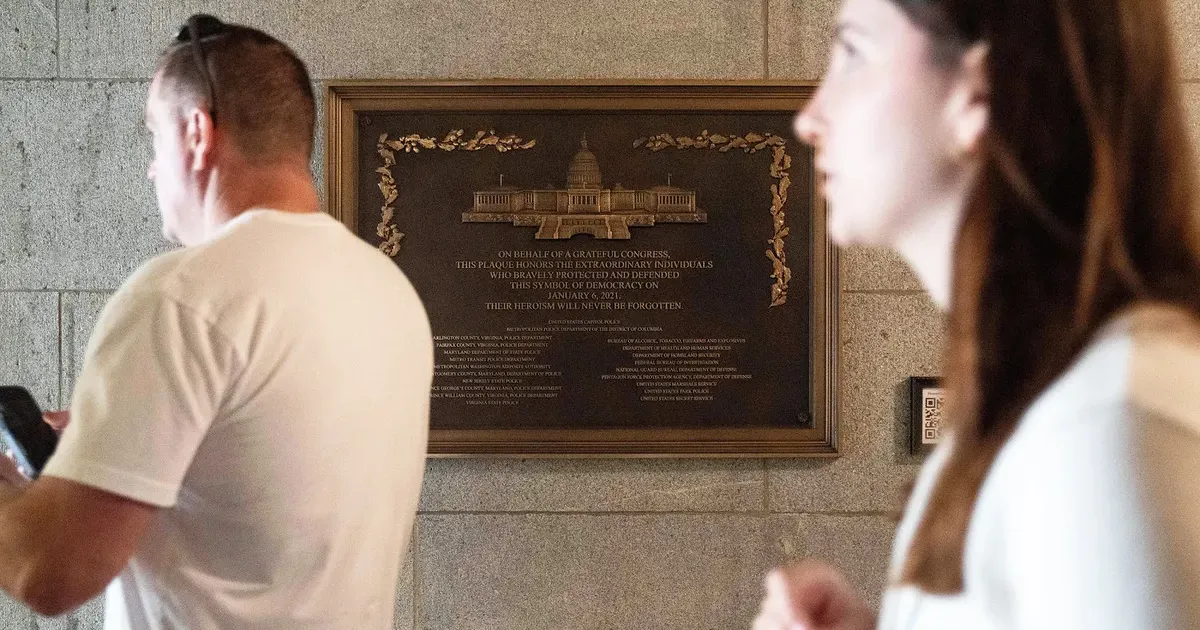
Capitol Police officers are suing over a hidden riot memorial plaque, turning a dispute about visibility into a deeper fight over recognition and institutional memory. The lawsuit drew attention because the plaque is not only a piece of metal. For officers who lived through the attack, it represents whether the institution is willing to remember what happened openly. By March 12, 2026, the dispute had become a reminder that memorial fights often look symbolic from a distance. For the people named, injured or traumatized, symbolism can be the point.
Memory and Recognition
A memorial plaque inside or near the Capitol carries official weight. It tells visitors, lawmakers and staff that a particular event belongs in the public record of the building. If officers believe the plaque was hidden, delayed or minimized, they may read that as an effort to soften the memory of the riot. That is why the dispute has legal and emotional force. The phrase riot memorial plaque now stands for a broader argument over whether January 6 is treated as an institutional wound or a partisan inconvenience.
Why Officers Are Suing
The lawsuit gives officers a formal way to challenge decisions that might otherwise remain internal. It also puts pressure on officials to explain who made the placement decision and why. Legal claims around memorials can be difficult, but litigation can still force disclosure, timelines and accountability that ordinary complaints do not produce.
The officers' case will likely focus on process, representation and whether promises made after the attack were honored in practice.
Political Stakes
The politics are unavoidable. Some lawmakers want January 6 remembered as an attack on democratic institutions. Others have tried to narrow, redirect or soften the official narrative. A hidden plaque would become powerful evidence for those who argue that the institution is uncomfortable with its own memory.
The lawsuit may not settle the national debate, but it can force a concrete answer inside the Capitol: where does this memory belong, and who gets to decide?
Visibility Becomes the Test
For the officers, recognition is not a substitute for policy, benefits or security reforms. But it is part of whether their service is treated as visible and permanent. For Congress, the case is a reminder that institutional memory cannot be managed only through speeches. Physical symbols matter because they remain after the news cycle moves on. The plaque fight shows that the aftermath of January 6 is not finished. It continues in courtrooms, hallways and the contested spaces where public memory is built.
The officers' argument also has a workplace dimension. They are not only asking for a symbol to be seen by the public. They are asking whether an institution that depends on their service will acknowledge the conditions under which that service was tested. That matters for morale. Security agencies often tell employees that sacrifice will be remembered, but remembrance has to be visible to carry weight. A plaque kept out of view can feel like a promise honored only in technical form. The case may also affect how future commemorations are handled. If officials can approve a memorial and then place it where few people encounter it, the dispute becomes a template for symbolic minimization. Officers are likely to argue that visibility is not a decorative detail but part of the memorial's purpose.
There is a public-record issue as well. The Capitol is not an ordinary office building. Its corridors, rooms and entry points carry civic meaning because they are tied to national events. Decisions about what appears there are decisions about what visitors are invited to remember. Legal success may depend on narrow claims, but the public debate will be broader. Supporters will frame the lawsuit as a demand for dignity. Critics may say memorial placement belongs to officials who manage the building. The court may have to separate those emotional and administrative questions. The lawsuit also arrives in an environment where January 6 is still being reinterpreted in political speech. That makes a physical plaque more important, not less. A fixed marker resists the way slogans can change from campaign to campaign.
For officers who were injured, threatened or forced into prolonged recovery, the placement issue can feel personal because it concerns whether their experience remains visible after ceremonies end. The practical solution may be simple, but the conflict is not. It reflects a larger struggle over whether the institution remembers the attack as a shared civic rupture or manages it as a partisan liability. The lawsuit also asks officials to think about permanence. A ceremony can be forgotten, a statement can be archived and a press release can vanish from public memory. A visible memorial keeps asking the institution to account for what happened.
That is why the placement decision has become a dispute over January 6 memory. The officers are not only challenging where an object sits. They are challenging whether the institution is willing to let the public encounter that memory without embarrassment or evasion. The case may end through a settlement, a placement change or a legal ruling. Whatever the path, it shows that recognition disputes rarely stay symbolic once the people affected believe the symbol has been hidden from view.