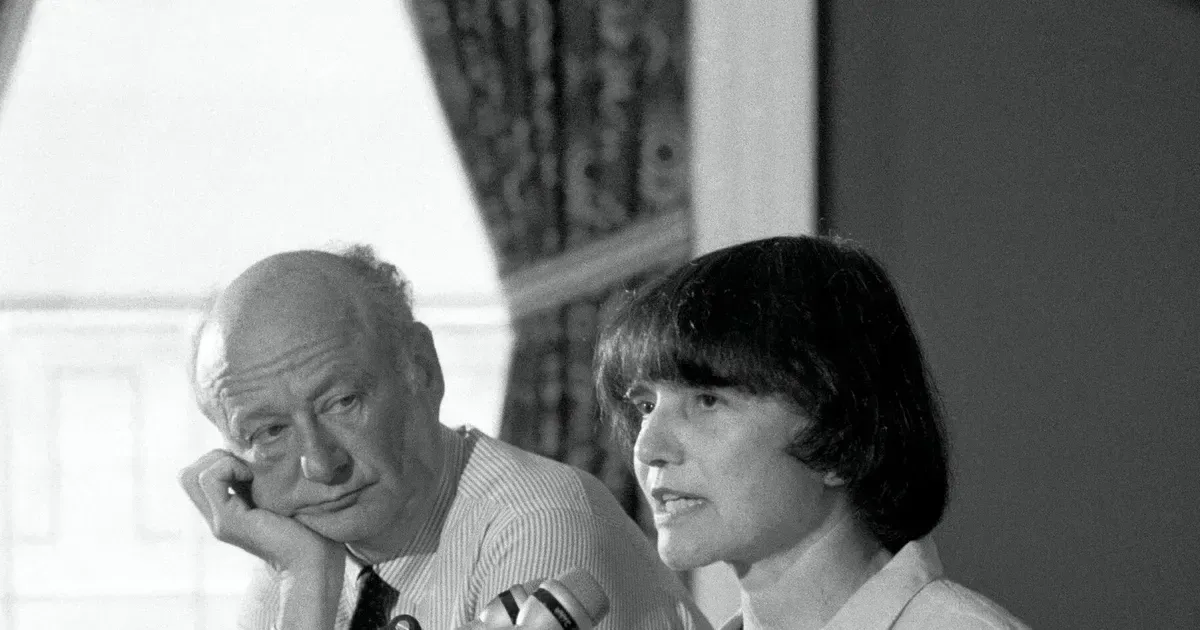
Carol Greitzer, the influential reformer who spent decades dismantling Tammany Hall power and defending lower Manhattan neighborhoods, has died. The news closed a civic career that helped redefine neighborhood power in New York. It also reopened a debate over preservation, housing and local democracy. Her death on April 16, 2026, at the age of 101 marks the final chapter for a generation of activists who transformed New York City from a developer-driven metropolis into a collection of protected neighborhoods. Greitzer was a founding member of the Village Independent Democrats, the insurgent club that famously unseated the powerful Democratic boss Carmine De Sapio in 1961.
New Yorkers knew her best as a fierce legislative architect on the New York City Council, where she served for twenty-two years. She entered the political arena when city politics remained dominated by smoke-filled rooms and rigid patronage networks. Along with urban theorist Jane Jacobs, Greitzer mobilized residents to defend the physical and social fabric of Greenwich Village against aggressive urban renewal projects. These efforts eventually defeated the Lower Manhattan Expressway, a large highway project that would have gutted the historic neighborhood to connect the East and Hudson Rivers.
The Battle Against Robert Moses
Robert Moses, the legendary urban planner who reshaped New York with bridges and parkways, met his most persistent match in Greitzer and her neighborhood coalition. Moses viewed Greenwich Village as a slum in need of modern clearing, but Greitzer recognized the area as an essential center of architectural history and community life. She worked to block his plans to run a road through the heart of Washington Square Park, a move that would have permanently severed the park from its surrounding residential blocks. The victory against the park roadway established a new precedent for community-led resistance in municipal planning.
Legislative records from the 1960s show that Greitzer viewed preservation as more than a nostalgic exercise. She saw it as a necessary defense against the homogenizing forces of mid-century architecture. After the 1963 demolition of the original Pennsylvania Station, she became an early advocate for the New York City Landmarks Law. This legislation provided the legal framework to protect thousands of structures, including the Jefferson Market Courthouse, which Greitzer helped save from the wrecking ball. The courthouse is now a public library.
The Village Independent Democrats described Greitzer as a lifelong New Yorker who opposed Robert Moses’s wrecking ball and championed the rights of district residents.
Greitzer's influence came from the patience of local politics rather than a single famous office. She organized block by block, committee by committee, at a time when neighborhood residents were often treated as obstacles to large planning schemes. That work helped turn preservation into a political force and gave reform Democrats a durable base outside the old machine structure.
Her career also showed how municipal power could be used defensively. By slowing destructive projects, protecting street life and pressing agencies for accountability, she made city government answer to people who would otherwise have been displaced by decisions made far from their blocks.
That legacy is why her death resonated beyond the Village. Greitzer represented a style of city politics built on public meetings, stubborn paperwork and constant pressure on planning agencies. It was slower than mayoral power, but it changed what residents expected from local government and preserved civic leverage for future neighborhood fights.
Reform Legacy in the Village
Praise for Carol Greitzer can coexist with scrutiny of the preservationist movement’s unintended consequences. While Greitzer successfully defeated the heavy-handed master planning of the Robert Moses era, the tools she helped create have morphed into an impenetrable wall of regulatory capture. The very landmark laws designed to save architectural gems are now frequently weaponized to block the housing density New York desperately requires. Greitzer championed a version of the city that was vibrant because it was accessible to the middle class, yet her success in freezing the Village in amber has made it a playground for the global elite.
Her legislative bravery on civil rights is also part of that legacy. Proposing gay rights legislation in 1971 was not a career-enhancing move; it was a principled stand that invited vitriol. Her legacy endures not in monuments but in the neighborhoods she refused to let die.