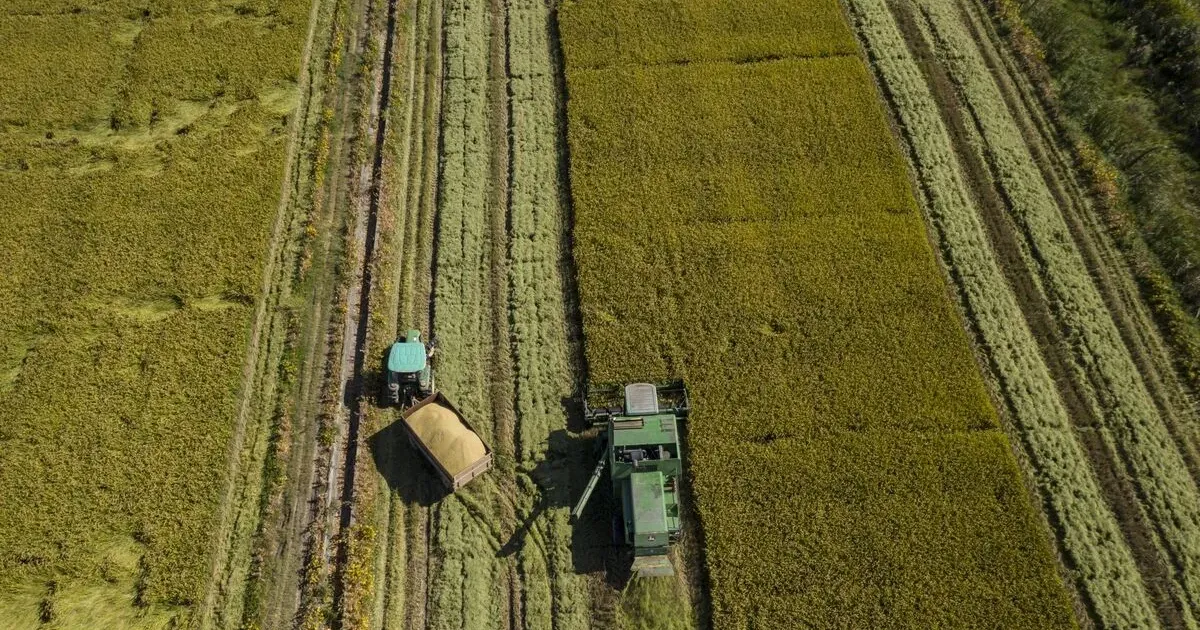
China is asking private companies to take a larger role in rural development as Beijing tries to strengthen food security, farm productivity and domestic demand. Vice Agriculture Minister Zhang Zhili urged U.S.-invested companies and other firms to align their strengths with China's agricultural and rural modernization agenda. The appeal shows how state planning and private capital are being pushed into the same countryside strategy.
The message fits China's broader rural revitalization campaign. Beijing wants to modernize agriculture, improve logistics, raise rural incomes and reduce vulnerabilities in food supply chains. The state can set targets and mobilize local governments, but it still needs private capital, technology and management expertise to make many of those targets practical.
That creates an opening and a warning for companies. The market opportunity is real, especially in agricultural technology, logistics, storage, seed development, cold-chain systems and processing. But the policy environment remains state-led, and foreign firms have to weigh access against control, data, intellectual property and political risk.
Rural Revitalization and Supply-Chain Stability
China's rural modernization drive is tied closely to food security. Officials want more efficient production, better storage and less waste between farm and consumer. Processing, transport and quality control all matter because losses after harvest can be as important as yield in the field.
Private firms can help build that missing infrastructure. Grain storage, cold-chain logistics, digital marketplaces, agricultural inputs and processing technology are all areas where commercial expertise can support public policy goals. Local governments may offer incentives, but companies will still have to navigate land rules, approvals and uneven regional capacity.
The policy also reflects Beijing's desire to make rural areas more economically productive. Rural revitalization is not only about farming. It includes e-commerce, tourism, local manufacturing, digital services and links between villages and urban consumers. The countryside is being treated as a development platform, not just a food base.
U.S. Firms and Rural Modernization
Zhang's appeal to U.S.-invested firms is notable because it comes during a period of tense U.S.-China relations. Agriculture remains one of the more practical areas for cooperation, but it is not insulated from geopolitics. American firms may bring useful expertise in storage, logistics, biotechnology, animal health, equipment and farm management. They also bring technologies Beijing would like to localize.
U.S. companies in China should seize opportunities from Beijing's rural revitalization drive and align their strengths with the needs of agricultural and rural development, Vice Agriculture Minister Zhang Zhili said.
The invitation therefore works on two levels. It offers foreign companies market access and policy support, while also drawing their capabilities into a state-defined modernization program. For companies, the challenge is to participate without giving away the strategic value that made them attractive in the first place.
Joint ventures and local partnerships can help firms expand, but they can also create technology-transfer pressure. That risk is not unique to agriculture, but agriculture's connection to food security makes it more politically sensitive. A seed, storage or data platform can become a national-security asset once it is embedded in supply-chain planning.
Digital Villages and Agricultural Technology
China's rural development agenda increasingly depends on digital infrastructure. E-commerce platforms connect farmers to urban consumers, drones and sensors support precision agriculture, and data tools help track production and logistics. These systems can raise efficiency, but they also extend state visibility into rural markets.
The Digital Village concept is attractive because it promises to shorten the distance between producer and buyer. A farmer or cooperative can sell through online channels, while logistics firms move products faster and with less spoilage. That can improve incomes if the value does not get captured entirely by platforms, distributors or local officials.
Food security concerns give the policy urgency. China remains exposed to global price swings and import dependencies for key commodities. Improving domestic efficiency is a hedge against trade disruption. It is also a way for Beijing to reduce the political risk of rural discontent by linking modernization with income growth.
The State-Led Market Test
Can Western executives find a sustainable path inside a state-directed agricultural system? History suggests that invitations from Beijing often carry hidden costs that outlast the first wave of market access. The call for U.S. firms to join rural revitalization is not a move toward liberalization. It is a calculated effort to pull private expertise into a national food-security project that the state cannot modernize alone.
Beijing needs private capital to take risks the government does not want to shoulder by itself. Foreign corporations should be wary of any deal that requires proprietary technology to be embedded inside state-supervised networks. The chance to reach a modernizing rural market is tempting, but the price of entry can be future obsolescence once the foreign partner's expertise has been absorbed. China is building a fortress of food security, and it is asking Western firms to help provide the blueprints. Shareholders should ask whether short-term rural expansion is worth the long-term risk of losing competitive advantage in global agriculture.