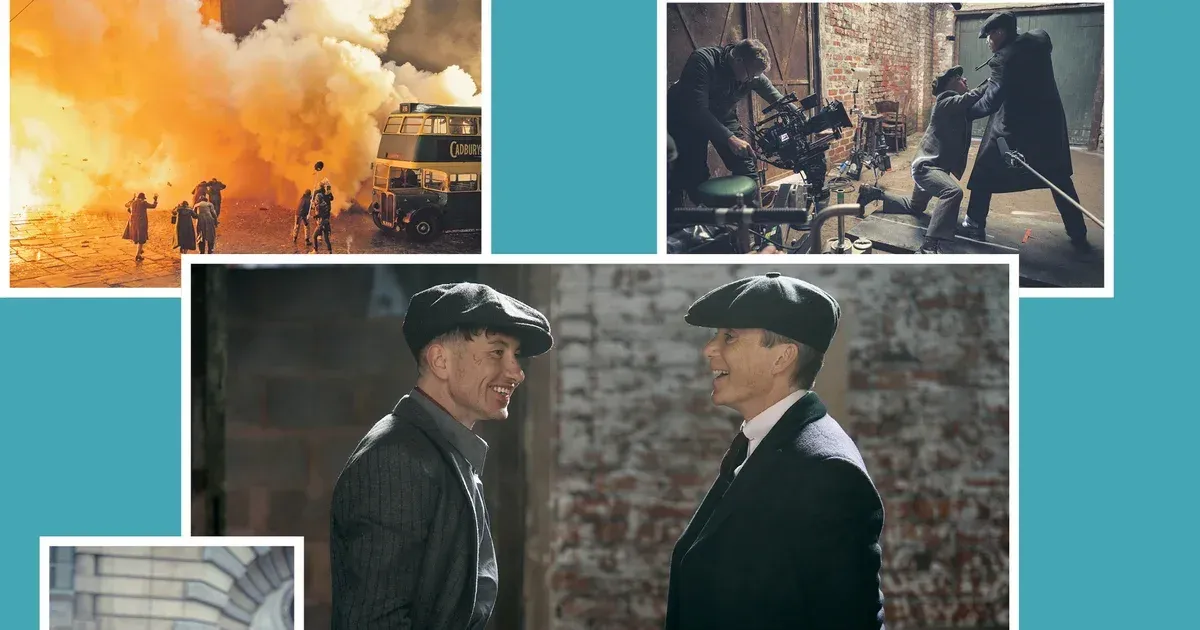
Peaky Blinders Moves to Film
Rain slicked the cobblestones of a reconstructed Birmingham street as Cillian Murphy stepped back into the heavy wool overcoat of Thomas Shelby. On March 13, 2026, the film plan gave Peaky Blinders a new screen life beyond the original series. After six seasons of television dominance, the transition to a feature film format brings a different set of logistical pressures. Production insiders describe a set defined by grueling physical demands, including choreographed brawls in literal pigsties and the unpredictable temperament of English weather. Steven Knight, the architect of the Shelby saga, has long maintained that the story would only find its true resolution on the silver screen. Success for the series did not arrive overnight.
Early seasons built a cult following in the United Kingdom before American audiences discovered the razor-thin line between period drama and gangland thriller. Cultural heavyweights like Snoop Dogg became vocal proponents of the show, often citing the sharp tailoring and unflinching violence as points of fascination. That endorsement helped propel the BBC production into the global consciousness, turning a regional story about post-World War I industrial life into a worldwide aesthetic movement. Production stalled recently when the crew encountered what Knight described as the wrong kind of snow. Visual consistency remains paramount for a franchise built on a specific, desaturated color palette.
Filming a winter sequence requires a delicate balance of practical effects and natural lighting, yet nature rarely cooperates with a shooting schedule. High-definition cameras reveal every flaw in artificial frost, forcing the team to pivot during expensive night shoots to maintain the gritty realism fans expect. June 2023 served as the starting point for a major casting coup. Barry Keoghan, fresh from a string of critical successes including his work in The Banshees of Inisherin, sent a simple Father's Day greeting to Cillian Murphy. The two actors had formed a bond during the filming of Christopher Nolan's Dunkirk in 2017.
Murphy responded with an invitation that would change the trajectory of the film. He asked if Keoghan would like to play his son in the upcoming movie. Murphy remains a central figure in the casting process, acting as an informal recruiter for high-caliber talent. While Keoghan remembers the exchange as a personal outreach, Murphy suggests his involvement was more structural. Regardless of the exact sequence of events, the addition of Keoghan provides a bridge between the established Shelby generation and a younger, equally volatile presence.
The chemistry between these two Irish actors provides a new engine for a narrative that many thought had reached its natural conclusion. Names like Tim Roth and Rebecca Ferguson soon followed. Their inclusion suggests a broadening of the Peaky Blinders universe, moving beyond the tight-knit family circles of Small Heath. Roth brings a seasoned intensity often found in Quentin Tarantino films, while Ferguson offers a refined, sharp-edged presence that rivals the late Helen McCrory's portrayal of Aunt Polly. A big-screen adaptation needs these high-profile additions to justify the expanded budget.
Murphy and Keoghan Reset the Cast
Action sequences in the film have reportedly pushed the cast to their physical limits. One specific sequence involving a fight in a pigsty required days of rehearsal in mud and animal waste. Knight insists on this level of immersion to avoid the sanitized feel of many modern period pieces. Murphy has often spoken about the physical toll of playing Thomas Shelby, a character who carries the psychological weight of the trenches into every business negotiation. Visual effects teams have had to work around the limitations of the wrong snow, a term used when the density of fake flakes fails to catch the light correctly.
Paper-based snow often looks clumpy under the glare of industrial lamps, while salt-based alternatives can damage the heritage locations used for filming. The production team eventually opted for a sophisticated chemical foam that mimics the crystalline structure of real powder, though it requires constant re-application between takes. Money flows into these details because the Peaky Blinders brand relies on a very specific sense of place. The Birmingham of 1919 and beyond is not just a backdrop but a character in its own right.
Stylistic choices from the show have bled into real-world fashion for over a decade. The undercut hairstyle, characterized by shaved sides and a longer top, became a staple in barbershops from London to Los Angeles. It was a look originally designed to prevent the spread of lice in overcrowded industrial housing, yet it evolved into a symbol of modern masculinity. Murphy admits to a complex relationship with the haircut, noting that it makes him instantly recognizable to fans even when he is not in costume.
Fan culture drove the show toward this cinematic finale. Online communities meticulously track the historical accuracy of the weapons used by the Shelbys and the specific blends of whiskey consumed in the Garrison Lane pub. Knight acknowledges this scrutiny, noting that the move to film allows for a higher level of historical detail that was previously restricted by television budgets. A single shot in the film can now cost as much as an entire scene in the first season.
Writing the conclusion for a character as resilient as Tommy Shelby presented a unique challenge for Knight. The creator has always viewed the story as a journey toward redemption, or at least a search for it. The casting also changes audience expectations. Murphy brings continuity from the series, while Keoghan adds a younger, volatile presence that can widen the film’s appeal beyond existing fans. For Netflix and producers, the challenge is scale. A film has to reward long-time viewers without feeling like an extended reunion episode built only on nostalgia.