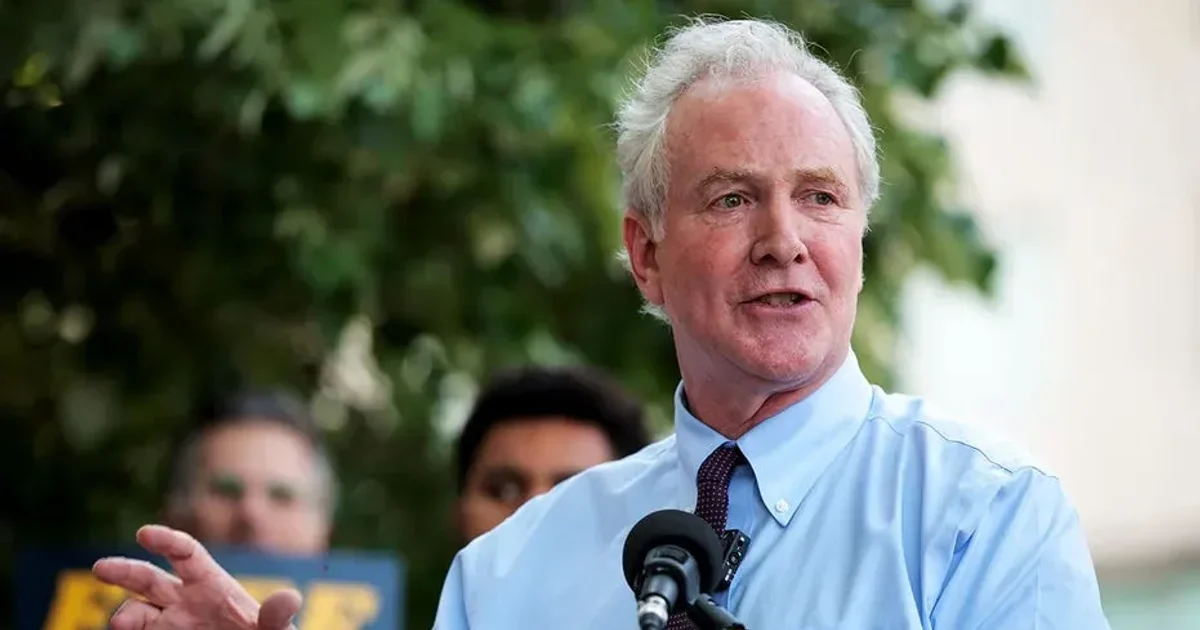
DHS pushed back against the account from Chris Van Hollen of a Baltimore-area ICE arrest, saying the man at the center of the dispute was not simply an asylum seeker in an open process. The agency said the enforcement action involved Ever Omar Alvarenga-Rios, a Honduran national with a final removal order from 2018. The rebuttal, issued on April 5, 2026, followed public attention on photos showing Alvarenga-Rios injured in a hospital bed. Van Hollen questioned the circumstances of the arrest, while federal officials said the injury followed a vehicle pursuit and an attempted escape from officers. The political stakes are high because immigration enforcement disputes now move quickly from local incidents to national messaging fights.
DHS Challenges the Arrest Narrative
The agency's central claim is that Alvarenga-Rios was already subject to removal and was being targeted through an active enforcement operation. DHS said officers attempted to stop his vehicle before the encounter escalated into a crash involving government and civilian vehicles. The distinction matters because the political argument turns on language. Van Hollen's description framed the case around treatment of a vulnerable migrant. DHS framed it around a fugitive with a removal order who, according to the agency, endangered officers and the public while trying to avoid custody.
DHS said two ICE officers were injured during the enforcement action and were expected to recover.
The agency also said investigators were reviewing vehicle evidence, officer accounts and available video. Those materials will determine whether the public record supports DHS's version, Van Hollen's concerns or some combination of both.
Maryland Politics Meets Immigration Enforcement
The dispute lands in a state where immigration enforcement has long been politically sensitive. Local limits on cooperation with federal immigration authorities are defended by advocates as public-safety measures that encourage trust. Federal officials argue those policies make targeted arrests more difficult and more dangerous. Van Hollen's intervention gave the incident a national profile. It also forced DHS to respond in unusually detailed language, naming the suspect, emphasizing the removal order and describing the crash as the result of alleged evasion rather than agent misconduct.
Advocacy groups are likely to keep pressing for independent review. Even if the removal order is confirmed, they will argue that federal officers must account for how an arrest produced a head injury and a multi-vehicle crash. DHS will counter that the suspect's own actions created the danger.
Evidence Will Decide the Public Fight
The case now depends on records more than rhetoric. Dashcam footage, body-camera video, medical reports and vehicle data can clarify the timing of the crash and the struggle that followed. Without those records, each side can emphasize the facts that serve its preferred frame.
For DHS, the goal is to protect officer credibility and discourage local officials from portraying every contested arrest as abuse. For Van Hollen, the goal is to question whether immigration enforcement is being carried out with enough care and transparency.
The broader stakes are practical. If lawmakers and federal agencies cannot agree on basic facts after a high-profile arrest, future immigration operations will become even more politically combustible. The Baltimore case is therefore less about one hospital photo than about who gets trusted when enforcement, injury and immigration status collide.
The case also shows why immigration disputes often become fact fights before they become policy fights. A removal order, an asylum claim, an injury photo and an officer injury can all be true in different ways, but each fact pushes the public toward a different conclusion. Officials on both sides are therefore trying to define the incident before the full investigative record is public.
Maryland leaders will also face pressure over local cooperation rules. Supporters of those policies say immigrants are less likely to report crime when local police are seen as an extension of ICE. Federal officials argue that limited cooperation pushes more work onto specialized arrest teams and increases the chance that a routine stop becomes a confrontation.
The next phase should be less about slogans and more about sequence. Investigators need to establish when the stop began, how the crash happened, when Alvarenga-Rios was injured and what officers knew at each stage. If that record is released clearly, it may narrow the dispute. If it remains fragmented, the Baltimore arrest will become another durable symbol in the national immigration fight.
The practical question is whether the record can be released quickly enough to prevent the political frame from hardening. Immigration cases often become symbolic before the evidence is complete, and that creates incentives for both sides to overstate what is known. A careful timeline would help separate the immigration status dispute from the use-of-force dispute and give the public a clearer basis for judging the Baltimore operation.
That clarity matters for future arrests as well. If officers believe local politicians will immediately question their conduct, agencies may release more detail earlier. If advocates believe DHS is selectively presenting facts, they will demand outside review. The case therefore becomes a test of transparency as much as immigration enforcement.