England's final public count for the March 2026 Kent meningococcal disease outbreak records 21 confirmed cases linked to Canterbury. All 21 were confirmed as serogroup B meningococcal disease, or MenB, and 18 matched the identified outbreak strain. Every confirmed case was admitted to hospital, and two people died.
The figures replace the changing totals reported while suspected cases were still being investigated. They also put the response on a firmer footing than the original alarm-driven account: this was a severe, concentrated outbreak among young adults, but it was not evidence of uncontrolled spread across the wider population.
How the Canterbury Cluster Developed
UK Health Security Agency data show that the earliest known patient became unwell on 9 March and the latest on 16 March. The largest number of onsets occurred on 13 March. In the agency's first technical briefing, based on information available on 23 March, the cluster comprised 20 confirmed and three probable cases. All were young adults, with a median age of 19.
Most cases had a shared exposure. Twenty of the 23 confirmed and probable patients in that early analysis had attended Club Chemistry in Canterbury before becoming ill, all between 5 and 7 March. That pattern supported a focused response around the venue, local universities, schools with cases and people identified as close contacts.
The apparent total moved up and down as laboratory and epidemiological work continued. UKHSA cautioned that a change in the daily table did not necessarily represent a new infection: a probable case could be confirmed, reclassified or removed when test results or exposure information changed. By 1 April, the table had settled at 21 confirmed cases and no probable cases.
Antibiotics and Vaccination Had Different Jobs
Health teams offered preventative antibiotics to close contacts, University of Kent residents and some staff, students at other Canterbury institutions where cases had been identified, affected sixth-form groups and people who had visited or worked at Club Chemistry during the specified exposure period. The aim was to reduce the chance that people assessed as exposed would develop or transmit disease.
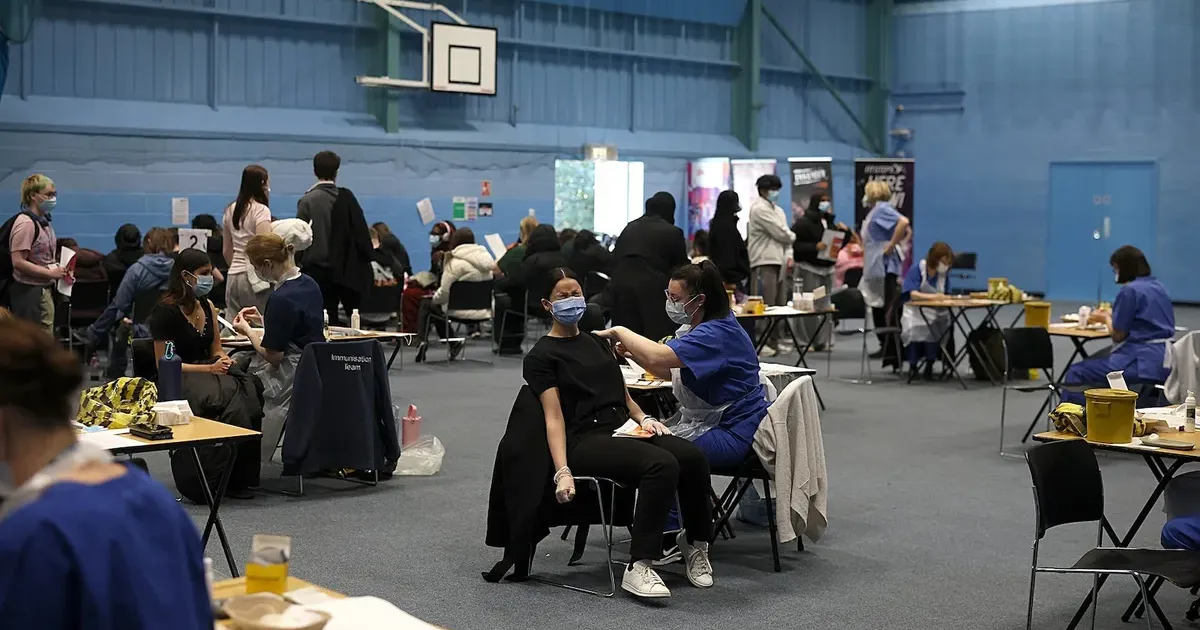
Targeted MenB vaccination was added for people considered at continuing risk. By 20 March, UKHSA said 4,500 vaccinations had been given and more than 10,500 antibiotic doses administered. Laboratory analysis indicated that the Bexsero vaccine used in Kent should cover the detected strain, although further analysis was still under way.
The two measures were not interchangeable. UKHSA said two vaccine doses help protect an individual against MenB disease but do not prevent all meningococcal infections or stop carriage and transmission in the community. That is why antibiotics, case investigation and contact tracing remained central even after vaccination clinics opened.
Later Evidence Narrows the Risk Picture
The first technical briefing recorded nine intensive-care admissions among the 23 confirmed and probable cases known on 23 March. It also identified the outbreak strain as part of clonal complex 41/44, a lineage already established in the United Kingdom. The strain was distinctive enough for additional genomic, antibody and transmission research, but the early data did not prove that one mutation or one behaviour caused the cluster.
By 24 April, UKHSA reported that no further cases of the outbreak strain had been detected in England. Overall invasive meningococcal disease activity remained within normal national bounds, including unrelated small clusters. A case in Austria carried the same strain, showing that the subtype circulated more widely than the known Kent cases, but this did not establish onward spread from Canterbury.
For the wider public, UKHSA continued to describe the risk as low. Meningococcal disease can progress quickly, so the agency's public guidance stressed urgent medical assessment for symptoms such as fever, severe headache, stiff neck, vomiting, confusion, extreme drowsiness or a rash that does not fade under pressure. A rash does not always appear, and the official advice was not to wait for every symptom before seeking help.
The Hard Test Is an Auditable Outbreak Record
The strength of this response cannot be measured by dramatic language about panic or by pretending every contact faced the same danger. It can be measured by whether authorities found cases, defined exposure groups, delivered prophylaxis, documented vaccination and published corrections as investigations changed the count. On those measures, the public record is unusually detailed.
That record also exposes the limits. Two people died, nine of the early confirmed and probable patients required intensive care, and the final case count only became clear after repeated reclassification. No further outbreak-strain cases by late April is reassuring; it is not proof that meningococcal risk disappeared or that every question about the strain was answered.
The durable lesson is narrower and harder than a generic call for speed. A credible outbreak response must distinguish confirmed cases from notifications, personal protection from transmission control, and an evolving hypothesis from a laboratory result. Kent's published timeline now allows those distinctions to be checked. Any future policy claim about vaccine eligibility or preparedness should be judged against that evidence, not against the fear generated during the first days of the cluster.