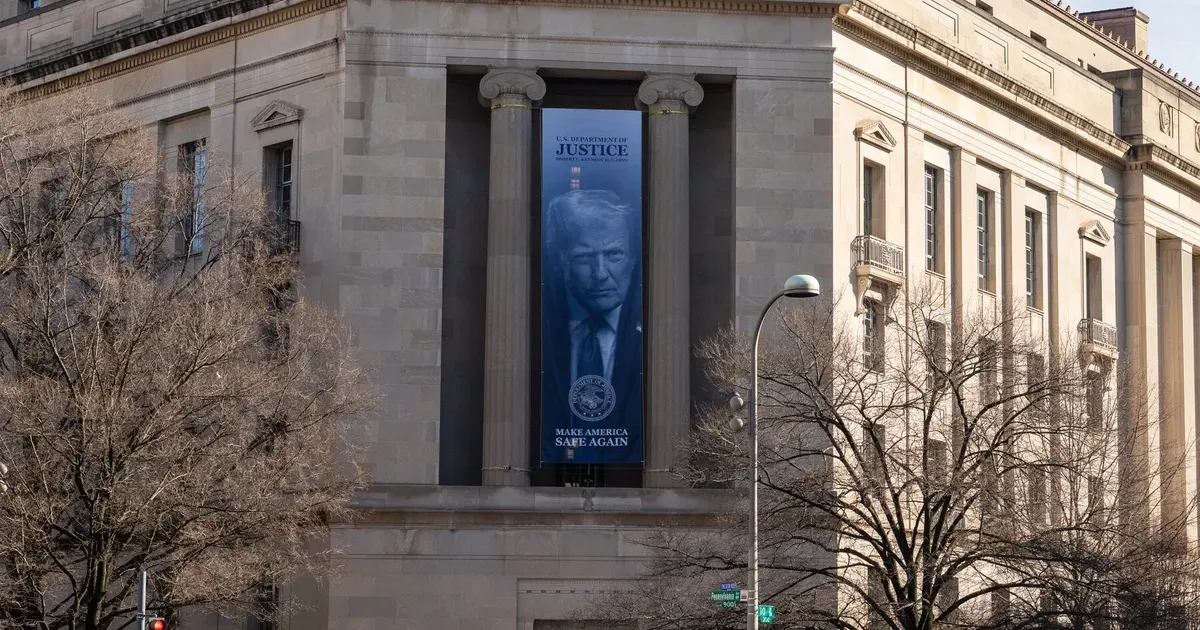
A Justice Department Office of Legal Counsel opinion challenging the Presidential Records Act has turned presidential recordkeeping into a live constitutional fight. The opinion argued that the 1978 law intrudes on presidential independence by giving Congress too much control over official presidential records. Critics see a direct threat to public ownership of documents created in the White House.
The opinion does not erase the statute by itself. Courts can still block or limit how the executive branch uses it, Congress can respond, and future administrations may take a different view. But OLC opinions guide executive-branch behavior, so the practical risk begins before a final judgment. If officials believe the law is optional, records can disappear long before a court sorts out the theory.
OLC challenged a post-Watergate settlement
The Presidential Records Act came after Watergate and the fight over Nixon's papers. Its basic premise is that official presidential records belong to the public, not to a former president's private archive. The law created preservation duties, transfer rules and a path for later access through the National Archives.
The new OLC view attacks the law's public-ownership premise at its root. It argues that Congress cannot regulate presidential records in this way without violating Article II independence. The claim is sweeping because the law has shaped presidential transitions and archival practice for decades. Treating it as unconstitutional would not be a technical adjustment. It would change the ownership logic around the modern presidency.
Archives need rules before disputes
The National Archives cannot function through improvisation. Emails, schedules, memos, correspondence, call notes, photographs and digital messages need capture rules while officials are still in office. Waiting until a scandal or lawsuit begins is too late. The record either exists or it does not.
Uncertainty can damage the system even before a final court ruling. Staff members who are unsure whether preservation rules remain binding may become less careful. Political aides may treat borderline materials as personal. Agencies may hesitate over transfer duties. A recordkeeping system built on hesitation becomes weak at the exact moment it needs routine discipline.
Executive power claim cuts into oversight
Supporters of the opinion will say presidents need confidentiality and control over internal communications. The confidentiality concern is real in some contexts. Presidents do need space for advice, deliberation and national-security decision-making. The Presidential Records Act already contains delayed-access and privilege mechanisms for sensitive material.
The opposing risk is more basic. If presidents can decide for themselves what counts as a public presidential record, oversight depends on the discretion of the official being overseen. Congress, courts, journalists, historians and later administrations would have to trust the White House to preserve the trail needed to evaluate the White House. Such discretion is self-policing, not neutral recordkeeping, by the most powerful office in the government.
Litigation now sets the guardrails
The fight has already moved into court, with historians and watchdog groups challenging efforts to treat the Act as optional. The litigation matters because OLC opinions can shape executive conduct even while judges consider the merits. A preliminary order, discovery fight or narrow ruling can determine whether records are preserved during the months when the legal argument is still unfolding.
Courts will have to weigh separation of powers against the public's interest in preserving official records. They may also have to decide whether internal executive guidance is enough when the government has simultaneously declared the statute unconstitutional. A promise to preserve records is weaker than a binding legal duty if the same administration claims the duty should not exist.
Missing records punish future officials
Missing records create problems beyond historical research. Incoming administrations need records to understand commitments, risks, diplomatic conversations, agency decisions and unresolved crises. Courts need records to test legality. Congress needs records for oversight. Agencies need records to avoid repeating mistakes.
When a record disappears, the damage is rarely limited to one document. The missing file can distort the timeline around a decision, obscure who approved an action and make later accountability depend on memory instead of evidence. A president may benefit from gaps in the short term, but the next administration inherits the same damaged machinery.
Public memory is governing infrastructure
Recordkeeping is power because records decide what the public can later prove. A presidency without reliable archives becomes easier to mythologize, easier to sanitize and more difficult to audit. The fight over the Presidential Records Act is therefore not paperwork. It is a fight over whether the modern presidency leaves a public trail.
The executive branch can argue for confidentiality without claiming ownership of public history. A sound standard protects sensitive advice while preserving official records for lawful review. If the OLC opinion becomes the operating rule, the country will learn about missing records only after the missing record is needed. By then, accountability has already lost.