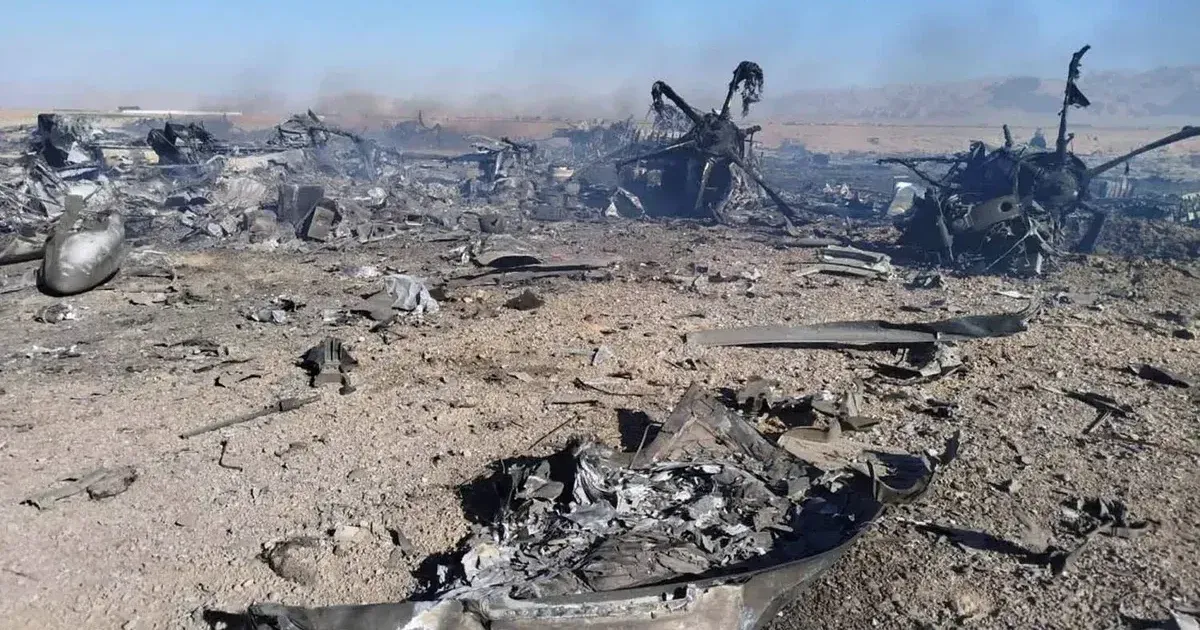
Donald Trump confirmed that a U.S. F-15 was downed over Iran, placing a rare aircraft loss at the center of the expanding conflict. Officials said both crew members survived after a rescue operation inside hostile territory. The confirmation came on April 7, 2026, with Washington emphasizing the successful recovery while defense analysts focused on the threat posed by portable anti-air systems. The incident raises tactical questions about future manned flights over contested airspace.
Iranian Shoulder Missile System Capabilities
Tehran maintains that its military forces were acting in defense of national sovereignty when the missile was launched. Defense analysts suggest the weapon used was likely an indigenous Misagh variant or a smuggled QW-series system capable of high-mobility deployment. These systems allow small infantry units to threaten multimillion-dollar jets without the need for traditional radar-linked batteries. Proliferation of this technology negates the high-altitude advantages typically held by Western air forces during low-level reconnaissance.
Courtney Kube reported that the vulnerability of fourth-generation fighters to low-cost ground threats remains a primary concern for Pentagon leadership. Records indicate that the F-15 was operating within a contested corridor when the infrared seeker locked onto the engine exhaust. Most modern flare systems are designed to distract incoming missiles; the jet failed to deviate quickly enough to avoid the blast radius. Fragmentation damage caused a total loss of hydraulic pressure within seconds of the impact. The loss added a new tactical risk to the geopolitical fallout.
Rescue Mission Logistics in Hostile Territory
Military logistics for the rescue involved a fleet of HH-60G Pave Hawk helicopters supported by HC-130J Combat King II refueling planes. Specialized pararescue jumpers descended into the rugged terrain under the cover of darkness to establish a perimeter around the survivors. Survival gear provided to the airmen included encrypted signaling devices that allowed the recovery team to pinpoint their exact location despite Iranian jamming efforts.
Lt. Col. Dan Rooney noted that the success of such missions relies on a seamless integration of satellite data and pilot instinct. Airman training emphasizes evasion and concealment in the hours immediately preceding extraction. Both survivors followed standard protocols by moving away from the primary debris field to avoid detection by Iranian patrol units. Their extraction was completed in less than ninety minutes from the time of the initial distress call.
“President Trump is hailing the rescue of a downed weapons system officer as one of the most complex missions the U.S. military has ever attempted,” officials said.
Military Response and Combat Aviation Risks
Washington continues to monitor the fallout of the downing as military leaders evaluate the necessity of further sorties over Iranian territory. Engagement rules may shift to require a higher minimum altitude for all manned flights to move aircraft beyond the effective ceiling of shoulder-fired weapons. Such a change would impact the quality of visual intelligence gathered by weapons system officers during close-air support drills.
Historically, the loss of an F-15 in combat is a rare event that triggers an exhaustive investigation into electronic warfare failures. Pilots across the fleet are now reviewing tactical maneuvers designed to evade short-range heat-seeking threats. Defense contractors at Boeing are analyzing the telemetry data to determine if hardware upgrades can improve the reaction time of automated flare dispensers.
Command assets in the Persian Gulf initiated a tier-one response to suppress local communications while the rescue progressed. This action prevented Iranian commanders from organizing a larger intercept force to block the extraction helicopters. Satellite imagery confirmed the wreckage was largely destroyed upon impact with a ridge line in the central Iranian plateau.
Tehran has signaled that any further incursions will meet similar resistance from its domestic defense networks. Intelligence suggests that several militia groups in the region have recently received shipments of advanced MANPADS components. The proliferation of these weapons creates a persistent threat to all coalition aircraft operating at low or medium altitudes. Pentagon officials have not ruled out the use of unmanned platforms for future high-risk missions to minimize the potential for American casualties.
Combat search and rescue units remain on high alert throughout the operational theater. President Donald Trump confirmed on April 7, 2026, that an Iranian shoulder-fired missile brought down a U.S. F-15 fighter jet during an operational mission over Iran. Recovery teams launched a specialized extraction effort immediately to retrieve the pilot and the weapons system officer from hostile territory. Survival of the two airmen depended on a rapid response from regional assets as Iranian militias moved toward the crash site.
Iranian forces deployed a Man-Portable Air-Defense System, commonly known as a MANPADS, to strike the fourth-generation fighter at a low altitude. Initial intelligence reports indicate the weapon was a heat-seeking variety that bypassed the aircraft's thermal countermeasures. This specific vulnerability in the F-15 airframe continues to challenge defense planners who must account for increasingly sophisticated anti-air technology in the hands of non-state actors.
Lt. Col. Dan Rooney described the extraction as a high-stakes coordination between air assets and ground-based recovery specialists. Successful retrieval of the crew members avoided a potential hostage scenario that would have complicated diplomatic maneuvers in the region. Security protocols dictated that the rescue teams use a combination of rotary-wing aircraft and electronic warfare support to mask their approach from Iranian radar installations.
Air Superiority Meets Cheap Threats
The rescue avoided a hostage crisis, which is no small outcome in a conflict where every captured service member can become a diplomatic weapon. The operational review will have to look beyond the aircraft loss itself. Investigators will need to examine route planning, altitude, electronic countermeasures, intelligence on local missile teams and whether unmanned systems should take more of the risk in similar missions. The larger military lesson is harsher. A low-cost missile system can force expensive aircraft, pilots and planners into a risk environment that technology alone cannot erase. Future sorties will have to account for that reality.