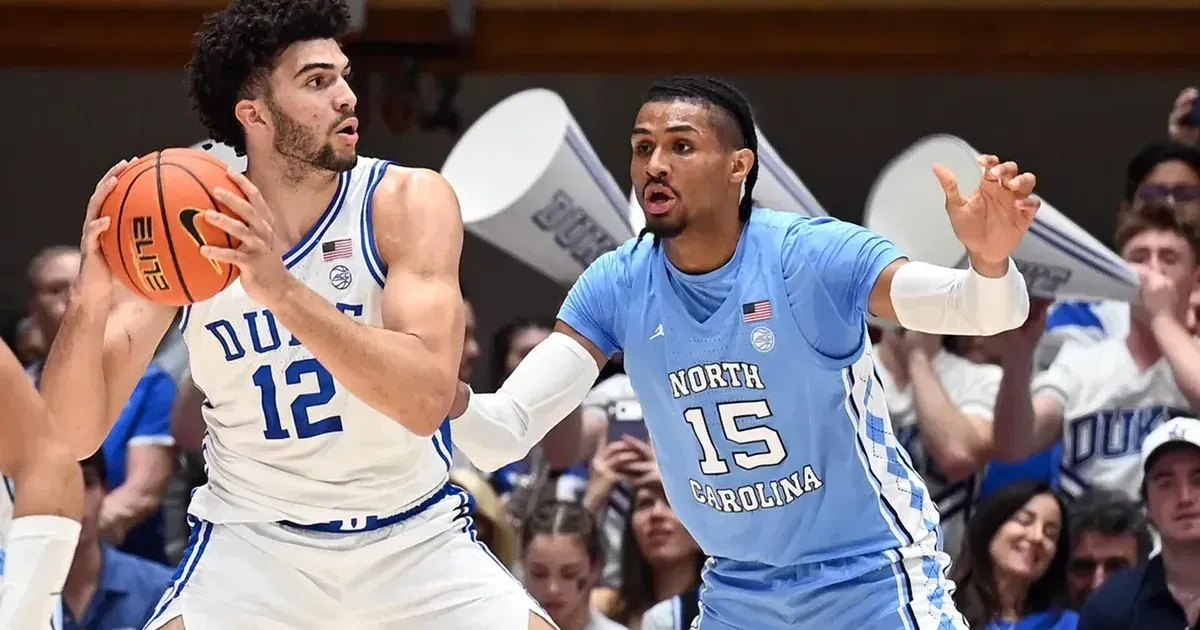
Duke enters the 2026 NCAA Tournament with a No. 1 overall seed, a 32-2 record and a medical problem that cannot be hidden by bracket graphics. The Blue Devils earned the top line after dominating the Atlantic Coast Conference, but the mood around the program changed once point guard Caleb Encourage and center Patrick Ngongba both reached March with foot injuries. The report was published March 16, 2026, after selection results turned Duke from a favorite into the most watched health story in the field.
Coach Jon Scheyer still guided Duke to the ACC tournament title, which says plenty about the roster. It also risks making the injury issue look smaller than it is. A conference tournament allows a staff to shorten games, lean on familiar opponents and survive one imperfect matchup. The national tournament gives every opponent a full week of film, a neutral floor and forty minutes to attack the exact place where a favorite is thin.
Duke Depth Becomes the Question
Encourage is the larger concern because Duke’s offense loses its most reliable organizer when he is unavailable. His pressure release value shows up against traps, late-clock possessions and the ugly stretches where a young team needs one calm decision instead of another difficult jumper. A walking boot does not automatically end a tournament, but it changes how opponents defend the first pass and how aggressively they test Duke’s secondary guards.
Ngongba’s injury creates a different problem. His presence near the rim gives Duke a defensive margin that cannot be replaced by simply playing faster. Without him at full strength, the Blue Devils have to protect the glass with guards, avoid foul trouble from smaller frontcourt lineups and still keep enough spacing for the offense to breathe. That is a lot to ask from a group already carrying championship expectations.
The SportsLine model still treats Duke as a major title threat, but projections can smooth over what single-elimination basketball does not forgive. A favorite can survive one cold shooting night. It can survive one starter at less than full strength. Surviving both, while every opponent treats the game like its season’s defining chance, is where the math begins to look cleaner than the sport itself.
East Region Leaves Little Margin
Kansas is the obvious team positioned to benefit if Duke’s injuries linger. Darryn Peterson gives the Jayhawks a scorer who can punish switching defenses, and their frontcourt has enough size to turn every missed box-out into a problem. The path is not built only around Kansas, either. Mid-major opponents in March rarely need to be better for six weeks; they only need to be sharper for two hours.
Betting markets have responded with caution rather than panic. Duke remains near the top of national title boards, yet the movement around alternate winners shows that sportsbooks understand the fragility of a favorite with two injured starters. Bettors may still want the brand, the seed and the roster ceiling. The price, however, has to account for the possibility that Duke is not fully Duke until it is too late.
The Blue Devils can answer the concern by winning early without asking either injured player to carry too much. That means cleaner defensive rebounding, more controlled tempo and better shot selection from the supporting cast. If Duke has to chase games in the first weekend, the injury story stops being background noise and becomes the central explanation for every hurried possession.
A Favorite Can Still Look Fragile
The uncomfortable truth is that college basketball sells March as a celebration while treating injured teenagers as moving parts in a billion-dollar bracket machine. Duke has done enough to deserve the top seed. That does not mean the sport should pretend that a medical staff can erase the cost of a long season in a few practice sessions. The bracket will call Duke the favorite; the floor will ask whether the favorite has enough healthy bodies to act like one.
This is where the Blue Devils’ status becomes less glamorous than it sounds. A healthy Duke team can bully the East Region. A compromised one has to manage minutes, absorb contact and hope that opponents fail to press the weakness everyone can see. That is not a scandal, but it is a warning. March does not reward the best resume; it rewards the team whose body holds together when the schedule stops offering mercy.