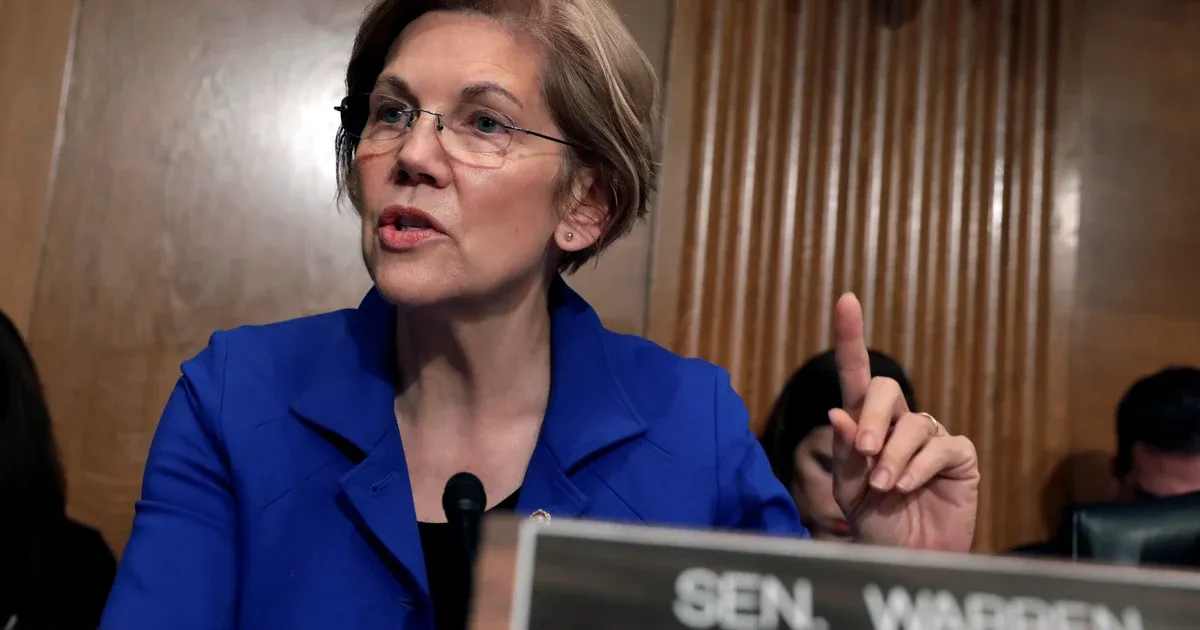
Warren Questions Amazon Pricing
Senator Elizabeth Warren sharpened her focus on Amazon this week, demanding answers about how the e-commerce giant handles contracts with local governments and school districts. A letter sent Wednesday to Amazon Chief Executive Officer Andy Jassy outlines allegations that the company utilizes its dominant market position to inflate costs for public institutions. Warren cited data suggesting that taxpayers may be footing an unnecessarily high bill for everyday supplies. The report was published March 12, 2026.
These concerns stem from a thorough report by the Institute for Local Self-Reliance, which analyzed procurement patterns across various jurisdictions. That research found that schools and municipal offices often pay sharply more for goods through Amazon's specialized portals than they would through traditional competitive bidding processes. Andy Jassy now faces a March deadline to provide detailed records of these pricing structures. Critics of the company have long argued that the convenience of the Amazon ecosystem masks a lack of transparency in how government-specific discounts are applied.
While the company markets its Business Prime and public sector tools as efficiency-saving measures, the data indicates a different reality. Local governments frequently find themselves locked into agreements that prioritize speed over fiscal responsibility. Warren wants to know if Amazon's algorithms are programmed to steer public buyers toward higher-priced items or if the company's contracting terms prevent schools from seeking lower prices elsewhere. Small businesses are also caught in the crossfire of this procurement shift.
Many local vendors, which once supplied their neighborhood schools directly, now find they must sell through Amazon's platform to reach those same customers.
Public Buyers Face Platform Dependence
Amazon takes a significant cut of every transaction, effectively acting as a private tax on local economies. Warren's inquiry seeks to uncover whether these fees are being passed directly to the schools. If Amazon is indeed overcharging for basic educational supplies, it would represent a significant drain on public funds during a period of tightening municipal budgets. Simultaneously, a separate legal battle in Washington reveals a growing rift between the technology sector and the national security establishment.
Anthropic, a leading artificial intelligence firm, filed an emergency request for a stay in the D.C. Circuit Court of Appeals this week. The company is fighting a designation from Defense Secretary Pete Hegseth that labels its products as a supply chain risk. Hegseth, acting under expanded executive powers to secure federal infrastructure, moved to restrict the use of Anthropic's software within the Department of Defense.
Lawyers for the AI company argue that this decision was not based on a reasoned agency process but was instead a unilateral move that lacks evidentiary support. Anthropic claims the designation will inflict escalating and irreparable harm on its business operations and reputation. This filing claims the Pentagon ignored standard protocols for evaluating software security before issuing the order. Security experts have pointed out that supply chain risks are often used as a catch-all justification for protectionist policies.
While the Pentagon maintains that the move is necessary to prevent foreign interference in sensitive AI models, Anthropic insists its systems are among the most secure in the industry.
Procurement Power
The company's legal team argues that being blacklisted by the Pentagon sends a signal to the entire private sector that their technology is untrustworthy. The tech industry is reeling. By comparison, other AI firms have avoided such scrutiny, leading some to wonder if the Pentagon is picking winners and losers in the race for digital supremacy. Pete Hegseth's office has remained tight-lipped about the specific intelligence that led to the Anthropic designation.
Still, the impact is undeniable. Federal contractors are already beginning to scrub Anthropic software from their systems to avoid losing their own government standing. This pattern suggests a systemic overcharge or a systemic bias might be at play across different branches of the executive office when dealing with large-scale tech providers. Public trust in corporate governance is at a low ebb.
When schools pay a premium for paper and pencils because of a lack of oversight in Amazon contracts, it erodes the efficacy of local tax dollars. When a major AI developer is sidelined by the military without a clear explanation, it creates uncertainty in the capital markets. These two seemingly disparate stories share a common thread: the immense power of a few corporations and the government's struggle to regulate them effectively.
Why should the public be forced to subsidize the profit margins of global tech giants through inflated school budgets? The recent revelations regarding Amazon's pricing for local governments are a predictable result of a decade spent ignoring the slow-motion monopolization of the public square. We have allowed ourselves to be lured by the siren song of convenience, trading away fiscal transparency for the sake of two-day shipping on whiteboard markers. Senator Warren is right to pursue this, but her inquiry only scratches the surface of a deeper rot in procurement ethics. Simultaneously, the Pentagon's heavy-handed treatment of Anthropic suggests a government that has forgotten how to collaborate with its most innovative sectors. Pete Hegseth is treating technology like a physical border, closing it off with blunt instruments rather than surgical precision. If we continue to treat every software update as a national security threat and every government contract as a blank check for Amazon, we will end up with a bankrupt public sector and a stagnant tech industry. It is time to stop pretending that what is good for the corporate bottom line is inherently good for the American taxpayer. Accountability is not a burden; it is the price of doing business with the public.