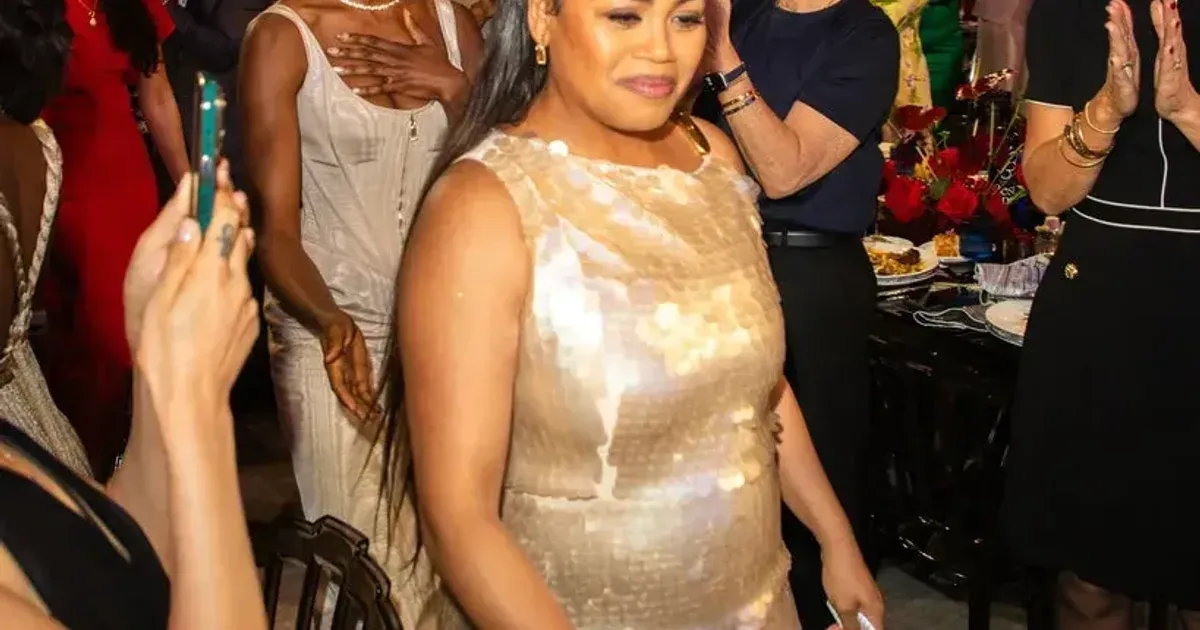
This gathering arrived as the entertainment industry faced renewed scrutiny over the contraction of diversity and inclusion budgets at major streaming platforms. Against this backdrop, several hundred actors, directors, and craftspeople assembled in Los Angeles to acknowledge professional milestones that frequently escape the notice of mainstream voting bodies. The ceremony was held on March 12, 2026, at the Fairmont Century Plaza in Los Angeles. Chase Infiniti and Kerry Washington emerged as central figures during the afternoon ceremony. Their presence bridged the gap between the emerging generation of performers and those who have worked inside the studio system for decades. Unlike the high-tension atmosphere of the Academy Awards, this event prioritized communal stability over individual competition. Attendees focused on the persistence required to maintain careers in an unstable market. But the celebration extended beyond the acting categories to include those operating in technical and administrative roles. Organizers emphasized that visibility on camera depends entirely on the work done by Black women in the writers' room and the production office. Recognition of these behind-the-scenes contributions formed the backbone of the program.
Essence Gala Centers Creative Labor
Kerry Washington accepted her honor with a speech that addressed the structural mechanics of longevity. She has spent years diversifying her portfolio through her production company, Simpson Street, which focuses on centering marginalized stories. Her career path is a template for younger actors like Infiniti, who are entering an industry dominated by franchise intellectual property rather than original character studies. For instance, LaTanya Richardson Jackson received praise for her extensive work in both theater and film. Her recent efforts include a focus on the preservation of classical performance standards within Black storytelling. She spoke about the necessity of maintaining high technical rigor while managing the constraints of commercial filmmaking. The room responded with a standing ovation that lasted nearly two minutes. Zinzi Coogler joined the roster of honorees, representing the growing power of producers who manage large-scale cinematic universes. As a producer on several high-grossing projects, her work involves the complex logistics of global distribution and franchise management. She noted that while the financial stakes have increased, the difficulty of maintaining creative integrity remains a constant challenge for Black women in executive seats. Industry veterans observed that the Fairmont Century Plaza has become a recurring site for this specific type of mobilization. The hotel ballroom was filled with executives from major networks and independent production houses. Conversations at the tables focused on upcoming production slates and the difficulty of securing financing for mid-budget dramas.
Sinners Team Receives Luminary Recognition
Luminary Spotlight honors were directed toward the creative team behind the production of Sinners.
To that end, the gathering functioned as a networking hub for those seeking to bypass traditional gatekeeping mechanisms. Independent filmmakers used the opportunity to pitch projects to established producers during the cocktail hour. The concentration of decision-makers in a single room created a unique environment for professional development. Many attendees discussed the impact of the 2024 strikes on their ability to secure consistent work.
The discussion of the internal responsibility to protect Black stories from distortion remained a recurring theme. Honorees argued that the erasure of marginalized experiences often begins in the early stages of script development. They emphasized the need for Black women to hold positions in the development phase of production to ensure narrative accuracy. The advocacy is seen as a defense against the homogenization of global media. Zinzi Coogler offered a specific perspective on the isolation that often accompanies high-level success. She described the journey as a lonely pursuit but countered that feeling with the observation that a wider community now exists to offer support. The expansion of this network is seen as an essential component of career sustainability for newcomers. She urged the audience to view their presence in the industry as a form of resistance against exclusionary practices.
Today we stand in a community that is both deep and wide. There's space for all of us. Your future contributions are so necessary. Your brilliance, beauty, joy, and optimism are revolutionary. You are each a mirror.
The sentiment in the room remained focused on the practicalities of work. Attendees shared information about international tax credits and the benefits of filming in emerging production hubs outside of California. These technical discussions occur alongside the more emotional elements of the afternoon. The ceremony concluded with a call to action regarding the support of independent Black-owned media outlets.
Silence was not an option during the final addresses. The speakers emphasized that the current economic climate in Hollywood requires a more aggressive approach to securing creative autonomy. It involves both financial investment and the cultivation of new talent pipelines. The event ended as guests moved to the foyer for further discussions regarding the 2026 production season. Fairmont Century Plaza personnel began clearing the room at 4:30 p.m. local time.
Hollywood Recognition Needs Ownership Too
Awards ceremonies usually function as hollow marketing exercises designed to inflate studio egos, but the Essence Black Women in Hollywood event manages to avoid this trap by addressing a harder reality. While the industry likes to pat itself on the back for casting a few more diverse leads, the underlying power structures remain largely untouched. The celebration at the Fairmont is less about the trophies and more about a survivalist coalition forming in the face of corporate apathy.
It is a necessary gathering because the mainstream institutions continue to treat Black excellence as a seasonal trend rather than a permanent fixture. If these women do not create their own space, the industry will gladly continue to ignore them once the social media metrics shift. The real test is not whether these artists can win an Oscar, but whether they can build a parallel system that does not require the permission of the legacy studios to exist. Waiting for the traditional establishment to provide permanent equity is a fool's errand.
True power lies in the technical mastery and executive power discussed in that ballroom, far away from the performative appearance of the red carpet.