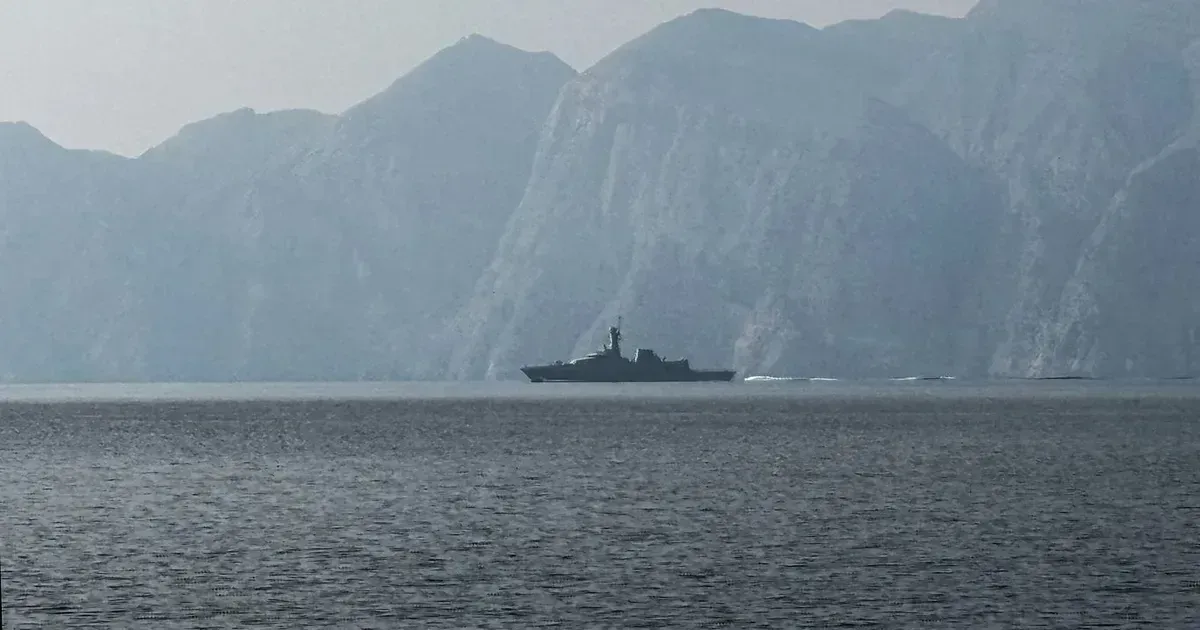
European leaders refusing Trump's request for ships in the Strait of Hormuz exposes a familiar alliance problem. The threat is shared, but the appetite for risk is not. Governments in Europe want open shipping lanes and stable energy markets. European leaders also had domestic politics to manage. They are less willing to place naval assets inside a mission that could quickly become part of a US-Iran confrontation. The request had become a test of allied seriousness.
Washington was not asking for sympathy; it wanted hulls, crews and political cover. That is where the gap opened. A statement about maritime security is easy. A deployed ship with rules of engagement is a different level of commitment.
Allies Draw a Maritime Line
Voters may support de-escalation, but they are wary of another Middle East military role defined by American urgency. That caution does not mean Europe ignores Hormuz. It means leaders want missions framed around protection, legality and exit conditions rather than open-ended pressure. The refusal does not mean Europe is indifferent to shipping risk. It means leaders want a mission whose purpose, command structure and exit path are defined before ships enter a volatile corridor.
Alliance burden-sharing is the political pressure point. Washington wants partners to treat Hormuz as a shared economic security problem, while European capitals want proof that the mission will not become a blank check. Energy markets will watch the disagreement because naval posture can influence insurance rates, tanker routing and the risk premium attached to crude prices. European caution may frustrate Trump, but it also reflects lessons from earlier conflicts where limited deployments expanded after the first crisis. The strategic question is whether allies can build a narrower maritime framework that protects shipping without becoming a parallel pressure campaign.
If they cannot, the gap between US urgency and European restraint will remain exposed. The standoff also shows how Iran policy can divide allies even when no one wants a closed strait. Shared exposure to energy risk does not automatically produce shared military strategy. European capitals may still contribute intelligence, logistics or diplomatic support if they reject ships. That would let them participate without accepting the most visible form of escalation.
European officials are also weighing domestic politics. Sending ships to Hormuz under direct U.S. pressure would expose governments to accusations that they are underwriting a conflict they did not choose, especially while energy prices and defense budgets are already straining voters.
The refusal does not mean Europe can ignore the strait. It means leaders want a clearer mandate, narrower rules of engagement and proof that a naval mission would reduce risk instead of turning commercial shipping into another front in the Iran war.
What Washington Wanted
For Washington, however, visible assets matter because they signal unity. That is why the refusal is more than a staffing problem; it is a message about trust in the mission design. The disagreement also affects deterrence. Iran will watch whether the refusal signals European caution only about command structure or a deeper reluctance to confront threats in the strait. That distinction matters because a fragmented coalition can invite testing, while a narrower but disciplined mission can still raise the cost of disruption.
European governments also know that refusal carries its own cost. If they decline the ships and the strait worsens, Washington will argue that restraint weakened deterrence. That possibility explains why the disagreement is tense even when all sides say they want maritime stability. They want protected shipping lanes but fear being pulled into escalation if the mission is framed as pressure on Iran. A major share of global oil and gas traffic moves through the strait, making disruption a direct economic threat.
The refusal weakens the image of a unified Western maritime front, but it may also prevent a rushed coalition with unclear limits. For Trump, the challenge is turning a demand into a coalition. For Europe, the challenge is proving restraint is not passivity. Hormuz forces both sides to decide how much military risk they are willing to attach to economic security.
That is the alliance fracture Trump cannot bully away. Europe wants the oil to move, but it does not want to be drafted into an American escalation script. If Washington wants ships, it has to offer more than urgency. It has to offer limits, command clarity and a mission that looks like protection rather than the opening chapter of another war.