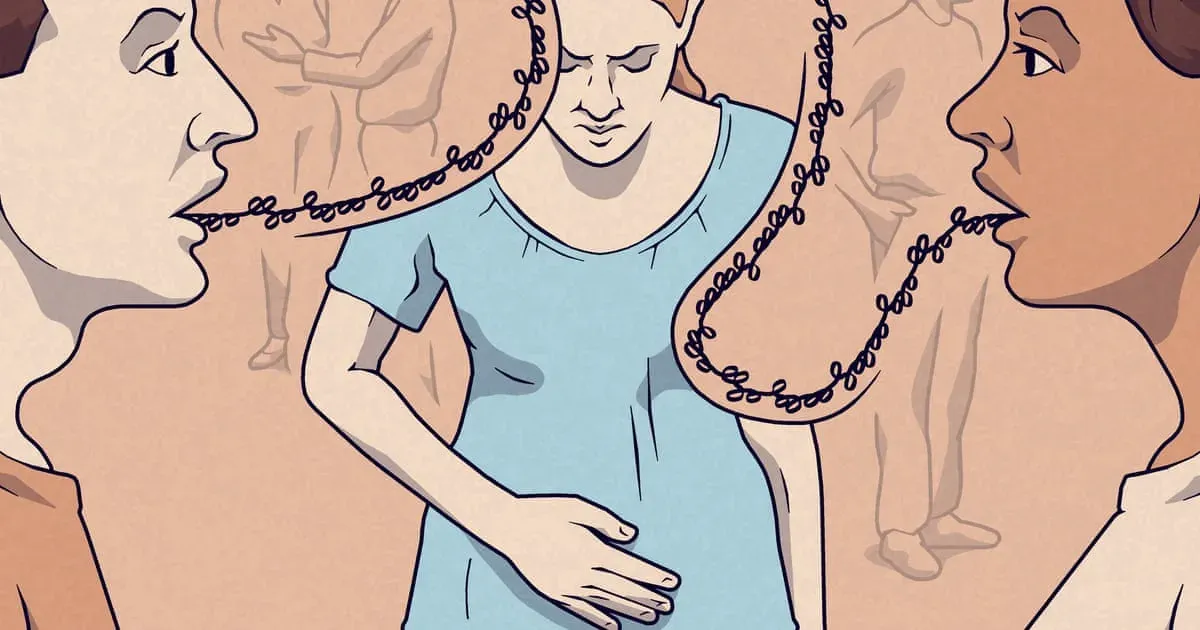
Two letters published by The Guardian argue that conversations about infertility often fail when people reach for certainty, intrusive questions or automatic reassurance. The letters responded to a first-person essay by broadcaster Nuala McGovern about miscarriage, unsuccessful IVF and the difficulty of finding language that respects another person's experience.
One letter came from Louise Goddard-Crawley, a chartered member of the British Psychological Society. She wrote that people may be encountering infertility for the first time without a shared vocabulary. Claire Nixon, writing from her own past experience, recalled the pain caused by clumsy comments, invasive questions and assumptions about how much effort or suffering should count.
These accounts are testimony and professional reflection, not a clinical study. They support a careful discussion about communication, but they do not establish that every patient experiences infertility in the same way or that a particular phrase will always help.
Acknowledging Uncertainty Can Be More Honest
Goddard-Crawley contrasted familiar condolence language after a death with the lack of an equivalent social script for infertility. In that gap, people may offer positivity because they feel uncomfortable or do not know how to respond. She argued that the result can center the speaker's unease instead of the other person's needs.
Her alternative was not a perfect sentence. She suggested that a person can admit not knowing what to say, remain present and ask what would be helpful. The emphasis is on tolerating discomfort and continuing the conversation rather than trying to erase uncertainty with a prediction.
That distinction is important because reassurance about a future pregnancy is still a forecast. A well-intended promise may land as a dismissal when the person hearing it is processing loss, treatment failure or an uncertain next step.
McGovern's Experience Shows Why Timing Matters
McGovern described becoming less open after other people sought details she found exhausting or invasive, including questions about miscarriage and rounds of IVF. She also recalled an acquaintance offering reassurance at a buffet, an example in which the timing and setting made an intended kindness feel exposing.
Another friend tried to temper expectations after an embryo transfer by stressing that the cells might amount to nothing. McGovern wrote that the statement was factually possible but arrived after months of injections, appointments and emotional endurance. Her point was not that difficult facts should be hidden; it was that accuracy does not remove the need for judgment about timing and delivery.
She gave a more helpful example involving a couple who shared their pregnancy news quietly and acknowledged that it might hurt. McGovern also remembered an IVF clinic receptionist telling her and her partner that their relationship had value without a baby. Both moments were specific to her. She cautioned that the same words could affect another person differently.
The Sources Do Not Prove System-Wide Negligence
The published material does not document clinic counseling policies, measure psychological outcomes or compare communication practices across health systems. It does not show that doctors hide behind data, that fertility programs routinely abandon emotional care or that a lack of shared language causes lasting psychological injury.
Nixon's letter describes memory and reflection from one person. Goddard-Crawley's letter offers a psychologist's communication perspective. McGovern's article is explicitly based on her own miscarriage and IVF experience. Each has value, but none supplies the evidence needed for a claim about millions of patients or a calculated institutional refusal to acknowledge loss.
That evidence boundary also protects patients from being assigned a single emotional response. Some people may describe grief, acceptance, anger, privacy, relief or several of those feelings over time. Reporting should not turn one account into a diagnosis for everyone who undergoes fertility treatment.
Listening Is Stronger Than a Universal Script
The hard lesson in these accounts is that good intentions do not give a speaker control over how words land. Certainty can minimize uncertainty, curiosity can become intrusion, and public discussion can remove privacy. The practical response is to listen, ask rather than assume and accept that the other person may not want the same conversation on every day.
A universal script would repeat the problem the letters identify. Communication has to leave room for the person receiving it to set the depth, timing and language. That principle applies to friends, relatives and professionals, but the sources do not provide a clinical protocol or prove that one wording improves a health outcome.
The letters are persuasive because they stay close to lived moments: an awkward reassurance, an invasive question, a quiet disclosure and a receptionist's careful words. Their force does not require a claim that medicine has failed every infertility patient. It requires taking individual testimony seriously without inflating it into evidence it cannot provide.