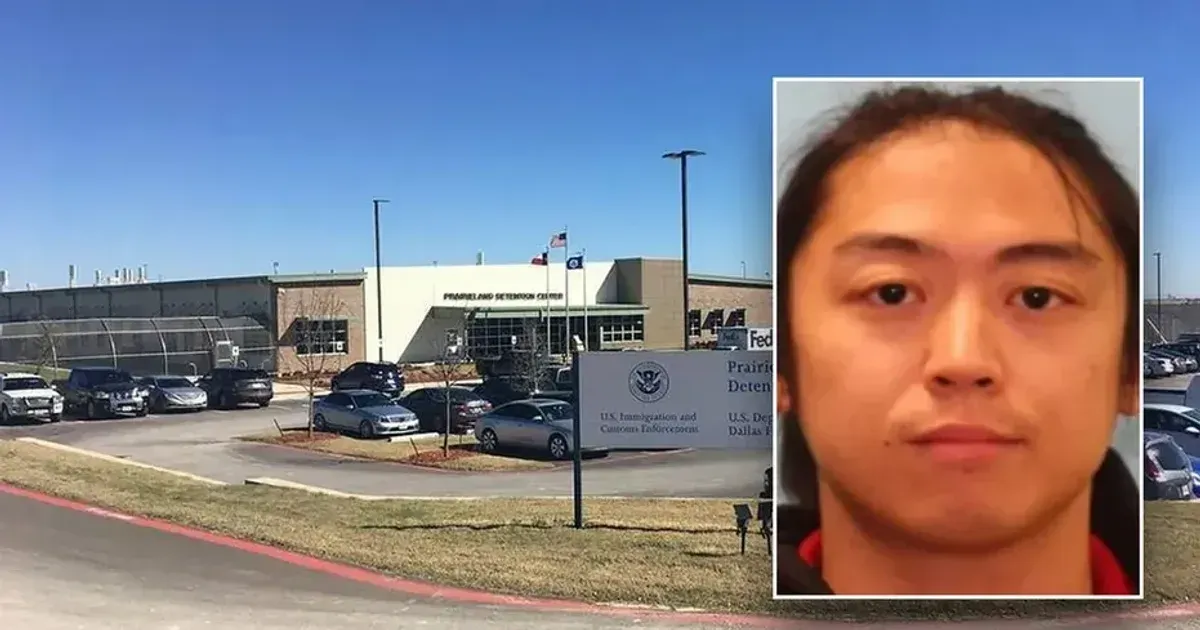
Fort Worth jurors delivered a decisive verdict Friday against nine individuals accused of orchestrating a violent ambush on a federal detention center. Deliberations spanned roughly a day and a half before the federal courthouse announced the results. Benjamin Song emerged as the primary figure in the trial. Prosecutors successfully argued that Song attempted to murder Alvarado Police Lt. Thomas Gross during the holiday melee. Witness testimony and hundreds of exhibits detailed a coordinated effort to disrupt federal operations through violence. But the legal fallout extends beyond the physical violence at the gates. Eight of the nine defendants now face years in prison for providing material support to terrorists and conspiring to use explosives. Federal authorities presented evidence that the group prepared for the raid by stockpiling incendiary devices. Only Daniel Estrada, who was not present during the actual breach, avoided the most severe charges related to the explosives. He was instead convicted of concealing records and conspiracy.
Jury Convicts Nine in ICE Ambush
Testimony during the 12-day trial provided a detailed look at the tactical choices made by the cell. More than 45 witnesses took the stand to describe a scene of chaos that involved fire, projectiles, and gunfire. FBI investigators spent months tracing the digital footprints of the participants to link them to the specific planning phases of the attack. Prosecutors detailed the use of improvised incendiary devices which included mixtures of gasoline and thickening agents. These devices were intended to breach the outer fencing and create distractions for the extraction teams. Finding these chemical residues on clothing recovered from the scene helped secure the conspiracy convictions. Kash Patel, speaking for the FBI, framed the convictions as a total dismantling of domestic extremist networks. He emphasized that the bureau remains committed to identifying and locating individuals who target federal officers. Justice Department officials noted that the investigation remains active as they look for potential connections to other cells.
If you attack federal law enforcement this FBI will use every resource at our disposal to hunt you down.
Still, the political atmosphere surrounding these convictions remains hyper-charged. Critics of the administration argue that domestic groups have been allowed to operate with relative impunity in certain jurisdictions. The Fort Worth verdict offers a counterpoint to that narrative. It establishes a legal precedent for applying material support statutes to domestic political violence in the Texas region.
North Texas Case Moves to Sentencing
Material support charges often involve international groups, but here they were applied to a localized collective. Jurors reviewed over 210 exhibits including internal communications and logistical manifests. These documents revealed a sophisticated understanding of the facility's perimeter weaknesses. Maricela Rueda and other defendants focused their efforts on document concealment. This secondary layer of the conspiracy aimed to shield the primary actors from federal scrutiny after the July 4 incident. To that end, the FBI Dallas field office worked with local partners to recover deleted data and physical ledgers.
Political Violence Remains the Context
The verdict lands in a national climate where political violence has become harder to separate from organized tactical planning. Prosecutors framed the case as more than a protest that turned violent. They argued that the defendants prepared tools, roles, and concealment methods before the breach occurred.
Court Records Matter More Than Slogans
Why does the American interior increasingly resemble a low-intensity conflict zone? The Fort Worth verdict shows how quickly a violent breach of a federal facility can move from a criminal case into the language of domestic terrorism. That shift may be legally justified on the facts, but it demands exact evidence and public scrutiny every time it is used.
The government cannot afford to blur the line between political protest and organized violence, because that line is one of the few protections left in an overheated republic. The defendants convicted here were not punished for slogans. They were punished for an alleged plan built around fire, concealment, and force against federal officers. If prosecutors want the country to accept that distinction, they must keep proving it in court records rather than press conferences.
The Fort Worth verdict is a warning about violence, but it is also a warning about power. A state that expands terrorism law at home must be watched as closely as the movements it prosecutes.