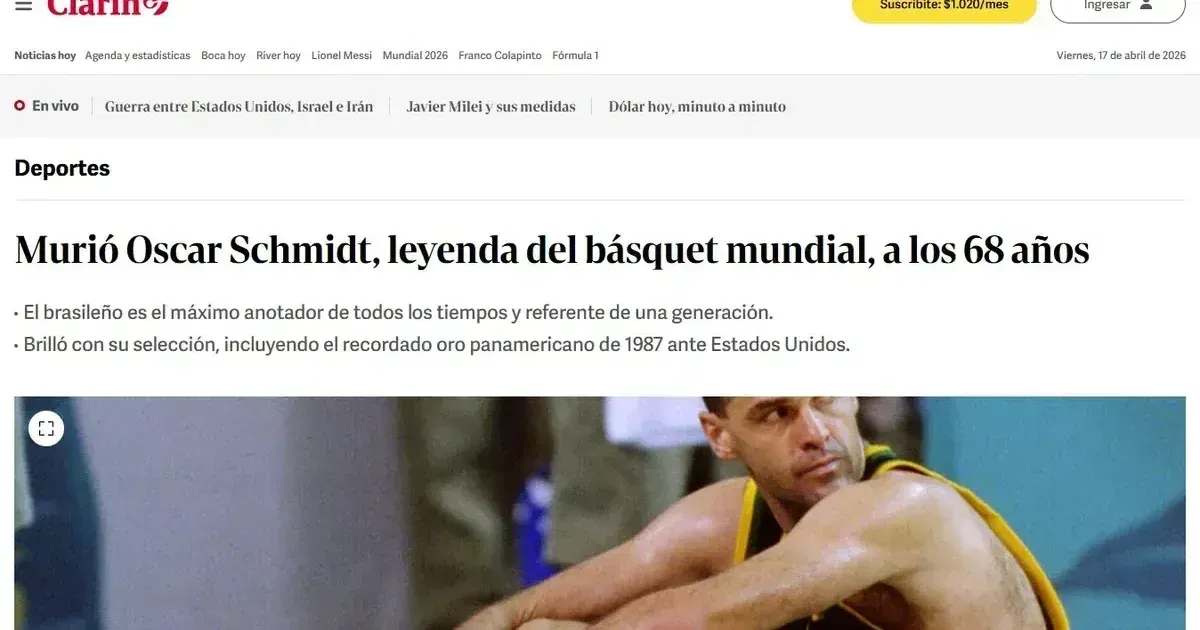
Flamengo retired the number 14 jersey of Oscar Schmidt, giving one of Brazilian basketball's defining figures a permanent place in the club's arena memory.
The arena understood the meaning before the formal speeches began. The tribute, held on April 19, 2026, connected Flamengo's modern basketball program with a player whose scoring reputation still shapes how many fans talk about the sport in Brazil. It was a club ceremony, but it also reached beyond club lines.
Flamengo used the night to honor a player known as the Holy Hand, a nickname that followed him through Brazil, Europe and the national team.
Number 14 Leaves the Rotation
Retiring a jersey is different from celebrating a former star for one night. It tells future players that a number carries a story too large to be reassigned casually.
Oscar Schmidt remains associated with high-volume scoring, stubborn confidence and a career that made Brazilian basketball visible to audiences who did not regularly follow the domestic game.
For Flamengo, the gesture also reinforces the club's multisport identity. Football dominates attention, but basketball has its own history, supporters and heroes.
Club Memory and National Memory
The number 14 now becomes a marker for younger fans who may know Schmidt more through archive clips than live games. Ceremonies like this help explain why older supporters still speak of his performances with unusual affection.
Flamengo's decision is also a reminder that legacy is maintained through rituals, not statistics alone. The points made him famous; the retired jersey keeps the story visible.
Schmidt's legacy is unusual because it belongs to both club basketball and the national imagination. He became famous for scoring totals, but the affection around him comes from the way he seemed to carry games through will, repetition and a shooter's refusal to accept doubt.
For Flamengo, retiring the jersey helps place basketball beside the club's football identity without pretending the sports have the same reach. The gesture tells supporters that the court has its own heroes, its own archive and its own standards for greatness.
Brazilian basketball has often fought for attention in a football-heavy country. Honoring Schmidt does not solve that imbalance, but it gives the sport a public moment built around excellence rather than nostalgia alone.
The number will now carry a simple instruction: ask why it is missing. That question is how clubs keep history alive for supporters who arrive long after the games that made the honor necessary.
Flamengo can use the honor to connect generations. Older fans receive recognition for memories they carried for decades, while younger fans receive a clearer map of the club's basketball identity. That shared memory is how a multisport institution avoids letting one sport erase the others.
The ceremony was therefore less about closing a chapter than keeping one open. Oscar Schmidt's games are over, but the retired number makes his standard part of every future Flamengo basketball season. There is a business side to the tribute as well. Clubs use history to deepen loyalty, sell tickets and make current games feel connected to something larger. When that history is authentic, it does not feel like marketing; it feels like the arena remembering its own best moments. Oscar Schmidt gives Flamengo that kind of memory. His name still travels beyond the club, and his retired jersey can draw casual fans into the basketball program's past. That matters for a sport that benefits from every visible sign of permanence. The honor also sets a standard for future recognition. Retiring a number should remain rare, because rarity gives the gesture force. Flamengo's decision says Schmidt's contribution cleared that bar without needing further explanation. For current Flamengo players, the jersey ceremony also draws a line between achievement and legacy. Winning games matters now, but a number is retired only when a career changes how a club understands itself. That is the level of memory Schmidt occupies. The club will benefit if it keeps that memory active rather than treating the ceremony as a one-night event. Youth programs, arena storytelling and anniversary games can all make the retired number part of Flamengo basketball's living culture. Handled well, the retired jersey can keep Schmidt present for fans who never saw him play. The best tributes do more than preserve a name; they explain why that name still remains part of the arena. That permanence is the point of retiring the number.