Jon McNeill's account frames Tesla management as a test of speed, tolerance and first-principles pressure. The lesson is useful beyond one company, but it is not a simple endorsement of extreme high-pressure executive burnout.
Jon McNeill, former president of Tesla, detailed his professional relationship with Elon Musk on April 6, 2026, highlighting the specific cognitive frameworks required to thrive under intense scrutiny. Longevity within the Musk corporate empire requires a departure from traditional executive management theory. Success depends on a rigorous adherence to what insiders call the algorithm. This methodology forces every engineer and executive to justify every line of code or physical part from a standpoint of physics and necessity. Failure to provide a first-principles justification usually results in immediate dismissal or public verbal correction.
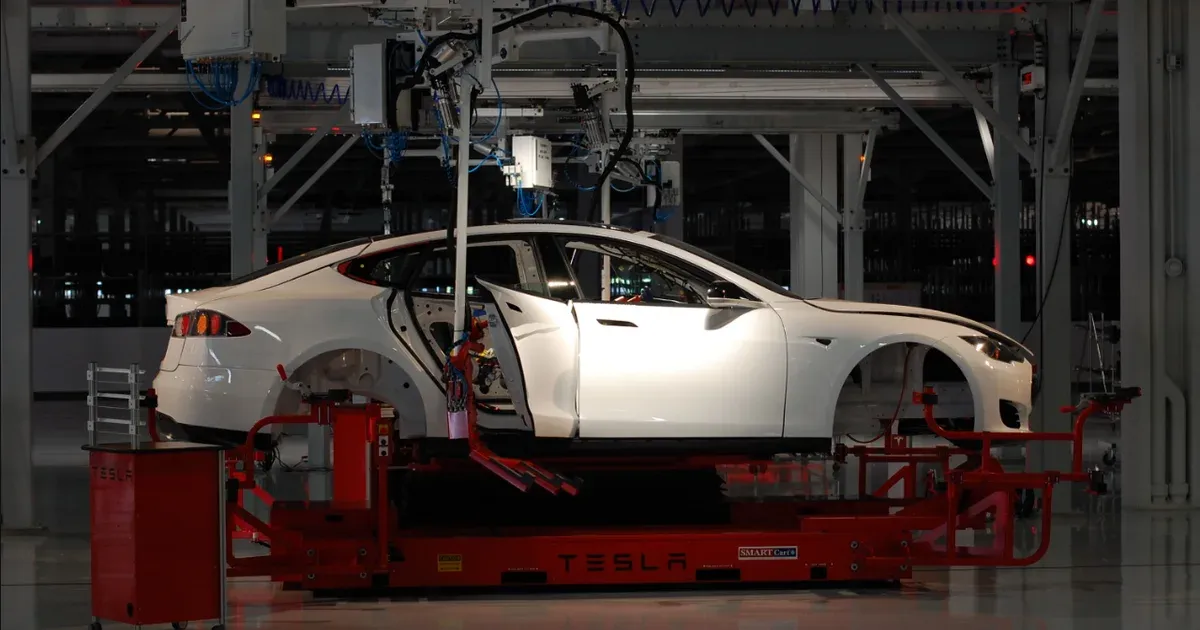
Acceleration represents the final stages of the algorithm where cycle times are shortened. Once a process is simplified and improved, the team must increase the speed of the assembly line. Automation follows only after these steps are completed. Early attempts at Tesla to automate the entire assembly line failed because the underlying processes were not yet simplified. McNeill observed that human flexibility remained superior to robotics in the early stages of high-volume manufacturing. The company eventually replaced complex robotic cells with manual workstations to meet delivery targets.
Operational Costs of Executive Attrition
Turnover at the presidential and vice presidential levels has been a consistent feature of the company's history. While Tesla reached a market valuation of $1 trillion, it did so while losing dozens of senior leaders. Each departure creates a void in institutional knowledge that must be filled by internal promotions. Critics argue that this constant churn prevents the development of a stable corporate culture. Proponents of the model suggest that it ensures only the most adaptable individuals remain in power. The resulting organization is lean and highly responsive to changes in the global market.
Recruitment strategies at the firm prioritize raw intelligence and a history of solving unsolvable problems. Academic credentials often carry less weight than a candidate's ability to demonstrate technical mastery in a high-pressure interview. Recruiters look for individuals who have built things from scratch rather than those who have managed existing systems. This preference for builders over managers creates a dynamic where the company functions more like a startup than a global automaker. Every leader is expected to be a hands-on contributor who can jump into a technical role at any moment.
Corporate Stability and Founder Influence
Concentrating power in a single individual creates a unique set of risks for shareholders. Decisions are made with incredible speed but often without the consensus typical of a public company. Tesla operates with a level of agility that competitors like Ford or General Motors struggle to match. The speed is a direct result of the founder's willingness to ignore established industry norms. Traditional manufacturing cycles of five to seven years are compressed into eighteen months. The risk of failure is high but the potential for disruption is even higher.
Adopting a wartime footing is the default state for the leadership team. Peacetime management styles are viewed as a sign of complacency and a lack of urgency. Competitive advantages are maintained by constant iteration and a refusal to accept the status quo. Elon Musk often disrupts his own product lines to stay ahead of emerging technologies. The transition from the original Roadster to the Model S involved a complete redesign of the battery architecture. Engineering teams must be prepared to scrap months of work if a better solution is identified.
"If you are not moving at the speed of the founder, you are essentially standing still in a race that never ends," stated an internal Tesla memo regarding executive performance standards.
Burnout rates among top-tier talent at these firms exceed industry averages by a meaningful margin. Personal life often takes a secondary role to the mission of the organization. Employees describe the culture as a mission-driven marathon where the finish line constantly moves. Elon Musk famously slept on the factory floor to emphasize the urgency of the manufacturing goals. This level of commitment is expected from every direct report regardless of their title or tenure. High compensation packages serve as the primary tool for retaining talent in such an environment.
Institutional stability endures because of a small core of long-term associates who understand the founder's rhythms. These individuals act as a buffer between the CEO and the broader workforce. They translate impulsive directives into practical engineering goals. Jon McNeill played this role by translating vision into the operational reality of global sales and service. His tenure coincided with the transition of the company from a niche luxury brand to a mass market manufacturer. The company reported 50 percent year-over-year growth in deliveries during his final years.
Management Under Musk
McNeill's account shows why founder-led companies can move quickly and wear down executives at the same time.
The management lesson is not to copy pressure for its own sake. It is to understand which decisions need speed and which require institutional stability.