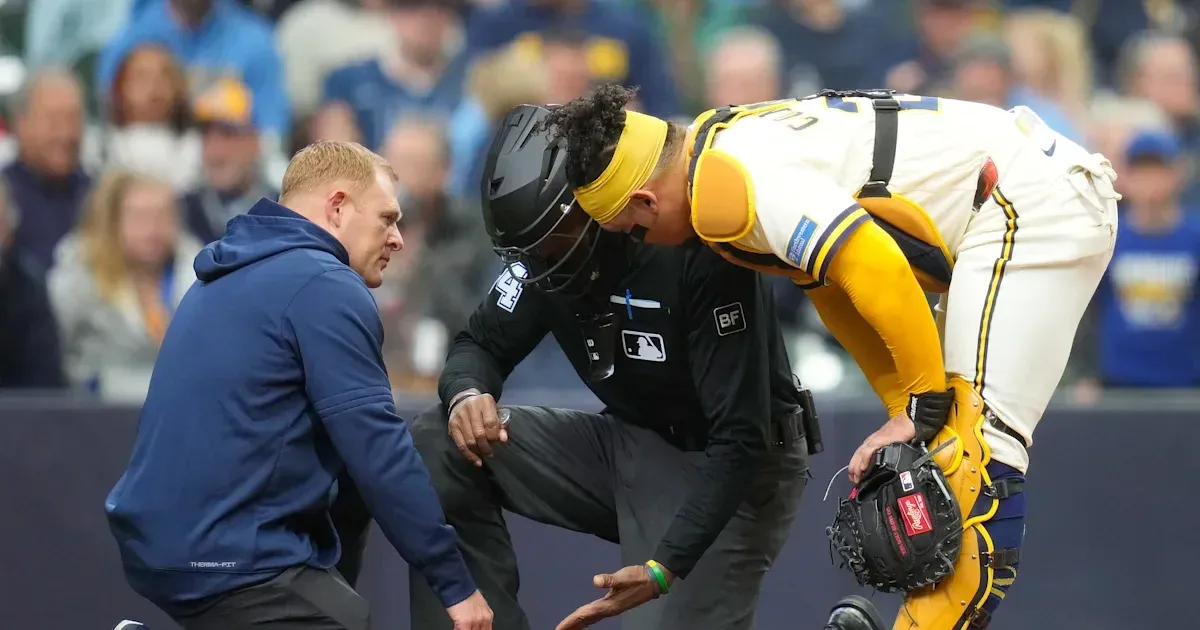
C.B. Bucknor's early exit from the Rays-Brewers game was a blunt reminder that the most exposed person on a 100 mph pitch is not always the catcher. In the second inning at American Family Field, Nick Fortes fouled a Jacob Misiorowski fastball straight back into Bucknor's mask. The veteran plate umpire went down, received attention from Milwaukee trainers and left the game after a delay of about 13 minutes.
Chad Fairchild, who had started the game at first base, changed gear and moved behind the plate. The game continued with a three-umpire crew. The sequence sounds procedural, but it exposes a real stress point in baseball: one violent foul tip can change the safety, coverage and rhythm of a game in minutes.
The Impact Left No Room to React
The danger came from the distance and direction. Misiorowski's fastball was around 100 mph, and Fortes' swing redirected it almost immediately toward the mask area. A catcher is braced in gear with a glove in front. The plate umpire has protection, but very little reaction time once the ball changes path.
The distance and speed make these plays look sudden. There is no long collision to read, no sliding runner and no chance to prepare the body. The mask absorbs part of the force. It does not erase the force. Once Bucknor was visibly shaken, removal was the responsible call.
The Crew Had to Rebuild the Game
Fairchild's move behind the plate kept the game going, but a three-man crew changes the geometry of the field. Base coverage, fair-foul responsibilities, rotations and tag-up reads all have to be adjusted on the fly. The new plate umpire also takes over the most scrutinized job in the sport without the normal beginning-of-game rhythm.
Players and managers rarely give a crew much grace once play resumes. The strike zone still has to be called. Replay communication still has to work. Pace still has to be managed. A single injury therefore becomes a test of the entire crew's preparation, not only the injured umpire's toughness.
Protective Gear Has Limits
Modern masks, pads and concussion protocols are better than what baseball used to accept. They still cannot change the basic geometry behind the plate. Pitch velocity keeps rising, hitters foul off more high-end stuff and the people working behind the catcher remain in the direct line of deflections.
The physical risk should keep the discussion focused on workplace safety rather than personality. Bucknor has often been a target of fan criticism over strike zones and missed calls. His criticism history is separate from a head impact. A disputed call and a foul tip to the mask are not the same issue.
The Delay Was the Correct Cost
A 13-minute delay is inconvenient. Keeping a shaken plate umpire in the game would be worse. Baseball cannot ask officials to absorb a direct mask shot and then immediately resume making judgment calls on pitches moving near triple digits. The competitive product is better when the injured person is removed and the crew resets properly.
The same judgment holds even when the reset creates imperfect coverage. A three-umpire game is not ideal, but it is manageable. An impaired plate umpire is a bigger risk for the game and for the person under the mask.
Umpire Health Is Part of Game Integrity
Umpire safety usually becomes visible only when someone drops to a knee. Most of the time, the risk is treated as background noise: foul tips, backswing contact, heat, travel and the physical strain of a long season. The Bucknor incident pulled that hidden labor into view.
Better masks and protocols help. But baseball still depends on officials standing in a dangerous sightline for hundreds of pitches. When one of them takes that kind of impact, the sport should treat it as a safety event first and an interruption second.