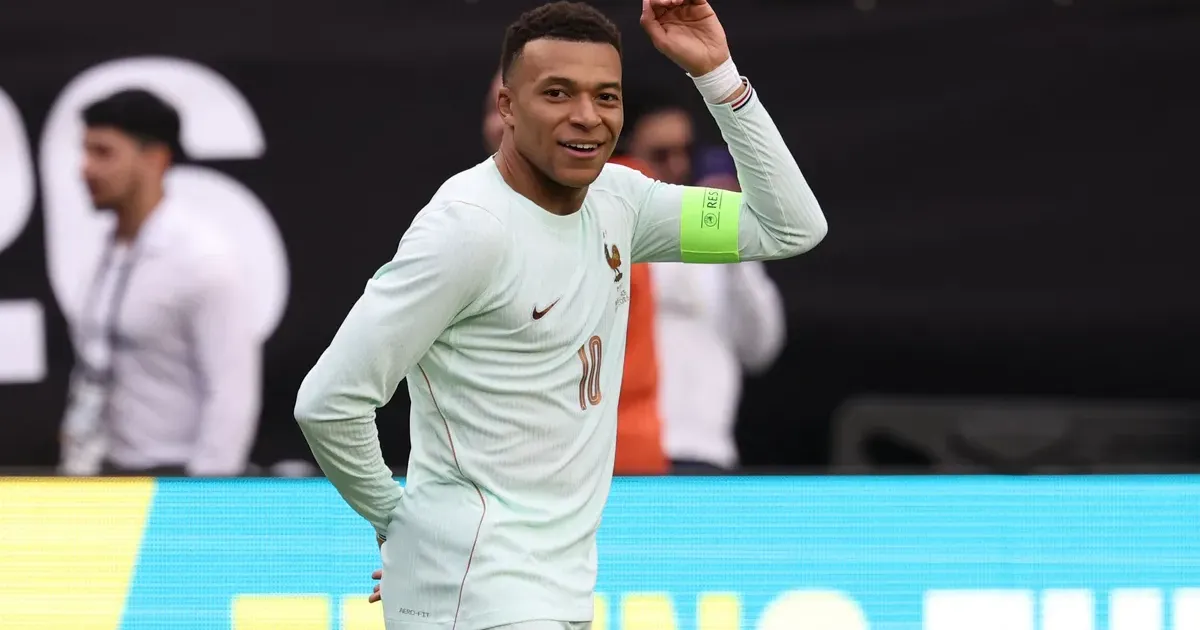
France and Colombia enter their friendly with different needs but the same larger goal: use a March window to learn something before the next major tournament pressure arrives. The match was scheduled for March 29, 2026, at Northwest Stadium, giving both staffs a neutral-site test against an opponent with enough quality to expose weak spots.
France comes in with the cleaner form line after a win over Brazil earlier in the week. Didier Deschamps can use the game to test combinations without abandoning the structure that has made his teams so difficult to break down. Colombia arrives from a narrow defeat against Croatia and needs a response that is more about organization than symbolism.
The setting also matters. A United States venue turns the match into a tournament-style rehearsal, with travel, mixed crowd support and broadcast logistics layered onto the football itself.
France Tests Its Balance
The French story starts with Kylian Mbappe, who remains close to Olivier Giroud's national scoring record. That pursuit will draw attention, but France cannot treat the match only as a record chase. The more useful question is whether the midfield can keep supplying him while still protecting the spaces Colombia will try to attack. Deschamps teams tend to value control over exhibition football. If France presses too aggressively, Colombia's wide players can break into space. If France sits too deep, the friendly loses some of its value as a preparation exercise.
That balance makes the game useful even if the scoreline is not dramatic.
Colombia Looks for a Cleaner Reset
Colombia's priority is defensive recovery after the Croatia loss. The back line needs better lateral coverage, and the midfield must track runners more consistently when possession turns over. Against France, those details can decide whether the game stays competitive or becomes a long defensive chase. Luis Diaz gives Colombia a direct route forward because his pace can punish fullbacks who step too high. The challenge is getting him the ball early enough and often enough. If Colombia spends most of the match clearing pressure, its best attacking outlet becomes isolated.
The friendly is therefore less about a perfect performance than about proving the team can absorb pressure without losing its shape.
Broadcast Access Frames the Audience
Streaming access became part of the story because ITVX carried the match in the United Kingdom while regional restrictions limited direct viewing elsewhere. Fans outside the rights area often look for VPN workarounds, but the underlying issue is the fragmentation of international sports media.
That fragmentation can make a friendly feel harder to follow than it should be. National teams market themselves globally, yet viewing access still depends on a patchwork of territorial deals. For supporters, the product is not just the 90 minutes; it is whether they can find a legitimate, stable way to watch. The football should remain the center of the night. Still, France-Colombia also shows how preparation matches now sit inside a global distribution system that can be almost as complicated as the tactics.
What the Match Can Actually Reveal
The useful evidence will be in patterns rather than in the final score alone. France will want to see whether its back line can defend transitions when the midfield steps forward. Colombia will want to see whether it can pass through pressure instead of turning every possession into a direct ball toward the wings.
Substitutions will also matter. Friendlies give managers permission to test players who may not start once competitive fixtures arrive. A second-half change in midfield or at fullback can tell observers more about roster planning than a late goal against tired defenders. The Mbappe record chase should not erase those details. A goal would dominate the post-match discussion, but Deschamps still needs answers about depth, defensive balance and how his team behaves when the game slows.
For Colombia, the standard is different. A disciplined performance against an elite European opponent would count as progress even without a win. The staff needs proof that the Croatia defeat was a correctable warning rather than a sign of a deeper tactical problem. Coaches and scouts will also watch the physical tone of the match. Friendlies can be misleading when one side treats them as a rehearsal and the other treats them as a showcase, but the duels in midfield and the recovery runs after turnovers still reveal preparation level. France needs controlled aggression; Colombia needs enough bravery on the ball to avoid spending the afternoon in its own half. A clean Colombian buildup against pressure would be a more meaningful sign than a single counterattack. For France, the most encouraging outcome would be a performance in which Mbappe remains dangerous without the team becoming dependent on him for every attacking solution. That is enough to make the match more than a calendar filler. It is a controlled test of whether both teams can carry their preferred habits into tournament conditions, with enough opposition quality to make the answers credible.