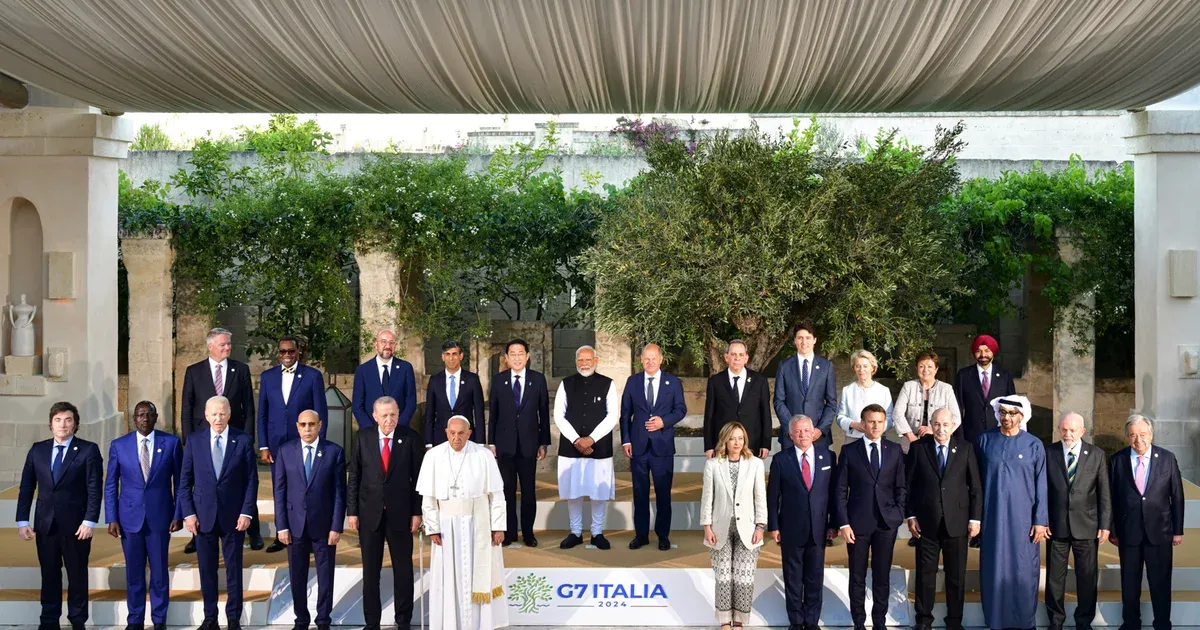
G7 countries have drawn a political line around the energy panic by refusing to signal sanctions relief for Moscow despite the oil crisis. The sanctions line hardened on March 11, 2026.
G7 Refuses to Ease the Pressure
Emmanuel Macron emerged from the closed-door sessions in Paris with a message that resonated from the trading floors of London to the front lines in Donetsk. He confirmed that the Group of Seven nations will not blink. Sanctions against the Russian Federation are set to remain in place, even as energy markets worldwide suffer from a suffocating supply crunch. The French President made it clear that the geopolitical cost of retreat far outweighs the economic burden of high energy prices. Brent crude oil recently breached the $140 mark, a level that has rattled through European industrial hubs.
Refineries across the continent are operating at sharply reduced capacity because the specific grades of heavy sour crude they were designed to process are no longer available through traditional channels. Tensions within the G7 remain high, yet the official stance remains a wall of defiance. Macron noted that member states are working on mechanisms to mitigate the negative impact of the conflict on global markets, though he offered few specifics on how these measures would function without Russian participation. Sanctions will remain the primary weapon of Western diplomacy. Reports from the Kremlin, transmitted via state media outlet TASS, highlight the internal pressure Macron faces.
Russian officials have pointed to the rising cost of living in France and Germany as a sign that the sanctions regime is a double-edged sword. While Macron acknowledges the issues with oil supplies, he maintains that the integrity of the international order requires a sustained economic embargo. This persistence reflects a strategic calculation that the Russian economy will fracture before Western political will dissolves. Berlin sent its own message of solidarity through the presence of Bärbel Bas in the Ukrainian capital. The Speaker of the Bundestag arrived in Kyiv to reinforce Germany's role as a primary benefactor of the Ukrainian defense effort.
Germany Signals Unity From Kyiv
G7 leaders chose pressure on Moscow over energy-market relief, making the sanctions position a test of political endurance.
Her visit coincides with the G7 refusal to ease restrictions, providing a legislative seal of approval to the executive decisions made in Paris. Bas emphasized that German support is not just a matter of military hardware but a long-term commitment to the reconstruction of a sovereign state. German industry, however, continues to voice concerns about the trajectory of energy costs. The chemical sector in North Rhine-Westphalia has seen a sharp decline in output, leading to fears of permanent deindustrialization. Still, the political consensus in Berlin remains remarkably firm.
The Bundestag has resisted calls from minor parties to reopen energy negotiations with Moscow, choosing instead to double down on renewable infrastructure and LNG imports from the United States and Qatar. Energy is the ultimate lever in this 2026 deadlock. Western intelligence suggests that Russia is increasingly reliant on a shadow fleet of aging tankers to bypass the price cap established by the G7. These vessels, often uninsured and sailing under flags of convenience, transport millions of barrels to markets in Asia. This economic leak has prevented the total collapse of the Russian federal budget, yet it has not provided the relief Moscow needs to modernize its industrial base.
The G7 is currently debating a tenth round of sanctions aimed specifically at the maritime insurance companies that enable this clandestine trade. Mitigation remains the watchword for G7 finance ministers. Discussions in Brussels and Washington have focused on tapping into strategic reserves and incentivizing increased production from non-OPEC sources. These efforts have met with limited success, as spare capacity in the global system is at an all-time low. This strategy assumes that the global economy can weather a period of sustained high inflation without slipping into a deep recession.
Energy Markets Test Moral Consistency
Recent data from the World Bank suggests that such an outcome is far from certain. Discrepancies between reporting agencies reveal the complexity of the current situation. While DW News emphasizes the moral and legislative unity of the G7, TASS focuses almost exclusively on the admissions of economic hardship from Western leaders. Such a contrast in narrative highlights the information war being fought alongside the economic one. Macron's admission that the G7 is working to soften the blow is being framed in Moscow as a sign of impending surrender, while in Paris, it is framed as prudent management.
Financial markets have reacted to the G7 announcement with a mixture of resignation and volatility. Equity prices in energy-intensive sectors dropped within minutes of the French President's remarks. Conversely, stocks in renewable energy firms saw a modest bump as investors bet on an accelerated transition away from fossil fuels. The math of the current crisis is simple: the world needs more energy than it is currently producing, and the largest producer is currently a pariah state. This economic gamble involves a high level of risk for democratic leaders facing upcoming elections.
Voters in the United States and the United Kingdom have already expressed frustration with the persistent inflation that has dogged the mid-2020s. Every increase in the price of gasoline acts as an unofficial tax on the working class, a reality that populist movements are eager to exploit. Yet, the G7 leaders appear to believe that any relaxation of sanctions would be interpreted as a victory for territorial aggression. Macron has positioned himself as the primary diplomat of this unified front, balancing the demands of the French electorate with the requirements of the European Union.
Why Sanctions Are Becoming a Domestic Tax
Why should a construction worker in Manchester or a truck driver in Ohio pay for the moral hygiene of the G7? The refusal to ease sanctions while energy markets are in a state of collapse is an exercise in bureaucratic detachment. Emmanuel Macron and his colleagues are effectively asking the global working class to subsidize a geopolitical stalemate that shows no sign of resolution. By prioritizing the integrity of an international order that has already failed to prevent this conflict, Western leaders are gambling with the stability of their own societies. Such a stubborn adherence to a failing economic weapon suggests a lack of imagination at the highest levels of government.
Sanctions were supposed to be a surgical tool to stop a war, but they have morphed into a blunt instrument of mutual economic destruction. The G7's focus on mitigation is a tacit admission that they have lost control of the variables. We are now in a situation where the cure has become more toxic than the disease. Unless the West finds a way to decouple its moral stance from the price of a gallon of fuel, the political backlash will eventually topple the very governments that claim to be defending democracy.