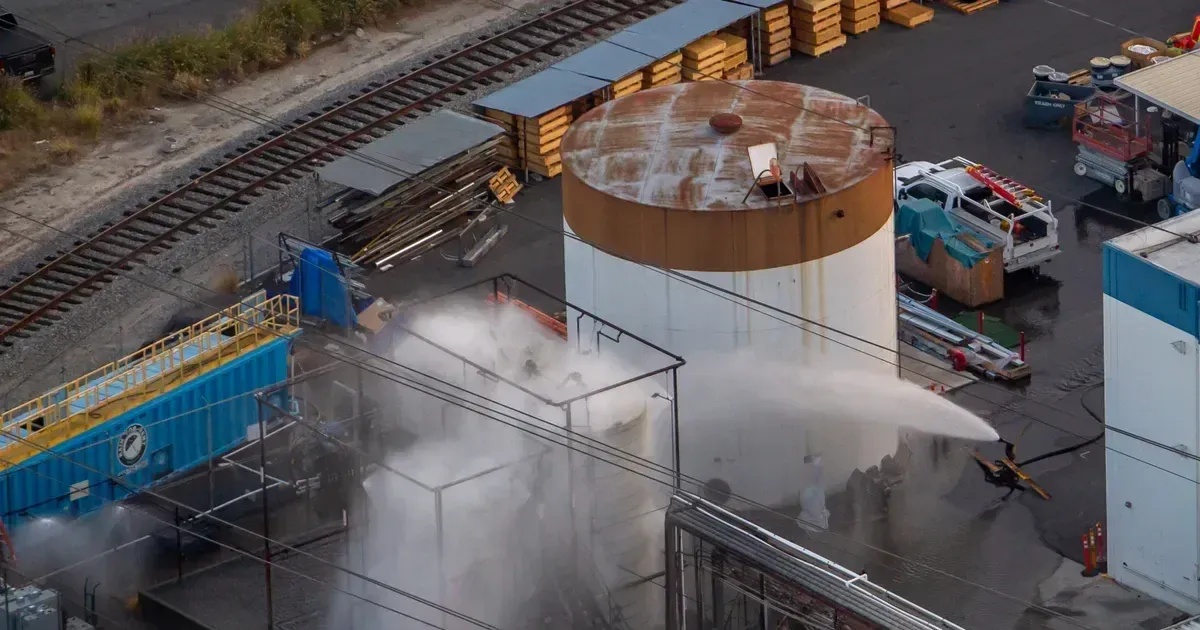
Garden Grove emergency responders maintained a large exclusion zone around a GKN Aerospace facility while technical teams monitored a pressurized chemical tank showing signs of possible failure. The chemical tank problem left residents weighing evacuation fatigue against a real industrial risk. Local officials had to keep the order in place while engineers worked through the overheating threat. Operational protocols continued through May 25, 2026, as sensors tracked fluctuating temperatures inside the compromised vessel. Local police reinforced roadblocks to prevent unauthorized entry into the high-risk area. The closures also gave hazardous-materials crews room to move equipment without residents or sightseers approaching the plant.
State officials issued an emergency declaration to mobilize resources for approximately 50,000 people under mandatory evacuation orders. Residents inside the danger zone sought refuge in temporary shelters or with relatives in neighboring cities. The displacement followed reports of excessive heat buildup inside industrial tanks at the aerospace plant. Local authorities framed the order as a prevention measure because a single pressure event could affect neighborhoods beyond the plant fence line.
Orange County Fire Authority teams arrived to assess the structural integrity of the container. Specialized units observed visible deformities linked to the internal thermal reaction. Heat levels reached a threshold that forced a withdrawal of non-essential personnel from the immediate vicinity. That withdrawal limited direct inspection work and pushed the response toward remote monitoring.
Monitoring remains the primary tactic for crews that cannot safely approach the overheating hardware. Engineers identified a potential crack on the exterior of the pressurized tank. While some breaches can lead to toxic leakage, authorities said this structural failure may have released enough pressure to lower the immediate explosion risk without ending the broader hazard. The uncertainty leaves commanders weighing two dangers at once: pressure buildup inside the tank and the possibility that any venting could carry hazardous material.
Tank Failure Risk
Garden Grove officials said the crack changed the short-term assessment for a sudden blast. Facility management reported that the tank is used in high-precision aerospace manufacturing processes involving reactive chemical compounds. Relief from the pressure surge offers a temporary reprieve, but the threat of a secondary reaction or toxic vapor release continues to shape the emergency response.
Fire officials are therefore treating the site as unstable rather than resolved. Air monitoring, remote temperature checks and perimeter control remain in place while crews decide whether the tank can be cooled, drained or left to stabilize. That cautious posture is why residents have not been cleared to return even after the pressure drop. Officials are trying to avoid a cycle in which families reenter the area, then face another emergency order if the tank destabilizes again.
Evacuation and Lawsuit
Beyond the evacuation zone, legal teams began organizing a collective response to the industrial failure. Attorneys filed a class-action lawsuit against GKN Aerospace on behalf of families forced from their homes. The filings allege that the company failed to maintain adequate safeguards and monitoring systems for high-pressure chemical storage units.
GKN Aerospace is a major contractor in the defense and commercial aviation sectors, with facilities across Southern California. Early court claims suggest the company had prior knowledge of equipment aging issues. Those allegations will have to be tested against maintenance records, inspection reports and regulatory communications. The case will likely turn on what managers knew about the tank before the evacuation and how quickly they acted when temperatures rose.
Displaced residents reported financial and emotional strain as the plant standoff continued. Relief centers supported by the American Red Cross handled families seeking food, medicine, temporary accommodation and updates on when neighborhoods might reopen. Officials warned that returning home prematurely could expose residents to dangerous chemical concentrations if the tank ruptures or vents unexpectedly. Parents, older residents and people with respiratory conditions are among the groups shelter operators are watching most closely.
The Tank Crack Shifts the Fight From Evacuation to Liability
Litigation involving industrial accidents of this scale often focuses on strict liability for ultra-hazardous activities. Companies managing pressurized chemical systems can be forced to bear evacuation costs, lost wages and property losses when operations place surrounding neighborhoods at risk. California precedents generally favor compensation when industrial failures displace residents or damage property values.
GKN Aerospace now faces possible civil exposure, regulatory fines and pressure for broader safety audits. The lawsuit seeks damages for displaced residents and a review of how reactive compounds are stored near dense residential areas. A court-ordered safety review would extend the case beyond immediate compensation and into the operating standards used across similar facilities. The outcome will hinge on whether the crack was an unavoidable mechanical failure or evidence of preventable maintenance lapses. Regulators will also examine emergency notices, evacuation timing and whether residents received clear information as the threat level changed.