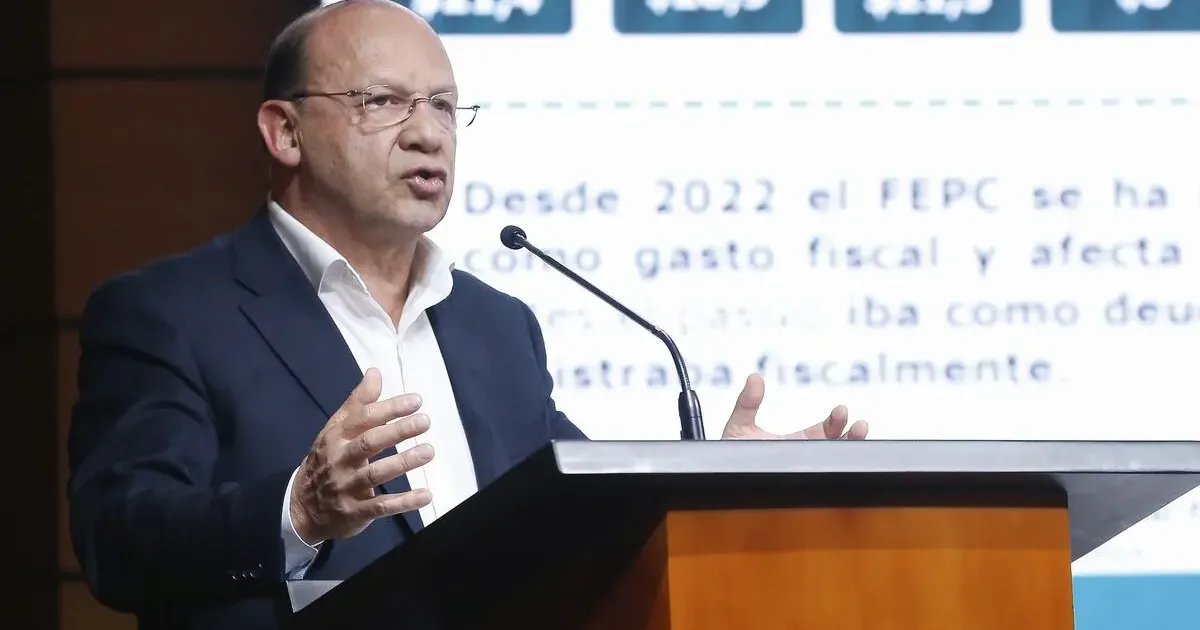
Finance Minister German Avila abruptly exited a policy session at the Banco de la República disrupting a scheduled vote on national interest rates. Tensions reached a breaking point during the morning session as board members prepared to weigh a potential increase in the benchmark lending rate. Witnesses noted that Avila gathered his materials and departed the room without a formal statement to the remaining six directors. By March 31, 2026, Avila’s walkout had become a warning sign for Colombia’s monetary-policy credibility. His departure occurred precisely as the board began debating the latest consumer price index data. The session continued in his absence.
Market participants had anticipated a tightening of monetary policy to combat persistent price pressures within the South American nation. German Avila had previously signaled a preference for holding rates steady to protect economic growth targets. His sudden withdrawal suggests a deepening divide between the executive branch and the independent monetary authority. Such a public rift is rare in the institution’s modern history. Trading on the local bourse slowed immediately as news of the walkout reached financial terminals in Bogotá.
Board members faced meaningful pressure to address an inflation rate that has consistently hovered above the 3 percent target range. Projections from major local banks suggested a hike of 25 to 50 basis points was the most likely outcome of the meeting. Avila’s absence did not technically prevent the board from reaching a quorum, but it cast a shadow over the legitimacy of the decision-making process. The Banco de la República operates with a seven-member board, including the finance minister and five independent directors. One governor oversees the proceedings.
Central Bank Independence Under Pressure in Bogota
Independence for the central bank was a foundation of the 1991 Colombian Constitution, designed to prevent the hyperinflationary spirals seen in neighboring states. Historically, the finance minister is a bridge between fiscal policy and monetary oversight. Avila’s decision to walk out indicates that this bridge is currently under serious structural stress. Critics argue that political interference threatens the credibility of the bank’s inflation-targeting regime. The peso fell 0.4 percent against the US dollar in the hour following the report.
The board of directors shall exercise its functions independently of any other authority, according to the Organic Law of the Banco de la República.
Political pressure on the bank has increased throughout the current administration’s tenure. President Gustavo Petro has frequently used social media to criticize high-interest rates, claiming they stifle industrial production and housing starts. Avila represents the administration’s interests on the board, though he is legally bound to uphold the bank’s primary mandate of price stability. The tension between social spending goals and monetary restraint has become a recurring theme in cabinet meetings. Currency volatility remains a secondary concern for the board compared to domestic price levels.
Inflation pressure still shapes the interest-rate outlook.
Consumer price growth has proven more resilient than economists predicted at the start of the year. Food and energy costs continue to drive the headline rate higher, impacting the purchasing power of low-income households. The central bank recently reported that inflation expectations for the next 12 months have drifted upward to nearly 5 percent. Monetary tightening is the standard response to such trends, despite the political unpopularity of higher borrowing costs. Bogotá residents have seen the price of basic goods rise by double digits in some sectors.
Capital flight is a persistent risk if the bank fails to maintain a competitive real interest rate relative to the United States Federal Reserve. If the Banco de la República pauses its hiking cycle while inflation is high, the real return on Colombian assets diminishes. Foreign institutional investors currently hold roughly $22 billion in local currency government bonds. Any perception that the central bank has lost its autonomy could trigger a large sell-off in these fixed-income markets. The yield on the ten-year benchmark bond rose by eight basis points today.
Institutional Friction and Market Reaction
Institutional friction between the Ministry of Finance and the central bank rarely becomes so visible to the public. Most disagreements are handled through private deliberations or technical memos sent between staff members. Avila’s walkout is a departure from the established protocol of professional dissent. Traders at major brokerage firms in London and New York characterized the move as an unnecessary escalation of domestic politics. The market thrives on predictability and clear communication from policymakers.
Avila's previous career as an academic economist makes his current tactical maneuver even more surprising to observers. He has long advocated for a more integrated approach to fiscal and monetary policy, arguing that the two cannot operate in silos. However, the legal framework of the 1991 reform explicitly separates these powers to ensure long-term stability. The current board includes several veteran economists who have served under multiple administrations. These members prioritize the bank’s technical reputation over short-term political wins.
Traders will now watch whether the next meeting produces a coherent signal or more visible disagreement.
Market Signal From the Walkout
A central bank walkout matters because investors read it as a sign of internal stress. Rate decisions are already difficult when inflation is sticky; visible conflict makes guidance harder to trust.
Colombia’s government now has to reassure markets that monetary policy remains independent. Without that confidence, currency pressure can make the inflation problem harder to solve.