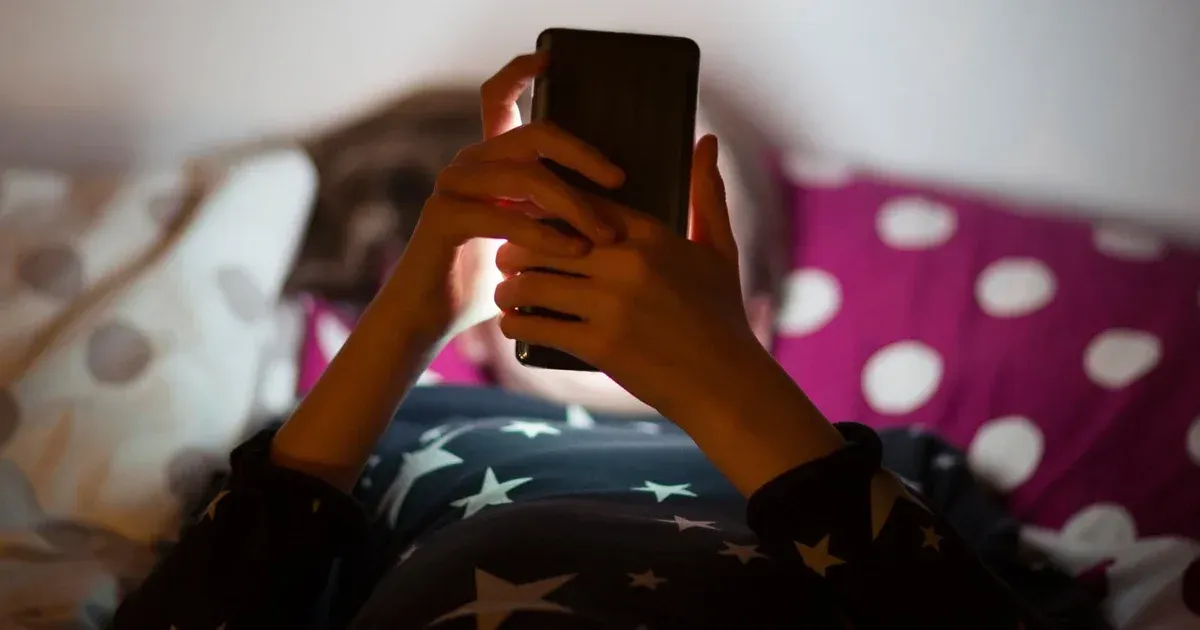
Children who reported more than three hours a day on social networking sites at ages 11–12 had higher depression and anxiety symptom measures when followed up at ages 13–15, according to a longitudinal cohort study from Greater London.
The analysis covered 2,350 adolescents from 31 schools. Compared with those reporting no more than 30 minutes a day, the highest-use group had 47% higher odds of being in a more severe depression-symptom category and 40% higher odds for anxiety symptoms after statistical adjustment. For clinically significant symptoms, the corresponding odds ratios were 1.70 for depression and 1.60 for anxiety.
Those results establish a temporal association, not proof that social media caused depression or anxiety. The exposure was self-reported, some relevant factors could not be fully controlled, and the researchers said reverse causation involving sleep could not be ruled out.
The Study Followed Use Before Later Symptoms
Baseline data were collected from pupils aged 11–12 between 2014 and 2016. Follow-up took place between 2016 and 2018, when participants were 13–15. Researchers adjusted for age, gender, ethnicity, parental socioeconomic status, baseline internalising difficulties and clustering within schools.
The significant threshold pattern appeared in the group reporting more than three hours of daily use. The lower duration categories did not show the same statistically significant associations against the 0–30 minute reference group. That makes three hours a finding within this study's categories, not a universal diagnostic cutoff for an individual child.
Depression-symptom associations for total and weekend use were stronger among girls than boys. The study did not find the same gender difference for anxiety, so its results do not support treating one sex as uniformly affected and the other as protected.
Sleep Explained Part of the Relationship
Insufficient sleep, longer time to fall asleep and sleep disturbance were examined as potential mediators. Individual mediation estimates varied by measure and outcome. In combined analyses, sleep problems accounted for 49.6% of the association with depression-symptom severity and 32.4% of the association with anxiety-symptom severity.
Mediation analysis can identify a plausible pathway, but it does not turn an observational cohort into a randomized experiment. Sleep and mental health can influence each other, and vulnerable adolescents may also use social media differently. The remaining association could reflect other mechanisms, unmeasured confounding or both.
The Platform Era in the Data Is a Limitation
The study measured overall time rather than use on individual platforms or exposure to particular content. Participants estimated their own use and sleep, creating a risk of recall error. Researchers also could not directly adjust for family mental-health problems, bullying victimisation or peer influence.
The dates matter. Social-media behavior was recorded before short-video feeds and current recommendation systems took their present form. The authors explicitly called for newer, more detailed data. The study therefore cannot quantify the effects of today's specific algorithms, notifications or design features.
A Ban Needs Outcomes, Not Assumptions
A separate Lancet Regional Health viewpoint on Australia's under-16 restrictions argues that policy should be evaluated through mental and physical health, academic performance, digital literacy, social contact and displacement to other services. It also warns that causal evidence linking social-media use to adolescent harm remains mixed and inconclusive.
The viewpoint proposes independent longitudinal evaluation and scrutiny of platform design, but it is a policy argument, not evidence that a ban has improved health. It also notes potential costs for marginalised young people who use online communities for support.
The hard conclusion is narrower than the headline panic: high reported use predicted later symptoms in this cohort, while causation and the effect of today's platforms remain unresolved. That is enough to justify better sleep research, more precise exposure measurement and serious policy evaluation. It is not enough to diagnose a teenager by a timer or promise that one ban will repair youth mental health.