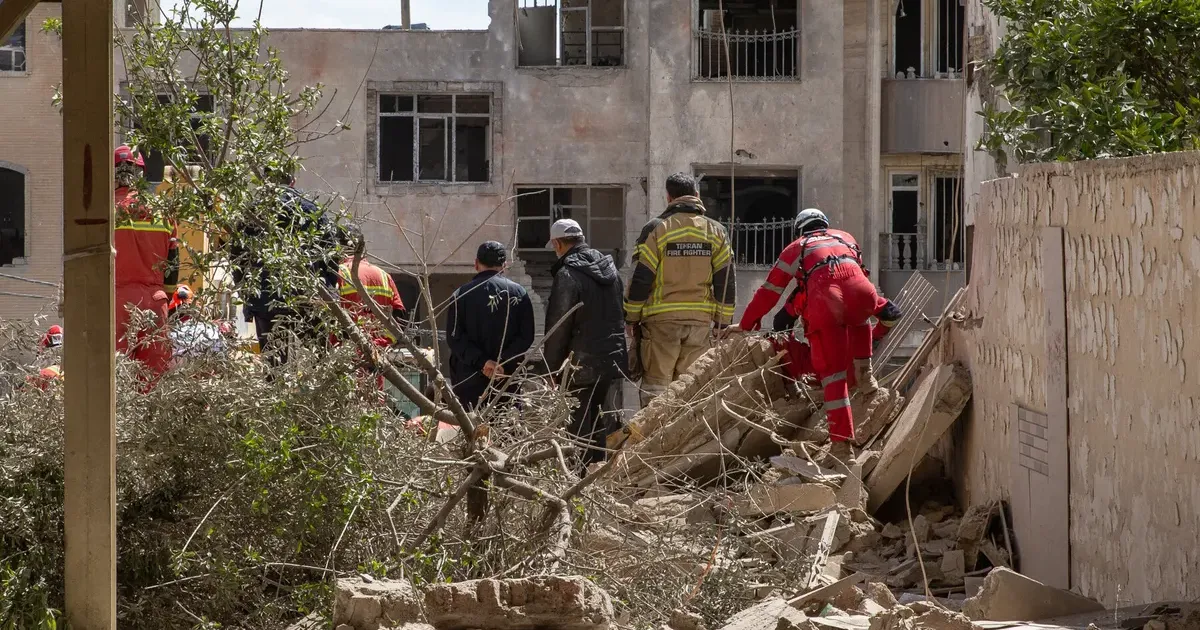
Pete Hegseth admitted that Iranian military forces retain the capacity to launch meaningful missile strikes despite a month of intensive aerial bombardment. On March 31, 2026, Hegseth's warning complicated claims that the bombing campaign had neutralized Iran. High-level defense officials conceded that joint US-Israeli operations failed to neutralize the mobile launchers and underground facilities belonging to the Islamic Revolutionary Guard Corps. Donald Trump remains the sole decision-maker regarding the timeline for military de-escalation, a dynamic that has created a sense of prolonged uncertainty within global markets. Intelligence reports indicate that Iranian silos, often buried deep within the Zagros Mountains, have proven more resilient than early mission projections suggested.
Hegseth described the upcoming window of operations as a decisive phase for the administration. Tactical success in the next seventy-two hours will determine if the current strategy can force Tehran into a defensive posture without requiring a broader ground invasion. Pentagon planners originally hoped that a thirty-day campaign of precision strikes would degrade the Iranian command structure to the point of collapse. Instead, persistent launches from regional proxies and mainland Iranian batteries continue to threaten shipping lanes in the Strait of Hormuz. Lloyd’s of London reported a 400 percent increase in maritime insurance premiums for vessels entering the Persian Gulf.
Hegseth Acknowledges Persistent Iranian Missile Threat
Defense officials emphasize that the technological sophistication of the Iranian arsenal has surpassed expectations. Hegseth noted that mobile units moving between hardened tunnels provide a level of redundancy that conventional air power struggles to overcome. American satellites track these movements, yet the speed of deployment allows Iranian crews to fire and relocate before strike packages can reach their coordinates. This mobility has preserved a credible deterrent for the Iranian regime despite the loss of several surface-to-air missile sites. Military analysts in Washington suggest that the survival of these assets emboldens hardline elements within the Iranian government.
Tehran maintains a stockpile estimated at thousands of short and medium-range ballistic missiles. While the White House highlights successful interceptions by the Protection combat system, the sheer volume of incoming projectiles creates a mathematical certainty of eventual penetration. Hegseth explicitly warned that the window for neutralizing these threats without a serious change in rules of engagement is closing rapidly. Strategic command centers in Florida and Qatar remain on high alert for a coordinated swarm attack targeting regional energy infrastructure. Saudi Aramco reported minor damage to a processing facility in the Eastern Province earlier this morning.
White House Weighs War Funding From Arab Allies
Administration officials are currently exploring a shift in the financial architecture of the conflict. Trump signaled that he might request Arab nations to bear the primary cost of ongoing military operations in the region. This proposal aligns with the enduring America First doctrine, which seeks to minimize the domestic fiscal impact of foreign entanglements. Negotiators from the State Department have already initiated quiet discussions with representatives from Riyadh and Abu Dhabi regarding a cost-sharing framework. Skepticism persists among regional diplomats who worry that direct funding of American military actions could trigger domestic unrest within their own borders.
I can tell you that only the president will decide when this ends, but the next several days will be decisive for the trajectory of our efforts in the region.
Pentagon budgets have already seen meaningful strain from the high consumption rate of precision-guided munitions. Each Tomahawk cruise missile carries a price tag of roughly $2 million, and the month-long campaign has seen hundreds of such units deployed. Treasury Secretary officials estimate the current burn rate at approximately $450 million per day when accounting for carrier strike group maintenance and fuel logistics. Trump argued during a private briefing that the security of the Arabian Peninsula directly benefits regional monarchies more than American taxpayers. European allies have expressed concern that such a transactional approach to security might undermine long-term treaty obligations.
Trump Strategy Remains Central to Military Exit
Control over the exit strategy rests entirely within the Oval Office. Hegseth reiterated that the military provides the options, but the president dictates the endgame. The centralized decision-making process has led to conflicting signals regarding the ultimate objective of the campaign. Some administration voices advocate for regime change, while others prioritize the total destruction of the Iranian nuclear and missile programs. The lack of a defined post-conflict governance plan for the region has drawn criticism from veteran diplomats in London and Paris. Trump has consistently maintained that he is not interested in nation-building, only in the elimination of the threat to American interests.
Military leaders continue to refine strike lists for the next phase of operations. Hegseth indicated that the focus will remain on the logistics hubs that enable the movement of missile components from factories to launch sites. Intelligence assets have identified several key nodes in the Iranian interior that have so far been spared to avoid civilian casualties. The decisive days ahead may see a widening of the target list to include dual-use infrastructure if the Iranian leadership refuses to engage in negotiations. Tehran has publicly stated it will not talk under the pressure of ongoing strikes. Iranian state media broadcast footage of Supreme Leader Khamenei visiting an underground bunker on Monday night. Allied governments will watch whether the warning leads to a narrower mission or a new request for support.
Hegseth's admission narrows the gap between official confidence and battlefield reality. If mobile launchers remain viable after weeks of strikes, the administration has to explain what additional military pressure is meant to achieve.
The next decision is therefore political as much as operational. Trump can extend the campaign, seek allied funding or search for a negotiated off-ramp, but each option carries visible costs for markets and regional security.