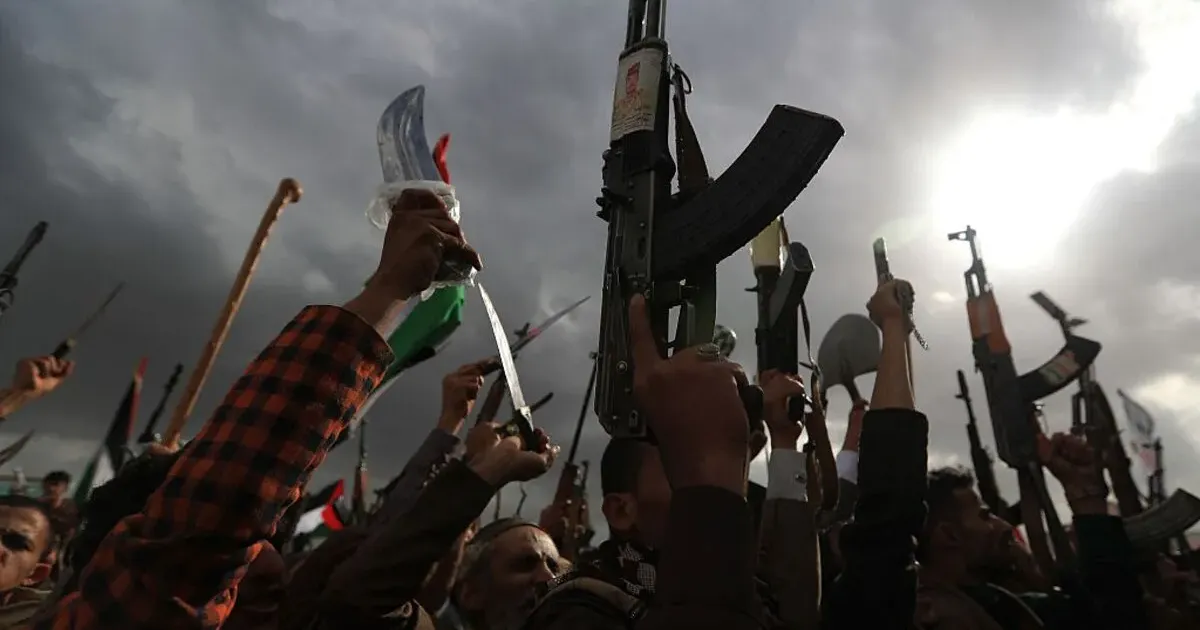
Houthi ballistic missile launches toward Israel have widened the Iran-related war into a more dangerous regional conflict, tying Yemen directly to Israeli security, Red Sea shipping and global energy prices. The relevant record was current by March 28, 2026. The importance of the launches is not limited to the number of missiles fired; it is the proof that the battlefield can expand through aligned groups with their own incentives. The launches did not only test air defenses. They forced governments and markets to price a broader map of risk.
The development follows weeks of US and Israeli strikes on Iran-linked targets and rising concern that aligned groups would open additional fronts. That sequencing matters because each new front makes it harder for leaders to claim the campaign is contained, even if the original target set remains unchanged. Reporting on earlier Houthi missile fire toward Israel already showed how Yemen can become a pressure point even when the main confrontation is elsewhere.
Southern Front Opens
For Israel, the Houthi launches create a distribution problem. Air defense is strongest when threats can be prioritized, but multi-front missile pressure forces commanders to spread attention and interceptors across a wider map. Interceptors, radar attention and civil-defense planning must now cover threats from the north, from Iran and from Yemen. Even when missiles are intercepted, the alerts impose economic and social cost.
The Houthis gain political value from the act of launching. They can present themselves as part of the regional confrontation, strengthen their domestic narrative and signal loyalty to Iran without matching the conventional military power of Israel or the United States.
That makes the conflict harder to contain. Retaliation against Yemen can answer one launch but also risks adding another theater to a war already straining diplomacy. A state can negotiate with another state through known channels. A non-state actor with local incentives, external support and a war economy is more difficult to deter cleanly.
Red Sea Trade Risk
The most immediate global exposure sits in the Red Sea and Bab al-Mandeb corridor. This is where a regional missile attack becomes a household-price story in countries far from the launch site. Shipping firms, insurers and port operators respond to risk before governments reach diplomatic clarity. If vessels reroute around the Cape of Good Hope, delivery times lengthen and freight costs rise.
Smaller operators feel the shock first because they have less room to absorb higher fuel, insurance and delay costs. Large carriers can reroute and renegotiate contracts; smaller firms may simply stop moving cargo through the corridor until risk premiums fall. Naval patrols can reduce the threat but not erase it. The defensive side has to be successful repeatedly, while the attacking side needs only enough credible risk to alter insurance rates and routing decisions. Mobile launchers, drones and missile stockpiles allow the Houthis to create uncertainty at a cost far lower than the expense of defending every ship and every route.
Energy and Inflation
Oil markets reacted because the Red Sea risk sits beside fear of a wider Persian Gulf disruption. Traders are not only pricing barrels that might be lost; they are pricing the uncertainty premium attached to every tanker, port and insurance contract that now depends on military restraint. Traders do not need a total blockade to bid up prices. They only need a credible chance that tankers, refineries or export routes could be hit.
Higher crude and insurance costs move quickly into the wider economy. The first effects appear in freight and fuel, but the second-order effects reach factories, supermarkets and governments already managing fragile inflation expectations. Airlines, shipping companies, fertilizer producers and manufacturers all face cost pressure, and some of that pressure reaches households through fuel, food and consumer goods.
Central banks are left with an awkward problem. War-driven inflation is not easily solved by higher interest rates, but ignoring the price shock can damage credibility. That is why geopolitical escalation becomes an economic-policy problem within hours.
Diplomacy has to account for that economic leverage. A ceasefire between larger powers may not be enough if the Houthis believe missile pressure improves their bargaining position in Yemen or strengthens their regional credentials. Any durable framework has to address the incentives of the group that can keep the corridor unstable. There is also a military sustainability question for Western navies. Escort missions, interceptors, surveillance flights and maintenance cycles are expensive, and they compete with other commitments in Europe and the Indo-Pacific. The defender's bill grows even when every interception succeeds.
For import-dependent economies, the risk is cumulative. A few days of rerouting can be absorbed; weeks of uncertainty change inventory planning, contract pricing and inflation expectations. That is how a missile launch becomes an economic policy problem.
Strategic Repricing
The analysis is that the Houthi entry exposes a fragile assumption behind globalization: key maritime routes remain usable because major powers can keep them secure. That assumption has always depended on overwhelming deterrence; the current crisis shows how much cheaper it has become to challenge the system than to defend it. The current conflict challenges that assumption by giving a non-state actor the ability to raise costs across global trade.
Western governments can strike launch sites, escort ships and pressure Iran, but none of those tools guarantees a quick return to normal. Once companies change routing assumptions and insurers reprice a corridor, normality requires confidence, not only the absence of launches for a few days. Security in the corridor has become a recurring expense rather than a background condition.
The Houthi missiles may not decide the war by themselves. Their larger effect is to widen the cost of the war, forcing households, companies and governments far from the battlefield to pay for a conflict they cannot control. That is the strategic leverage of a chokepoint: the actor firing the missile does not need to dominate the sea to make the sea more expensive. The result is a form of asymmetric taxation on global trade, imposed through fear, insurance math and the defensive cost of keeping routes open. That tax is paid in freight rates, fuel bills, delayed inventory and political pressure on governments that promised stability. It also changes boardroom behavior, because executives start planning around permanent insecurity instead of temporary disruption. The longer it lasts, the more companies will redesign supply chains around insecurity, which is far more expensive than absorbing one bad week of rates and far harder to reverse diplomatically. That is the new risk baseline for governments, carriers and energy markets.