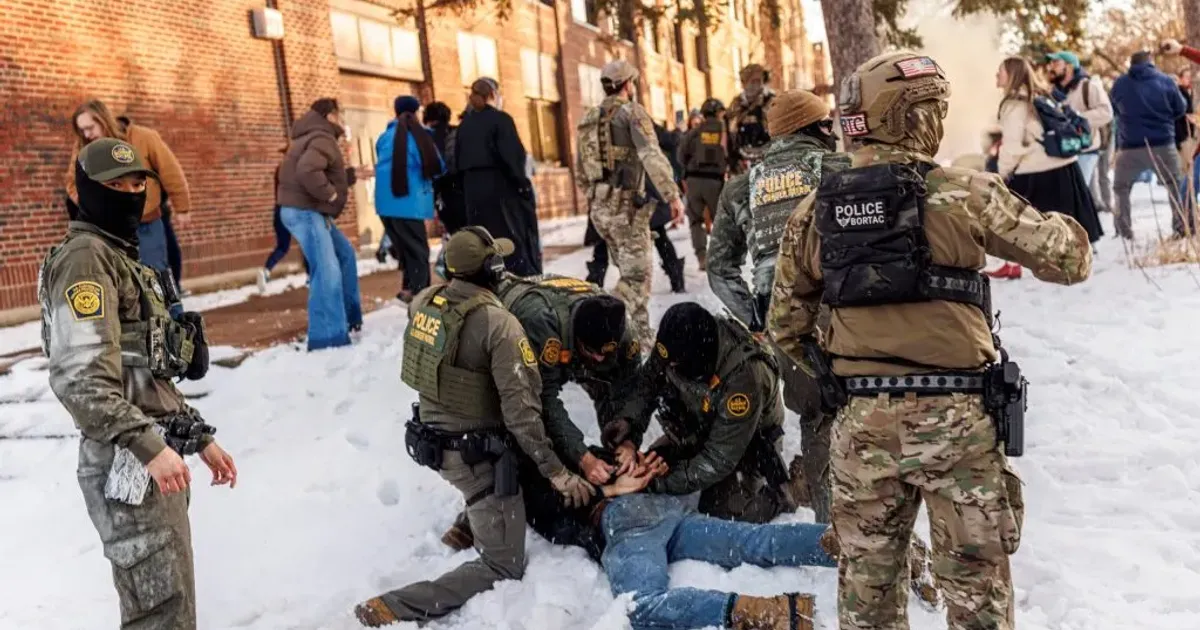
Immigration enforcement has become an education problem because attendance is built on trust. When families fear that a school route, bus stop, courthouse visit or public office could expose them to detention, the classroom loses before any legal case is decided.
The pattern is no longer only anecdotal. Brookings highlighted research from California's Central Valley showing daily student absences rose by 22% after ICE raids in early 2025, with the largest increase among the youngest students. Connecticut and Rhode Island research has also pointed to attendance declines and higher chronic absenteeism among English learners after the second Trump administration intensified enforcement. Districts do not need ICE agents in hallways to feel the effect. Fear is enough to keep children home.
Schools Pay When Families Hide
Public schools depend on daily presence. Attendance drives learning, meals, counseling, special education, language services and, in many districts, funding. When students disappear for days or weeks, teachers cannot treat the absence as ordinary truancy. A child may be home because a parent was detained, because the family is avoiding public systems, or because rumors of enforcement near a neighborhood have made the trip to school feel unsafe.
The effect spreads beyond children whose parents are directly arrested. Fear travels through WhatsApp groups, churches, workplaces, apartment buildings and school parking lots faster than official reassurances. One detention can change the behavior of dozens of families who share the same route, language or legal uncertainty.
Enrollment Loss Becomes A Budget Problem
The academic damage is joined by a financial one. AP reporting on immigrant-student enrollment declines pointed to large districts such as Miami-Dade, where newcomer numbers fell sharply and budget pressure followed. In Connecticut, Bridgeport officials reported losing nearly 700 students between the 2024-25 and 2025-26 school years, with English learner enrollment down by nearly 300 and ICE fear cited as one factor.
Falling enrollment can mean fewer teachers, fewer bilingual aides, weaker newcomer programs and less money for counseling. That creates a cruel loop. Enforcement fear reduces attendance and enrollment; lower enrollment reduces the support systems that would help anxious students stay connected; weaker support makes school feel less safe and less useful to families already under stress.
Legal Access Does Not Automatically Create Trust
Children have a right to attend public school regardless of immigration status. Districts can train staff, require proper warrants, restrict information sharing and communicate that schools are not immigration agencies. Those steps are necessary, and many districts have adopted them. They are not always enough.
The Trump administration's removal of prior sensitive-location limits changed the emotional calculation for many families. Even if enforcement does not enter a school building, visible arrests in nearby communities can make the route to school feel risky. The law may say the classroom is open. A parent may still decide that a bus stop, sidewalk or front office is too exposed.
The Trauma Follows Students Into Class
The students who do keep attending are not untouched. Children who fear family separation may arrive distracted, exhausted, angry or quiet. They may avoid after-school activities, college-planning meetings, field trips or parent conferences because every public interaction feels like exposure. Older students may work more hours or take on adult responsibilities if a parent loses income, is detained or goes into hiding.
Teachers are then asked to become crisis responders while still being judged on test scores, attendance targets and curriculum pacing. A classroom cannot fully function as a literacy program, meal site, mental-health triage unit and legal-fear buffer without resources. Schools can do remarkable work, but they cannot neutralize federal policy through compassion alone.
Attendance Is A Public Cost
Enforcement may be aimed at adults, but the educational cost lands on children. Missing early literacy, English-language instruction or math foundations can widen gaps that take years to close. A child who stops trusting institutions may not quickly return to normal attendance after one reassuring letter from a district office.
A country cannot scare families into stability. It can remove people from a jurisdiction, but fear removes children from classrooms long before any deportation order is signed. If policymakers want schools to produce skilled workers, nurses, engineers, teachers and taxpayers, they cannot treat attendance as collateral damage. The education system is one of the few institutions still capable of integrating immigrant children into civic life. Undermining that trust is not toughness. It is self-sabotage with a badge on it.