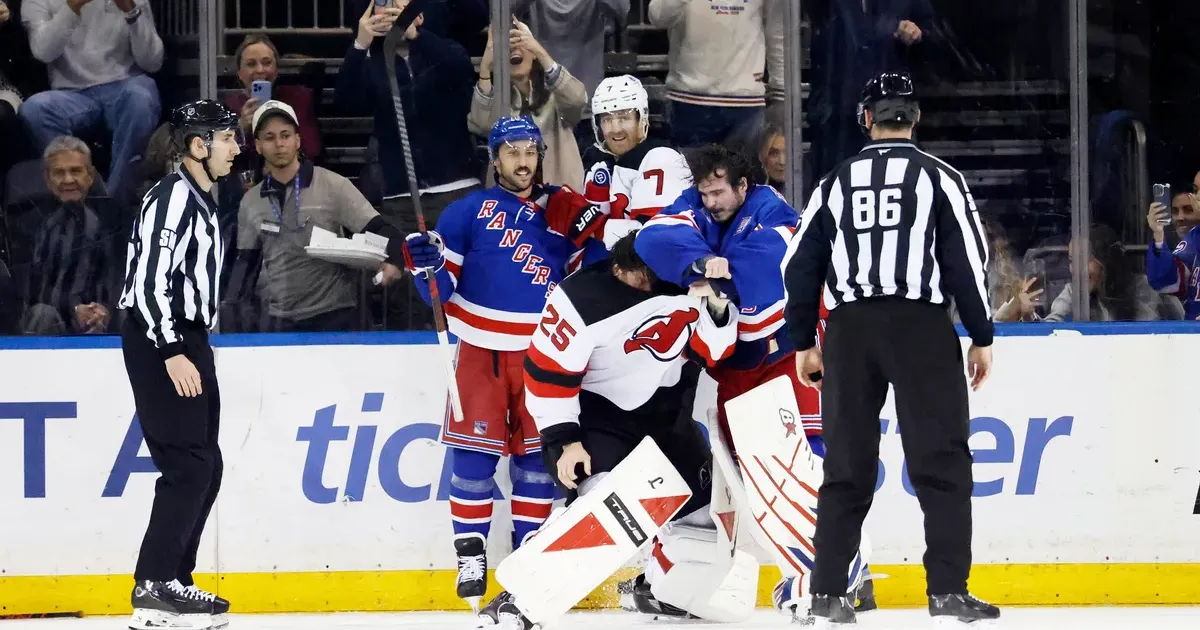
Igor Shesterkin and Jacob Markstrom turned a Rangers-Devils rivalry game into a rare goaltender fight at Madison Square Garden. The altercation came during a 4-2 New York win that prevented a season sweep by New Jersey. The brawl supplied the night's defining image, but the result also mattered for a Rangers team trying to salvage pride in the matchup. The game was played on April 1, 2026.
New York entered the night desperate for any appearance of momentum during what many observers have labeled a lost season for both franchises. While the New York Rangers managed to salvage a portion of their pride with the win, the physical confrontation overshadowed the actual box score. Jacob Markstrom skated toward the red line after a scrum in the Rangers' crease, beckoning Shesterkin to meet him for a physical exchange that the Russian goaltender quickly accepted.
Violent Confrontation at Madison Square Garden
Madison Square Garden erupted as the primary netminders threw caution aside. Conflict between these two organizations usually centers on tactical defense or speed, yet the April 1 matchup regressed into a showcase of raw hostility. New York's roster played with a desperation that suggested they were fighting for not only two points in the standings. Avoiding the sweep became a matter of organizational dignity rather than playoff positioning.
Jacob Markstrom appeared to initiate the sequence by shouting at the Rangers' bench following a disallowed goal earlier in the period. Tensions simmered until a collision between Chris Kreider and a Devils defenseman triggered a full-team brawl. New Jersey Devils players swarmed the crease, leading Shesterkin to signal his counterpart at the other end of the rink. Most analysts expected a quiet finish to the season, but this outburst suggests the rivalry remains deeply personal for the veterans involved.
Blood stained the ice near the logos as the linesmen finally gained control of the situation. Both Igor Shesterkin and Jacob Markstrom received game misconducts for their roles in the melee. Backup goaltenders were forced to finish the final eight minutes of play, during which the Rangers added an empty-net goal to seal the result. Records show this was the first goalie fight at the Garden in over a decade.
Violence often acts as a release valve for frustrated rosters.
Tactical Breakdown of the Hudson River Rivalry
Rangers players focused on neutralizing the Devils' transition game, which had dominated previous meetings this season. New Jersey used a heavy forecheck that forced early turnovers, but New York's defensive pairings stayed compact to protect the high-danger areas. Statistics from the first two periods indicated a shift in shot volume, with the Rangers leading thirty-two to twenty-four before the brawl altered the flow of the game.
Igor Shesterkin stopped twenty-two of twenty-four shots before his early exit, maintaining a focused presence in the net despite the escalating physical play. Markstrom was equally effective, turning aside twenty-eight shots while facing relentless pressure from the Rangers' power-play units. Strategy became secondary to survival once the gloves were off. Coaches Chris Drury and Tom Fitzgerald now face questions regarding the lack of discipline displayed by their respective stars.
"Even during a lost season for the Rangers and Devils, the Hudson River rivalry can still produce some intense moments."
Sources close to the New York locker room suggest the fight was a calculated attempt by Shesterkin to energize a demoralized squad. Pride dictates that a team cannot allow a divisional opponent to sweep a season series without a serious response. Jacob Markstrom, on the other side, was likely reacting to the physical toll of a long season where the Devils have underperformed expectations. Rivalry games frequently produce these unscripted eruptions when nothing else is left to play for.
Rivalry Fallout
Professional hockey often masquerades as a sport of skill, but the April 1 clash revealed it remains a blood-sport. Critics will argue that Shesterkin and Markstrom acted with gross negligence by risking their health in a game that had zero bearing on the postseason. This perspective ignores the primal reality of professional competition where the humiliation of a season sweep outweighs the logic of injury prevention. When the Rangers avoided that sweep, they were not playing for the Stanley Cup; they were playing for the right to look their opponents in the eye next October.
Is the NHL truly safer when stars are allowed to beat each other senseless? The league office will levy fines and issue stern warnings, but the marketing department will undoubtedly use the footage of Shesterkin landing punches to sell season tickets for 2027. This hypocrisy is the engine of the sport. Owners want the civility of a corporate box while profiting from the savagery of the ice. The Rangers win was a tactical footnote to a larger cultural statement about the endurance of violence in the Hudson River rivalry. Pride is expensive.