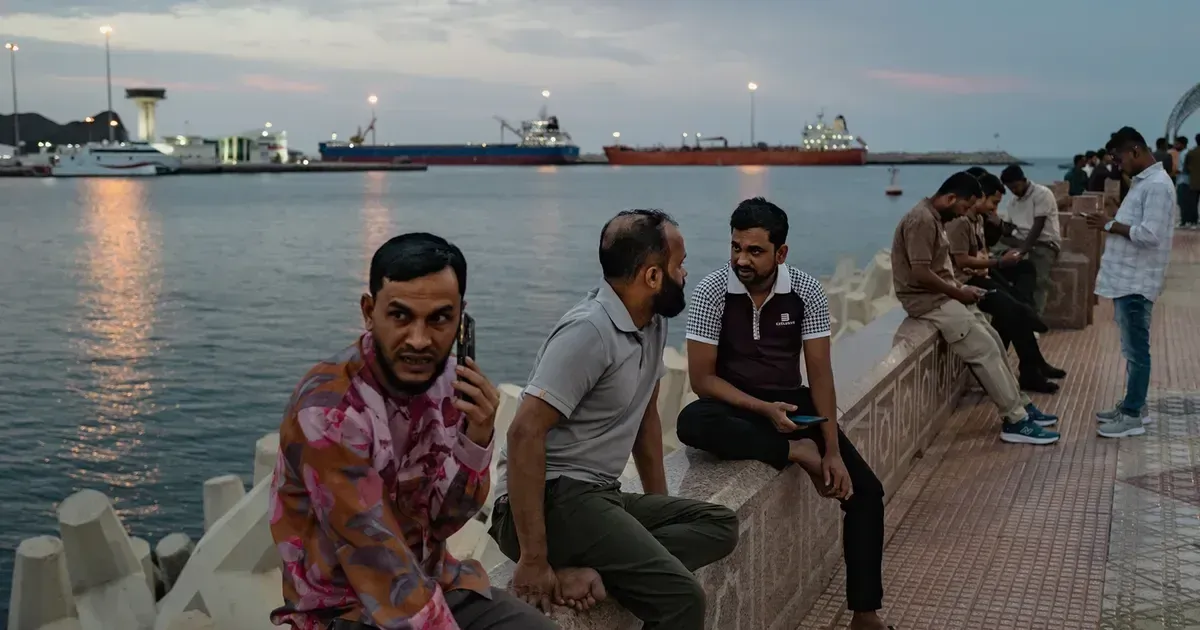
New Delhi officials confirmed that thousands of Indian seafarers are stuck on commercial vessels after the shutdown of the Strait of Hormuz. Families, maritime unions and shipping firms immediately pressed for a clearer rescue plan. The April 6, 2026 update turned the shipping crisis into a domestic emergency for the Ministry of External Affairs, which said the blockage had immobilized approximately 4,500 sailors across several dozen tankers and container ships. Indian maritime unions report that communication with at least twelve vessels has become intermittent as regional tensions increase.
Families in Kerala and Tamil Nadu have petitioned the government for immediate evacuation procedures. Shipping logs indicate that many of these vessels were transiting from the Persian Gulf toward Mumbai when the waterway was closed. Physical blockades and naval patrols have prevented any merchant movement through the channel for seventy-two hours. Global logistics companies estimate that cargo worth $4 billion sits idle on these Indian-crewed ships. Fuel levels on several Ultra Large Crude Carriers have reached critical lows.
Indian nationals make up roughly 10% of the world's seafaring population, according to data from the Director General of Shipping. This large workforce provides essential labor for the global energy trade, yet they are often the first to suffer during regional disruptions. Reports from the Ministry of External Affairs indicate that New Delhi has established a 24-hour emergency cell to track the GPS coordinates of every stranded vessel. Sailors on board the MT Desh Shanti reported via satellite phone that food rations are being strictly controlled to extend the ship's endurance.
Drinking water supplies are also a concern on smaller bulk carriers that lack advanced desalination systems. Port authorities in neighboring jurisdictions have refused to grant docking rights to these vessels due to security protocols. Indian diplomats in Tehran and Muscat are currently negotiating safe passage corridors for non-combatant merchant ships. Success in these talks depends on the willingness of regional actors to separate commercial transit from active hostilities. Current conditions suggest a prolonged stalemate. Shipping insurance premiums for the region have spiked by 400% since the closure began.
Hormuz Blockade Traps Indian Merchant Mariners
Merchant vessels trapped near the Strait of Hormuz are currently operating under high-security alerts. Captains have received orders to maintain darkened ship protocols at night to minimize visibility to local patrols. While some ships are anchored in neutral Omani waters, many remain inside the primary transit lanes now claimed as restricted zones. Local maritime laws provide limited protection for crews when a sovereign state declares a waterway closed for security reasons. Indian seafarers often serve under flags of convenience, such as Panama or Liberia, which complicates the direct intervention of the Indian Navy.
Despite these legal hurdles, New Delhi has deployed three stealth frigates to the Gulf of Oman to provide a visible deterrent against boardings. Naval commandos are reportedly on standby for potential ship-to-shore transfers if conditions deteriorate further. Food and medical supplies are the most pressing needs for the sailors. Most commercial tankers are designed for 30-day endurance cycles, but many of these ships were already ten days into their voyages when the blockade began. Satellite imagery shows clusters of vessels sitting motionless outside the Musandam Peninsula.
High temperatures in the region have increased the mechanical strain on cooling systems on older ships.
Psychological pressure on the crews is mounting as shore leave remains impossible. Under the Maritime Labour Convention, shipowners are responsible for the well-being and eventual repatriation of their staff. Enforcement of these rules is difficult when the physical path to a port is blocked by naval mines or warships. Small groups of sailors have attempted to contact the International Transport Workers Federation to report labor violations. Some shipping companies have stopped paying wages, citing force majeure clauses in their contracts. Indian labor laws do not easily apply to international waters or foreign-flagged ships.
Instead, the government must rely on diplomatic pressure to ensure that Indian citizens are treated humanely. Food shortages have led to a thriving black market for provisions in the outer anchorages. Iranian patrol boats have reportedly inspected several ships to verify the manifests. Most crews have been told to stay below deck during these inspections. The risk of accidental escalation during these boardings is a primary concern for New Delhi planners.
New Delhi Diplomatic Response to Maritime Crisis
External Affairs Minister Subrahmanyam Jaishankar spoke with his regional counterparts on Sunday to demand the immediate release of non-belligerent vessels. India maintains a policy of strategic autonomy, which it hopes will allow it to mediate between conflicting parties. Middle Eastern partners have expressed sympathy but have not yet offered a physical corridor for evacuation. New Delhi has historically avoided taking sides in Gulf disputes to protect its energy imports and its vast diaspora. That neutrality is being tested by the sheer number of citizens currently at risk.
Ministry officials are considering a plan to use Indian Air Force transport planes to ferry sailors from Omani ports if the ships can reach those docks. Such an operation would require the cooperation of several air traffic control jurisdictions. Past evacuations from conflict zones in Yemen and Libya provide a template for this type of mission. Logistics experts warn that the scale of the current crisis is much larger. Moving 4,500 people from offshore locations requires a huge coordinated effort between the Navy and commercial tug operators. Local weather patterns are expected to worsen, potentially complicating any sea-to-air transfer.
Diplomatic cables suggest that the Iranian government is using the stranded ships as leverage in broader negotiations. India currently imports a meaningful portion of its crude oil through this channel, making it vulnerable to such pressure. Prime Minister Narendra Modi has reportedly sought assistance from the United Nations to declare the strait an international zone for civilian traffic. Efforts to mobilize the International Maritime Organization have so far yielded only symbolic statements. Regional powers continue to prioritize their security objectives over the freedom of navigation for merchant fleets.
Financial markets in Mumbai have reacted with volatility as the prospect of a long-term blockade grows. Energy stocks fell by 4.2% on the BSE Sensex during Monday trading. Investors fear that a prolonged closure will force India to buy more expensive oil from the Atlantic basin. This shift would drastically increase the current account deficit. Remittances from the Middle East, which total nearly $80 billion annually, are also at risk. Many of the stranded sailors are the sole breadwinners for their extended families. Economic stability in several Indian states depends on the steady flow of these maritime wages.
Human Cost of the Blockade
Reliance on diplomatic decorum rarely resolves the physical containment of commercial assets in a theater of active hostility. New Delhi's historical commitment to strategic autonomy is rapidly transforming from a sophisticated foreign policy asset into a liability for its citizens. While the Ministry of External Affairs persists in its rhetoric of mediation, the 4,500 sailors in the Strait of Hormuz are experiencing the failure of that very policy. A middle-path approach offers no protection against naval mines or state-sponsored boardings.
India has spent decades building its maritime workforce to dominate the global merchant navy, yet it lacks the logistical and military infrastructure to protect that workforce during an inevitable regional flare-up. The current crisis exposes a fundamental disconnect between India's economic ambitions and its willingness to project power in its immediate maritime neighborhood.
Sending a few frigates to the Gulf of Oman is a symbolic gesture that does nothing to break a blockade or secure a docking port for a VLCC. If India wishes to be a primary maritime power, it must be prepared to enforce the freedom of navigation, not just request it. The strategic hesitation to confront regional actors is perceived as weakness, ensuring that Indian citizens will be targeted in every subsequent regional dispute. New Delhi must abandon its wait-and-see attitude and demand a dedicated humanitarian corridor backed by the credible threat of naval escort.
Anything less is an abdication of its duty to the men who power its economy. Soft power is useless when the gates of global trade are locked from the inside. India must lead or watch its mariners rot at anchor.