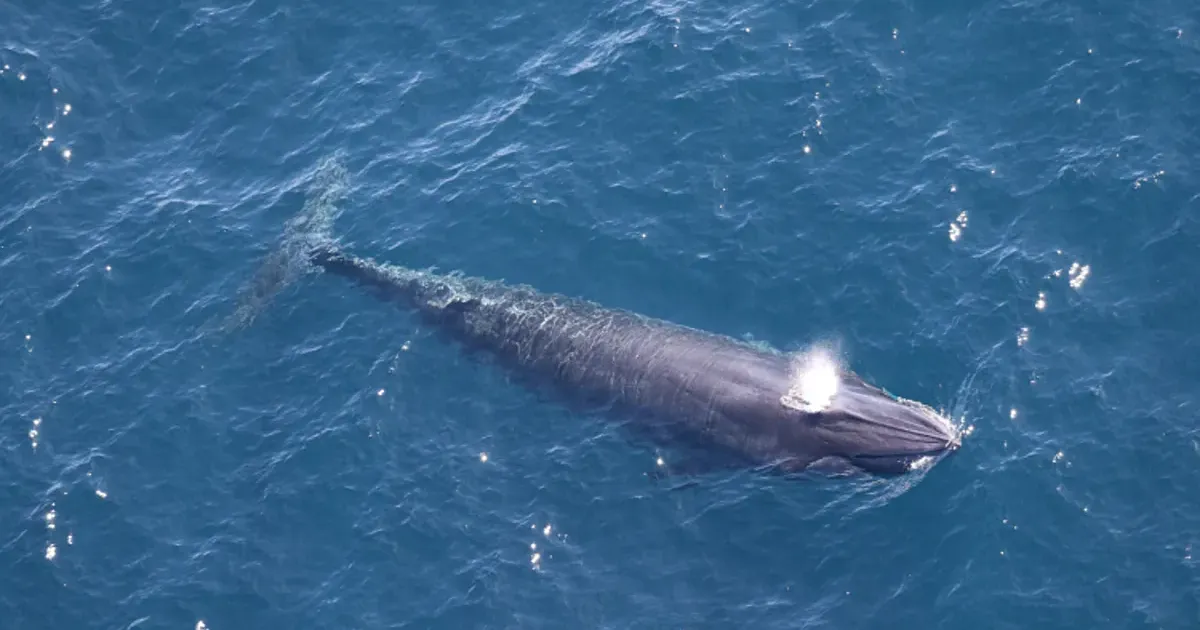
Doug Burgum presided over a Tuesday hearing where federal officials weighed the survival of the Rice's whale against the demands of American energy independence. Members of the Endangered Species Committee convened in Washington to evaluate a controversial proposal that would allow expanded oil and gas production in the Gulf of Mexico. Defense Secretary Pete Hegseth formally requested an exemption from federal protections for the rare marine mammal, citing urgent national security concerns tied to global energy shortages. On March 31, 2026, the exemption debate put offshore energy and endangered-species rules on a collision course.
International crude prices spiked following the outbreak of the Iran war, creating a volatile market that the administration intends to stabilize through domestic extraction. Federal law generally prohibits any action that could push an endangered species toward extinction. However, the committee, popularly known as the God Squad, possesses the rare legal authority to overrule the Endangered Species Act when a project is deemed of regional or national significance. Tuesday marked the first time this panel has met to deliberate on such an exemption since 1992.
Scientists estimate that fewer than 50 Rice's whales persist in the wild. Recognized as a distinct species only in 2021, these animals reside exclusively in the northeastern waters of the Gulf of Mexico. Their habitat overlaps sharply with proposed drilling sites that the administration wants to open for bidding. Conservationists argue that increasing vessel traffic, underwater noise, and the risk of spills will inevitably lead to the disappearance of the species. Experts from Florida International University noted that these whales are uniquely vulnerable because they rest near the surface at night, making them susceptible to ship strikes.
Endangered Species Committee Evaluates National Security claim
Hegseth notified Doug Burgum on March 13 that the drilling expansion was a military necessity. Legal filings indicate that the Pentagon views Gulf oil as a critical strategic reserve during the ongoing conflict in the Middle East. While specific details of the national security rationale remain classified, the administration maintains that domestic production must outweigh local environmental risks. Skepticism persists among legal analysts regarding whether the threat to energy prices meets the high bar required for a God Squad exemption.
Critics point to the lack of transparency in the Defense Department request. No public disclosure has clarified how specific drilling blocks directly support military readiness or tactical operations. Previous exemptions for the committee involved large-scale infrastructure projects like the Tellico Dam or logging in the Pacific Northwest. Using national security as a justification for private oil leases is a shift in how the executive branch applies the 1978 amendment to the Endangered Species Act. Administration officials did not respond to queries regarding the specific data used to link these lease sales to defense capabilities.
Biological Crisis Threatens Gulf Rice Whale Population
Rice’s whales occupy a narrow ecological niche between 100 and 400 meters deep. Their diet consists primarily of silver-rag driftfish, a fatty species found near the gulf floor. During the day, the whales undertake strenuous dives to feed, but they return to the upper water column to recover. Scientists have documented that the animals are already living on a razor-thin caloric margin. Any disruption to their feeding grounds or prey availability could trigger a population collapse within a single generation. The ongoing Iran war continues to drive energy market volatility and push crude oil prices to historic highs.
In his notification to the Interior Department, Pete Hegseth stated that an Endangered Species Act exemption for oil and gas drilling in the Gulf was “necessary for reasons of national security,” according to a court filing from the administration.
Noise pollution from seismic airguns used in oil exploration interferes with the whales' ability to communicate and locate food. High-intensity sound pulses can travel for hundreds of miles underwater, causing chronic stress and permanent hearing loss in marine mammals. Other species including manatees and sea turtles also frequent these regions. Records show that the cumulative impact of industrial noise has already altered migration patterns for multiple federally protected species in the region. Marine biologists warn that the Rice's whale has no alternative habitat if the northeastern Gulf becomes too loud for survival.
Energy Production Requirements Collide with Marine Conservation
Production in the Gulf of Mexico accounts for approximately 10% of total US crude oil output. Industry leaders argue that the region is essential for maintaining a stable supply-chain and reducing reliance on foreign imports. Earlier this month, the administration approved a new $5 billion project for BP, signaling a commitment to long-term fossil fuel investment. Energy analysts suggest that without new leases, domestic production could begin a steady decline by the end of the decade. This possibility has fueled the White House pushes to bypass environmental hurdles that delay exploration.
Exempting these projects would streamline the permitting process for several major energy firms. Supporters of the move claim that modern drilling technology is sharply safer than the equipment used in previous decades. They contend that the economic benefits of low energy costs provide a greater public good than the protection of a single species. Employment data suggests that the offshore oil industry supports thousands of jobs across the Gulf Coast, from Texas to Florida. Corporate lobbyists have intensified their presence in Washington, urging the committee to prioritize economic resilience over biological diversity.
The Gulf rice whale is central because the population is small enough that individual losses can alter the legal and scientific argument.
That gives environmental groups a clear basis to challenge any exemption that appears too broad.
That uncertainty can raise financing costs because lenders dislike projects whose permits may be reopened after investment decisions are made.
Business Stakes of the Exemption
The exemption request turns an environmental rule into an energy-security test for regulators. Drillers want certainty in the Gulf, while conservation groups argue that a small whale population cannot absorb more industrial disruption.
For energy companies, the decision could shape permitting risk beyond one project. If national security becomes a broader exception, offshore planning may shift toward legal strategy as much as geology.